
We hiked close to giant rock formations like none we had ever seen while visiting Torres del Paine National Park in the southern Chilean Andes.
Towers
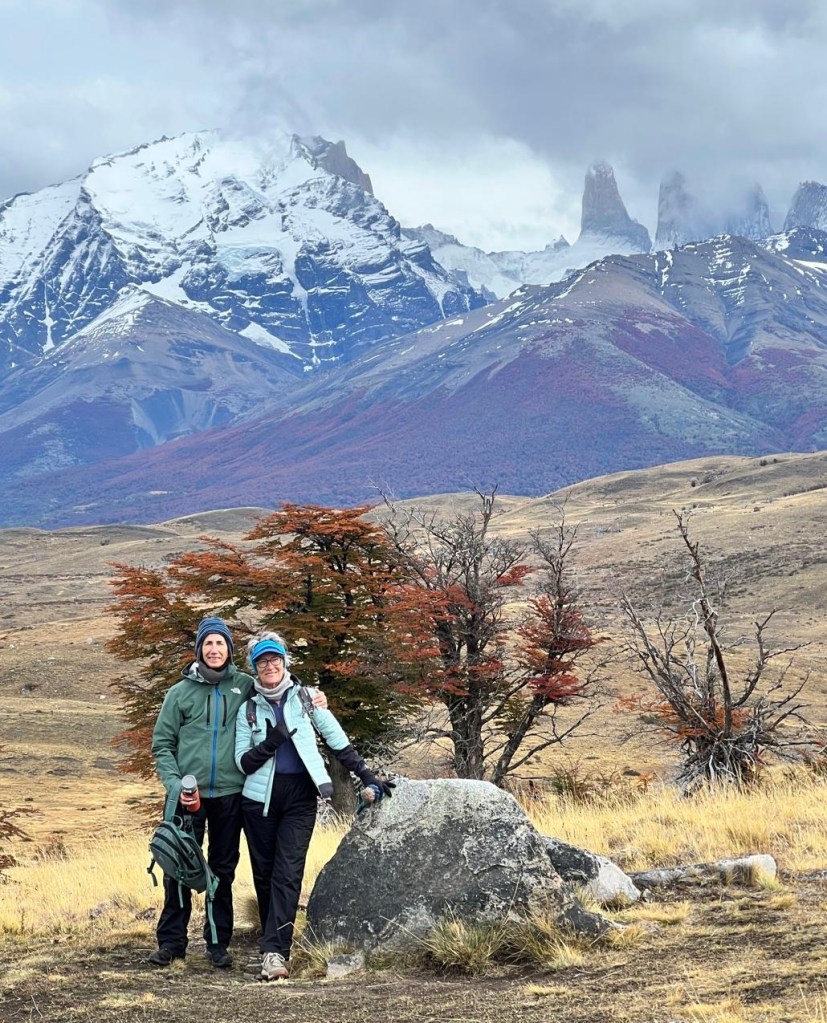
Chilean baqueanos gave this area its name, translated as Towers of Blue, by combining the Spanish word torres (towers) and the Tehuelche word paine (blue).
*Baqueanos were known as experts in the lay of the land, often guiding explorers and finding lost livestock. *The Tehuelche are one of many indigenous groups now extinct in the region.
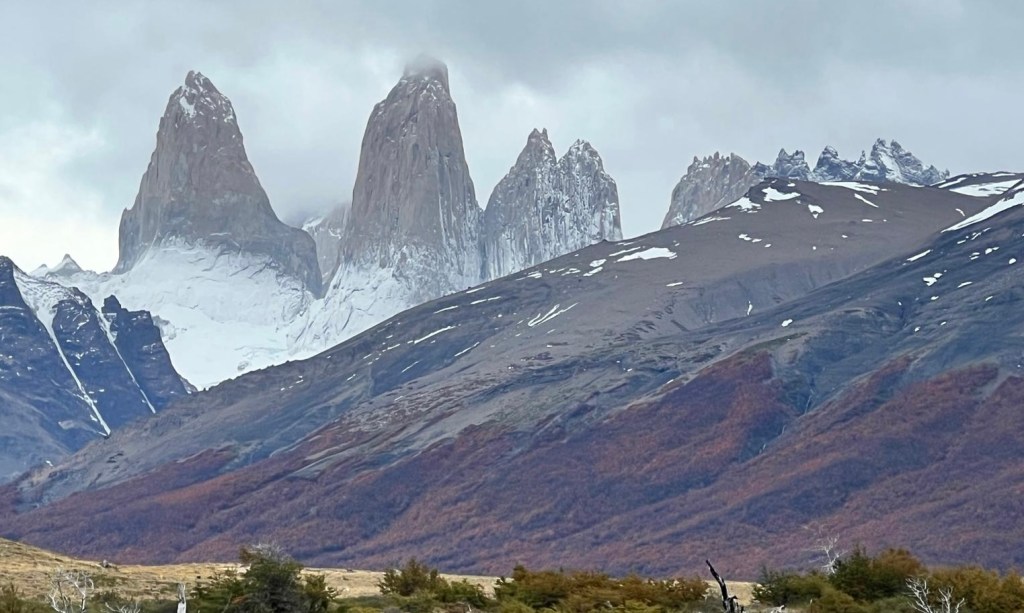
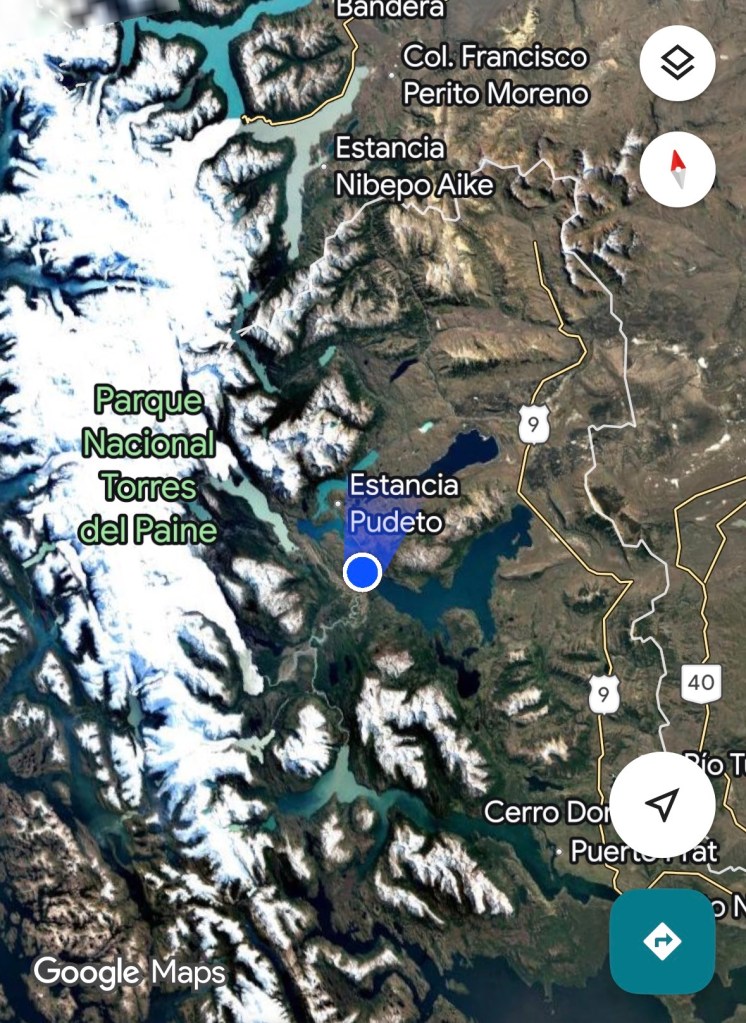
The torres stand near the crest of the Andes. The Chilean ice fields facing the Pacific Ocean capture the snow that feeds hundreds of glaciers. The dry Argentinian steppe stretches hundreds of miles leeward of the Andes.
Horns
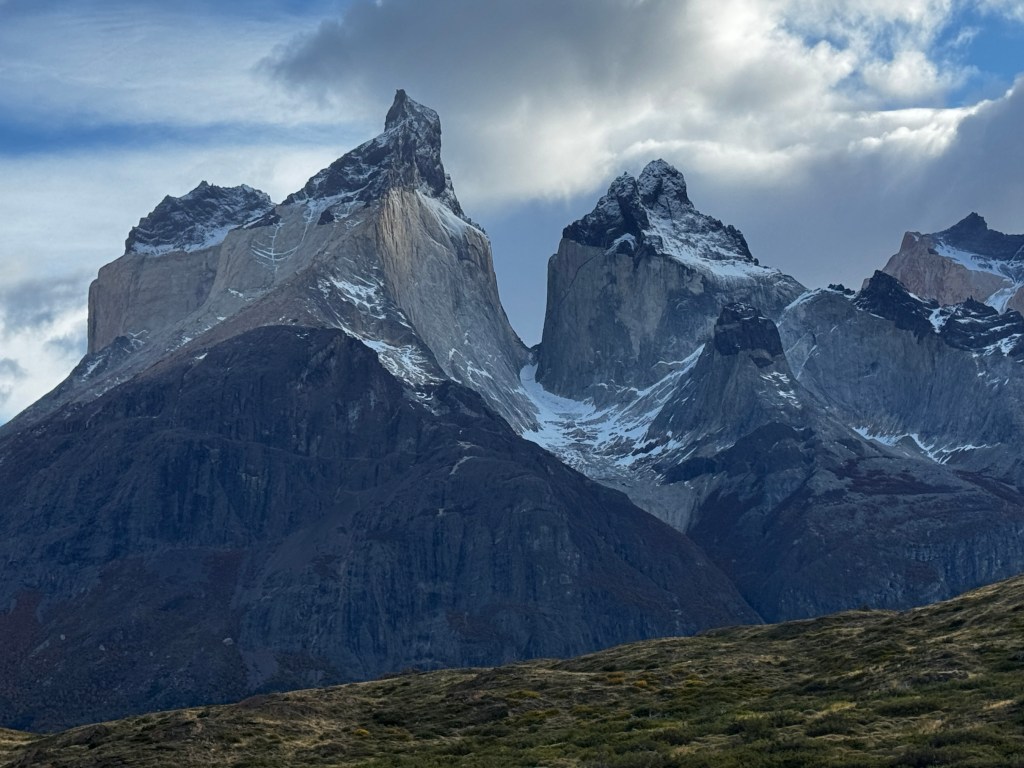
If you’re into geology at all, the Cuernos (Horns) del Paine will intrigue you. If you simply love contemplating big beautiful nature, the Horns will drop your jaw.
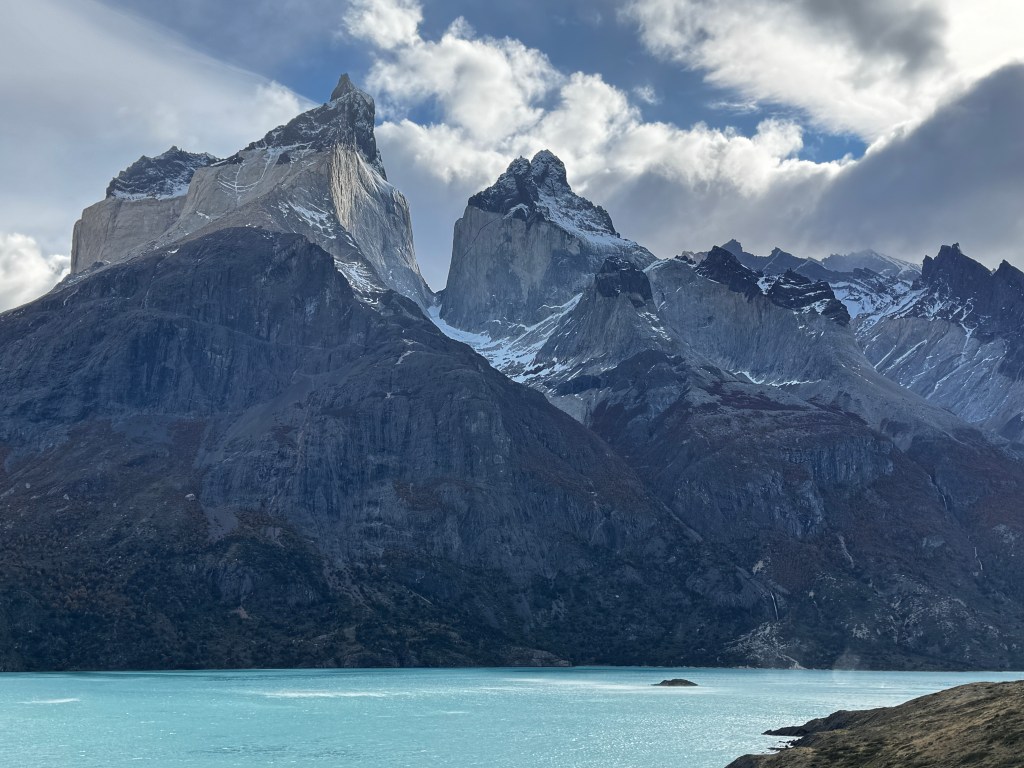
It’s strange to think of sedimentary rock sitting on top of granite, but that reality just speaks to the difference between geologic time and the clocks that run our lives.
The Water
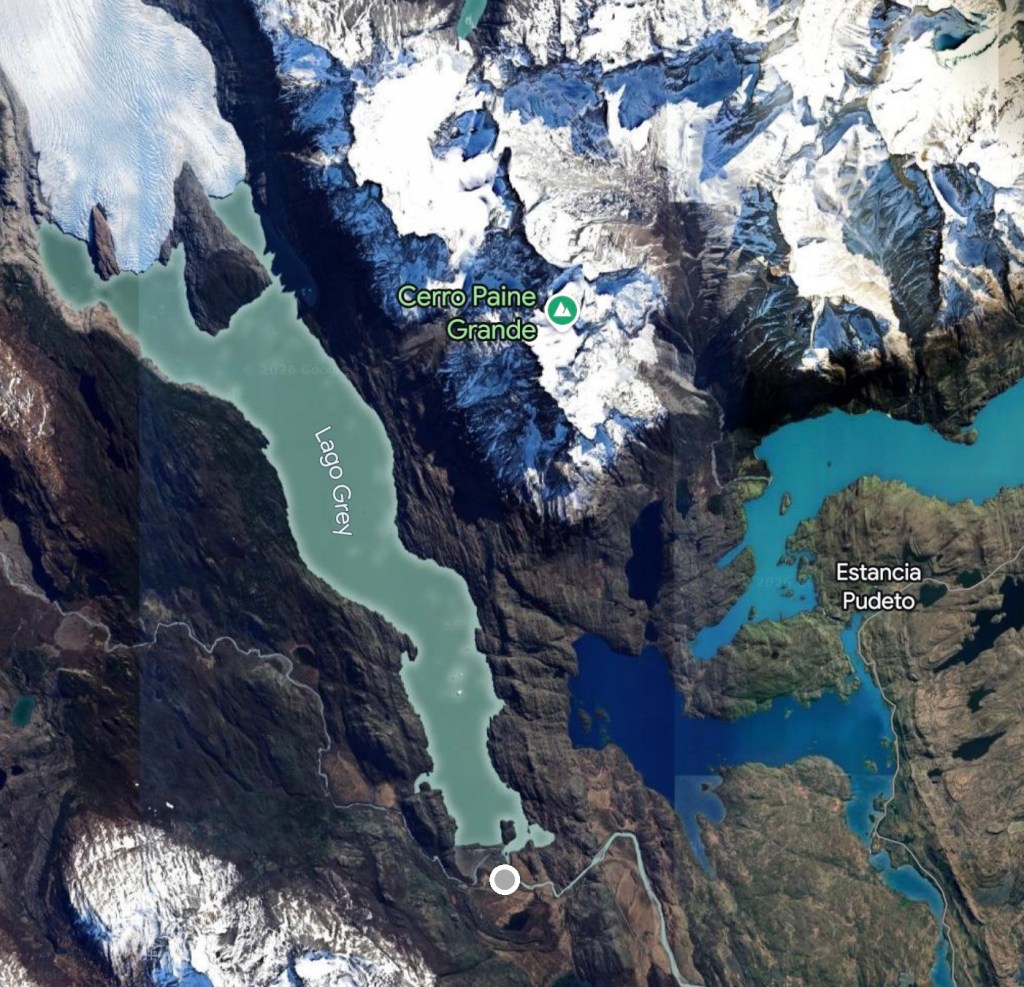
The color of water in the rivers and lakes of the icefields runs the gamut from dull gray to an unimaginably brilliant turquoise to deep blue.
Gray water at the feet of glaciers carries such a high concentration of silt that the water is opaque. As the water travels, some silt settles and more blue light is reflected on a cloudless day. But glacial water never runs fully clear.
Our hike to the Horns began near the roaring Salto Grande waterfall. Even the spray carried a glacial blue color.
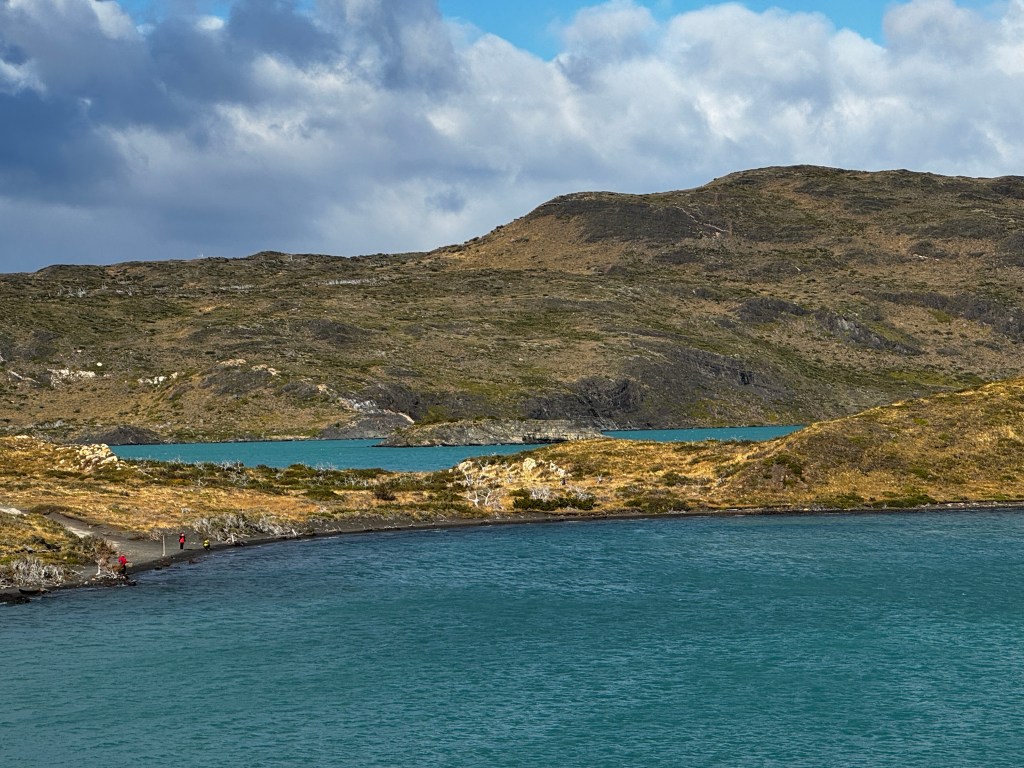
The water looks a bit paler as we hike closer to the source.
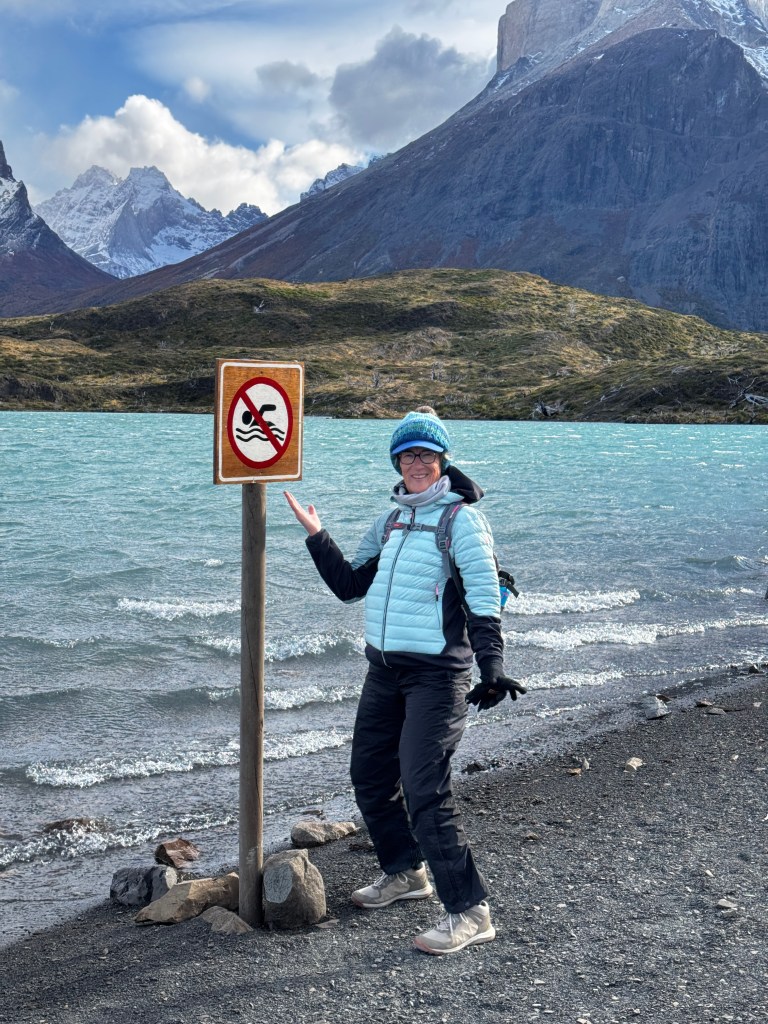
Patagonia is windy. Period.
From Day 1, we were told about the wind of Patagonia. We felt it at Cabo del Horno, when high winds nearly prevented us from boarding zodiacs and hiking to the monument at the foot of the continent. (See my post on Tierra del Fuego.) But that was only 30 knots.
Here, we felt “real wind” for the first time – wind that knocked us off our feet if we weren’t careful.
At one point I rounded a turn and found two traveling companions facing one another, leaning in shoulder to shoulder and hanging on to stay upright. I grabbed on to steady myself and hopefully help prop them up. We stood as a tripod for about a minute until the gust died enough that we dared venture a step.
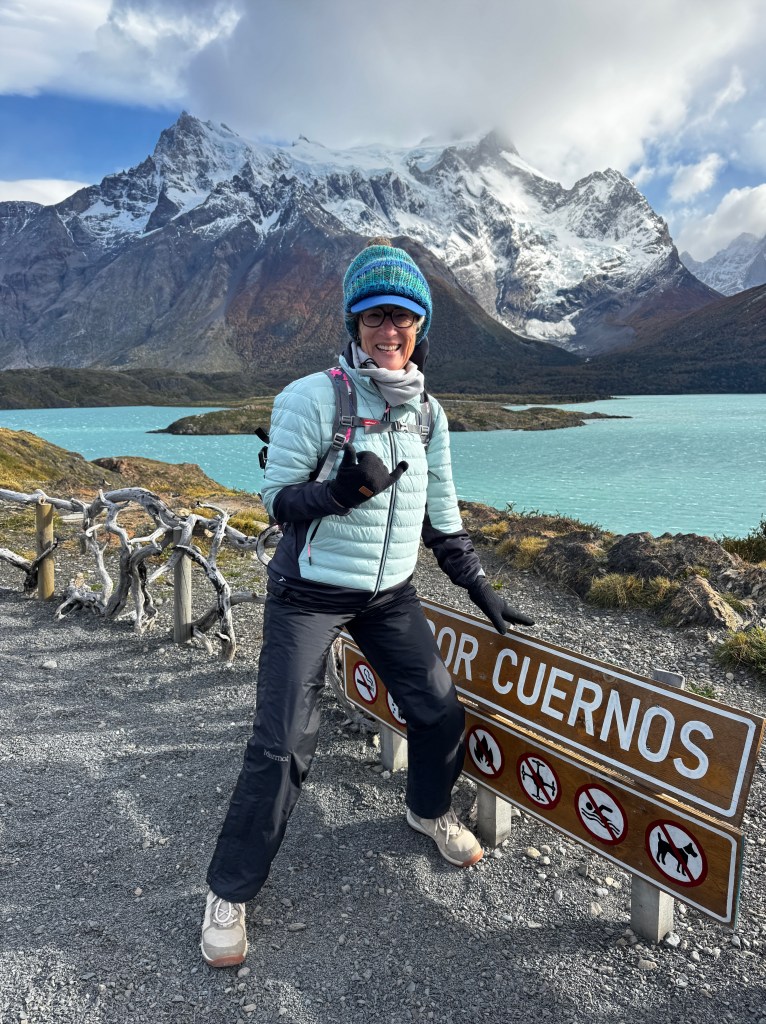
Clyde brought his doggie out to enjoy the breeze.
The wind swept up beautiful swirls of spray in the sunlight.
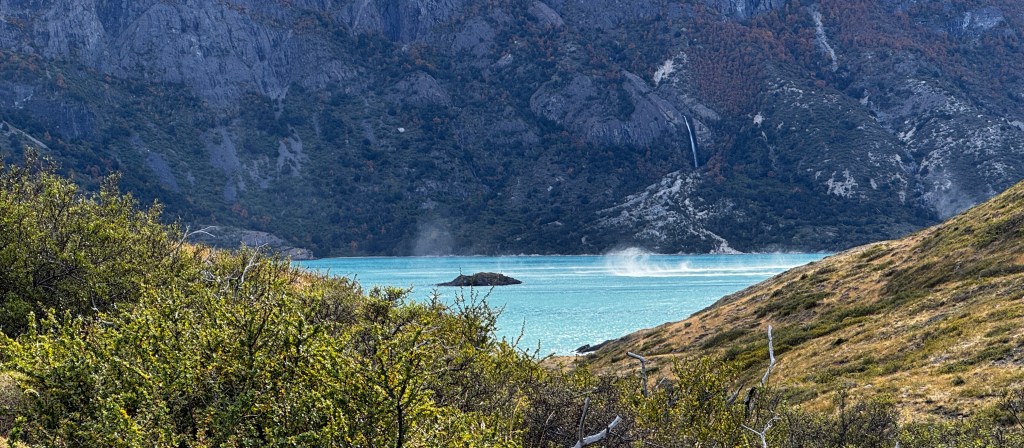
The beauty was beyond description. The wind took our breath away, literally. Amy and I were glad we traveled to Patagonia while our legs are strong enough to carry us into these amazing places.


Leave a Reply