
The town of El Calafate sits on the south coast of Lago Argentina, a lake that covers 545 square miles and was carved by glaciers to a depth of 1,600 feet.
El Calafate has been home to Caro, our OAT trip leader, all her adult life (See my post about Caro). Her generosity in sharing her beloved home created an especially moving experience in the heart of Patagonia.
First stop – Perito Moreno Glacier
Perito Moreno, a star among Patagonia’s glaciers, is just an hour’s drive from El Calafate. We followed Brazo Rico, an arm of Lago Argentina that runs downstream from the glacier.
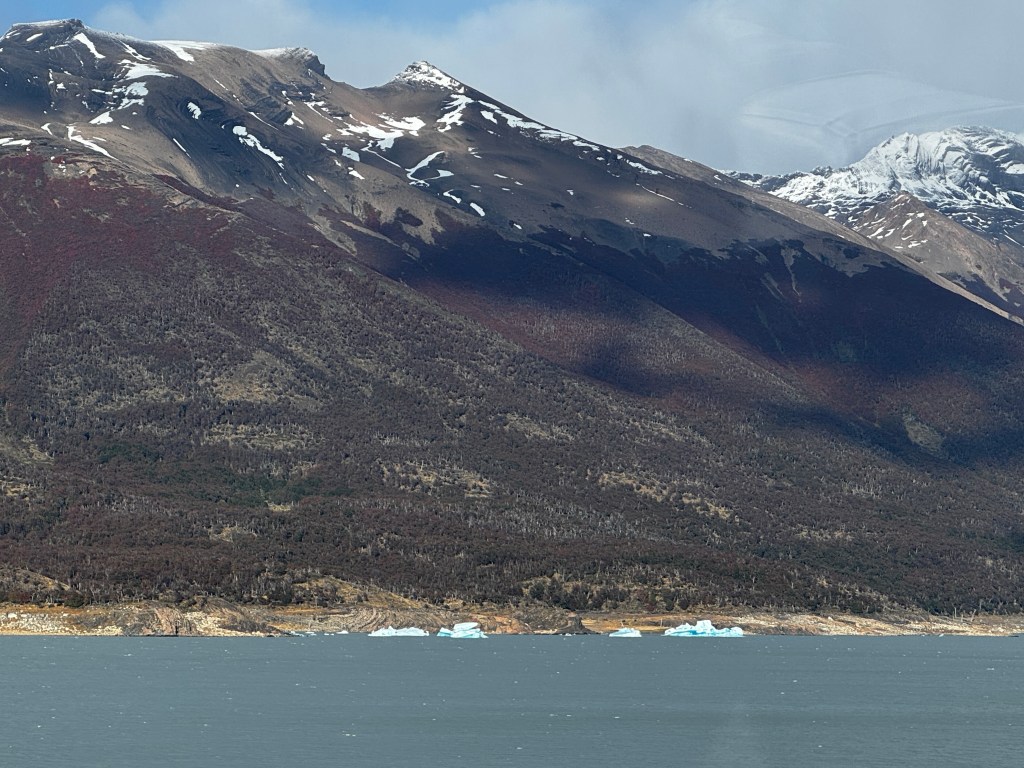
(See my post on Torres del Paine for color variation in glacial waters.)
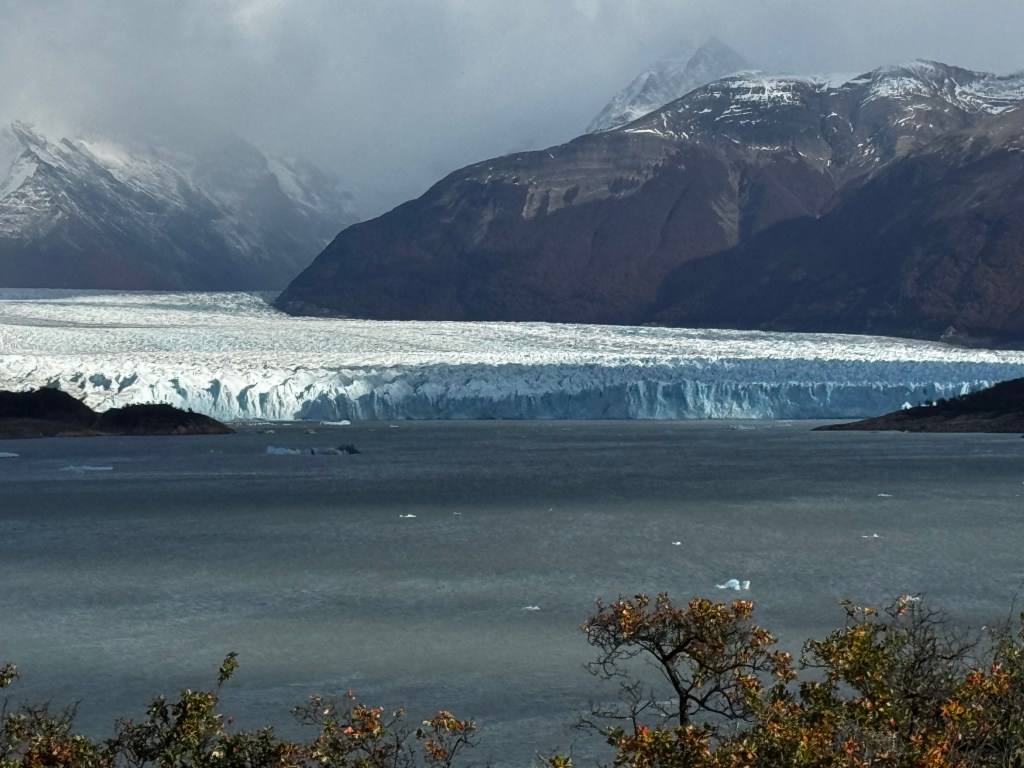
Park directors installed nearly 3 miles (yes!) of interconnected elevated walkways that extend up and down the bluff facing the glacier.
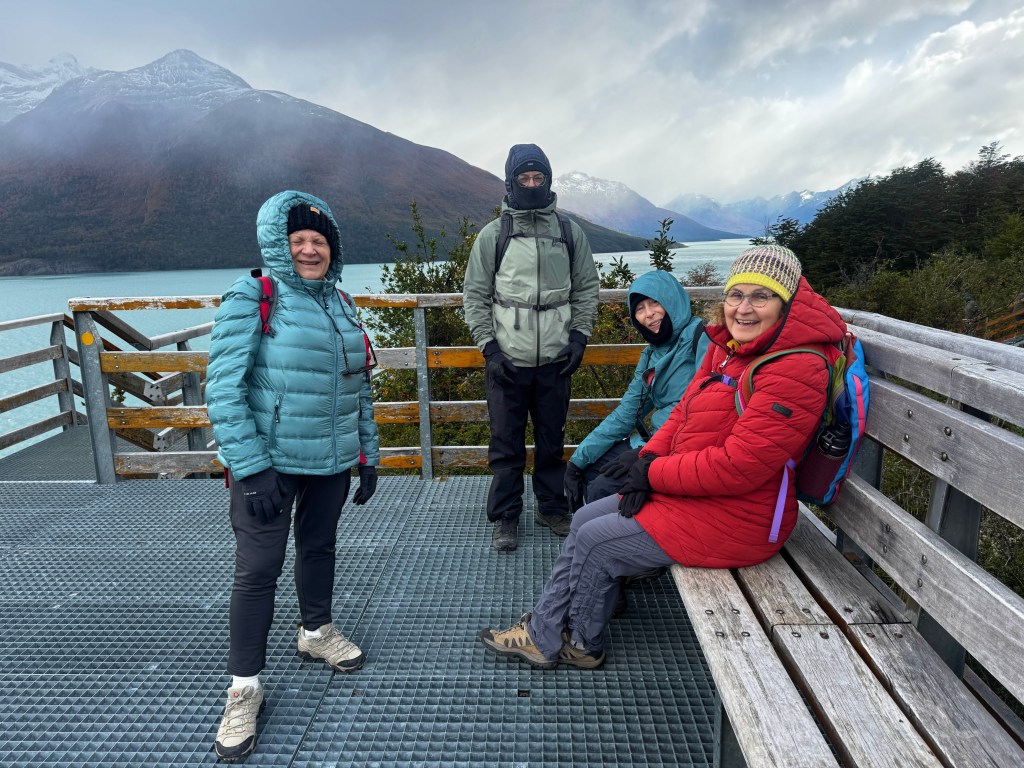
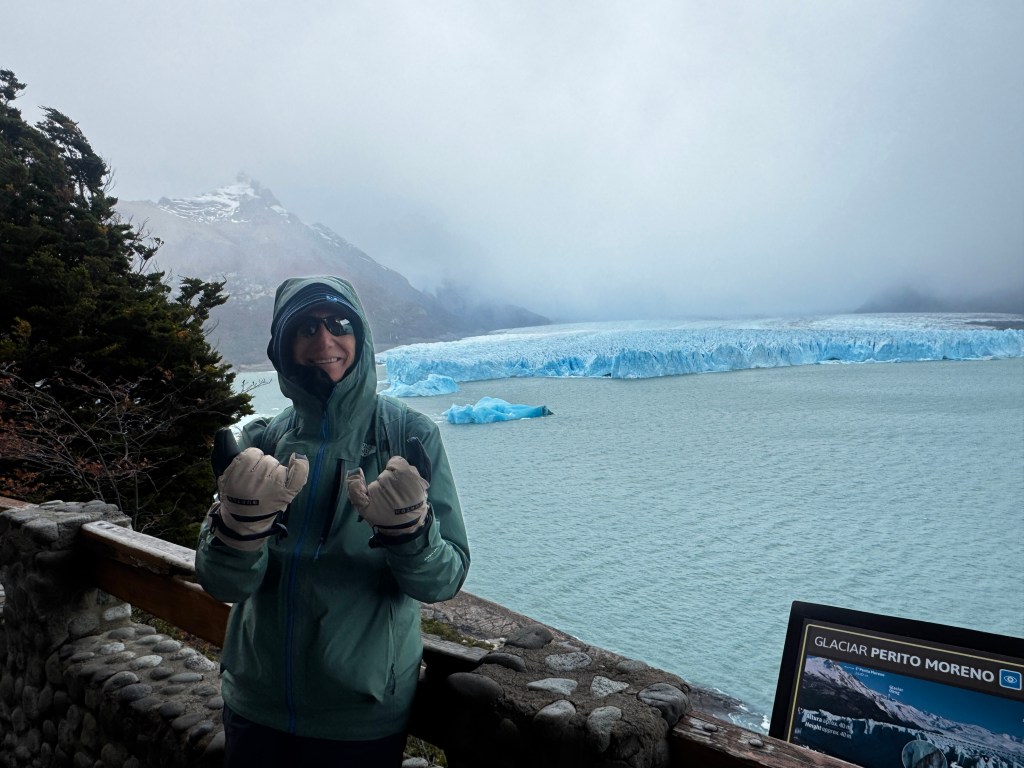
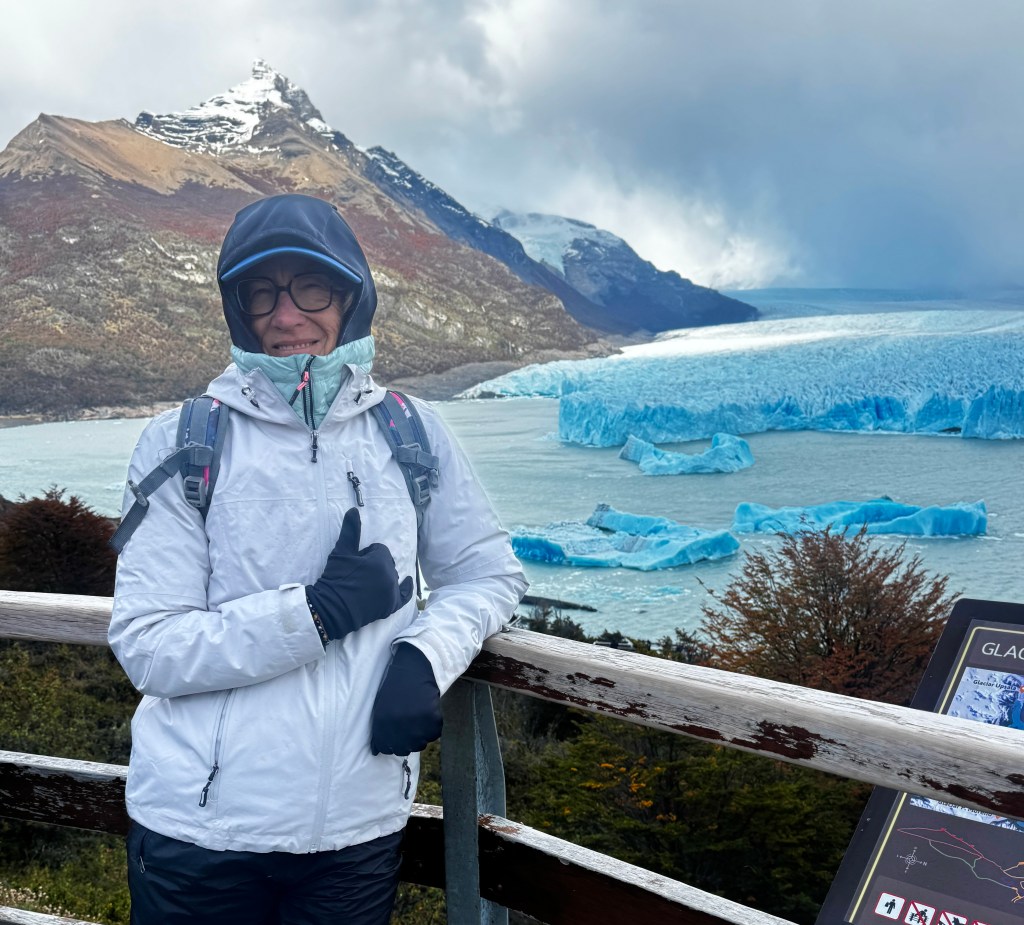
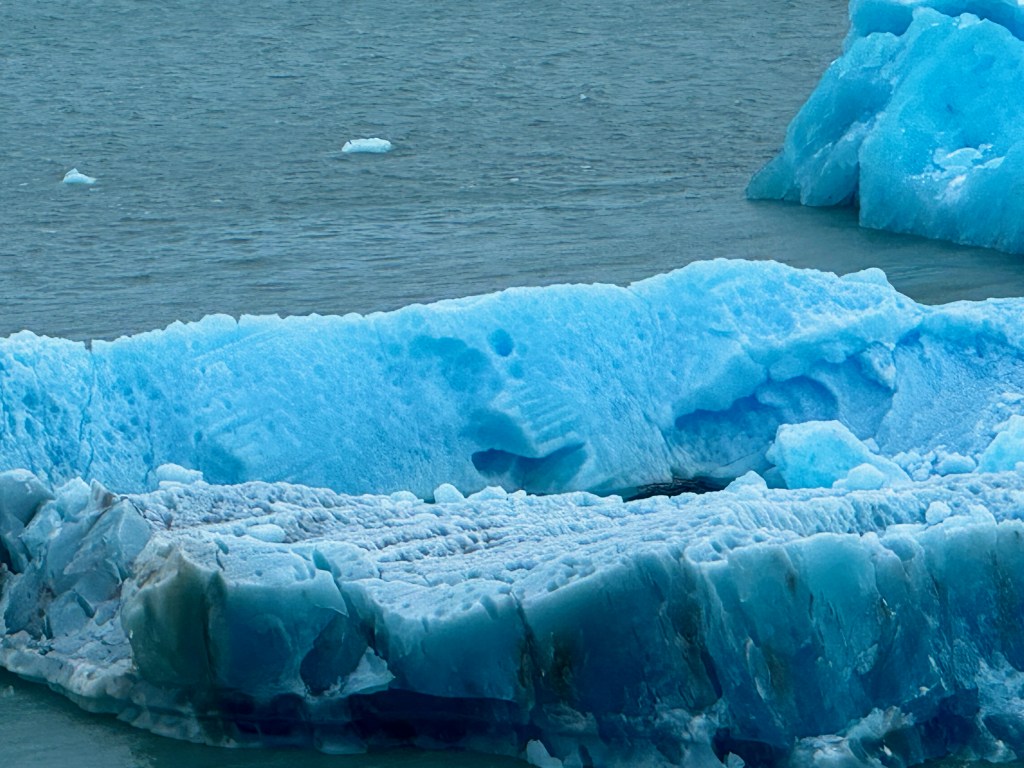
Shifting clouds and fog created ever-changing combinations of sunlight, water, sky, cloud, glacial blue ice. Our jaws just kept dropping.
I took the photos below less than a minute apart.
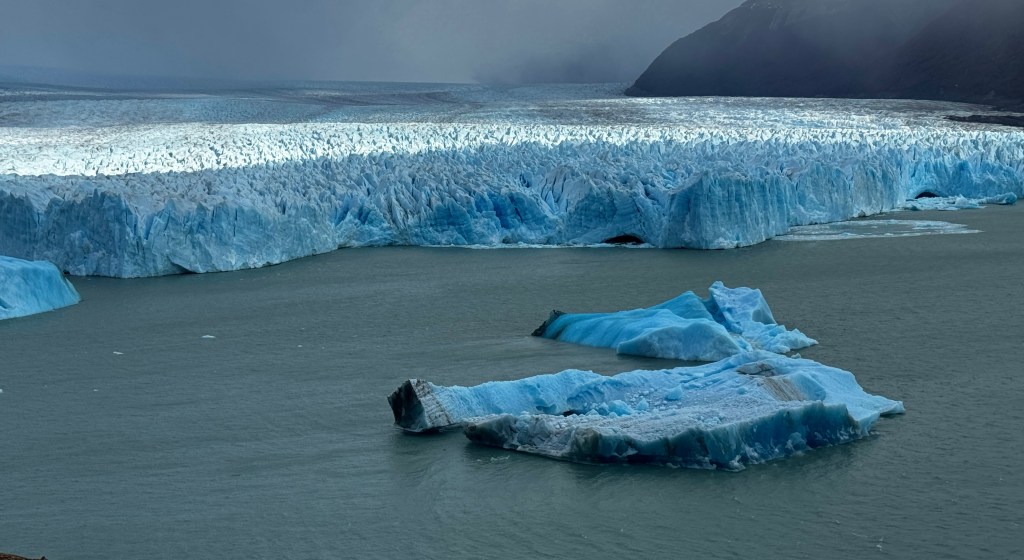
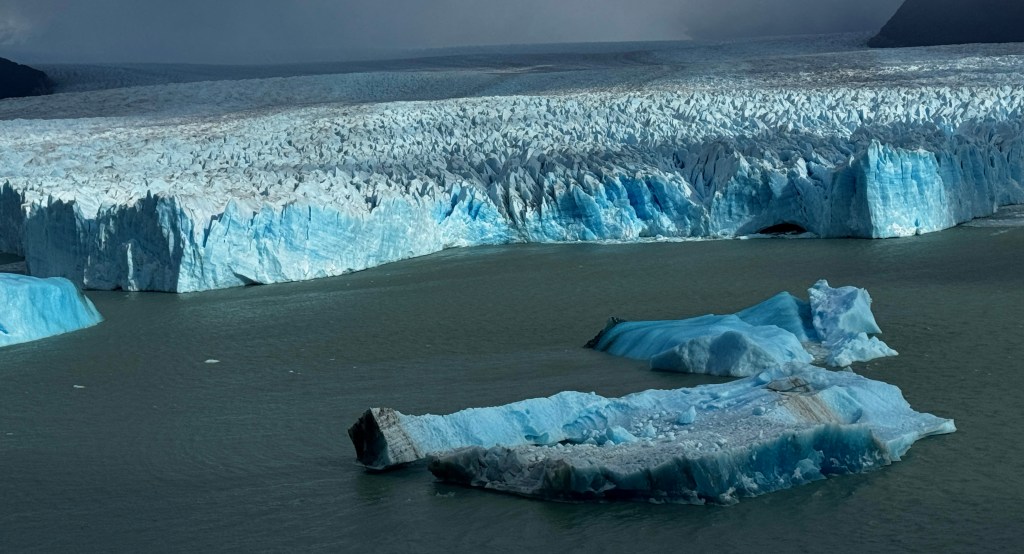
For most of its 18,000-year life, the glacier has expanded and shrunk. It can even dam up part of Lago Argentina (green water upstream), which raises the water level of Brazo Rico (gray water downstream) some 90 feet. After a massive buildup of pressure, followed by melting under the surface, the dam ruptures in dramatic fashion.
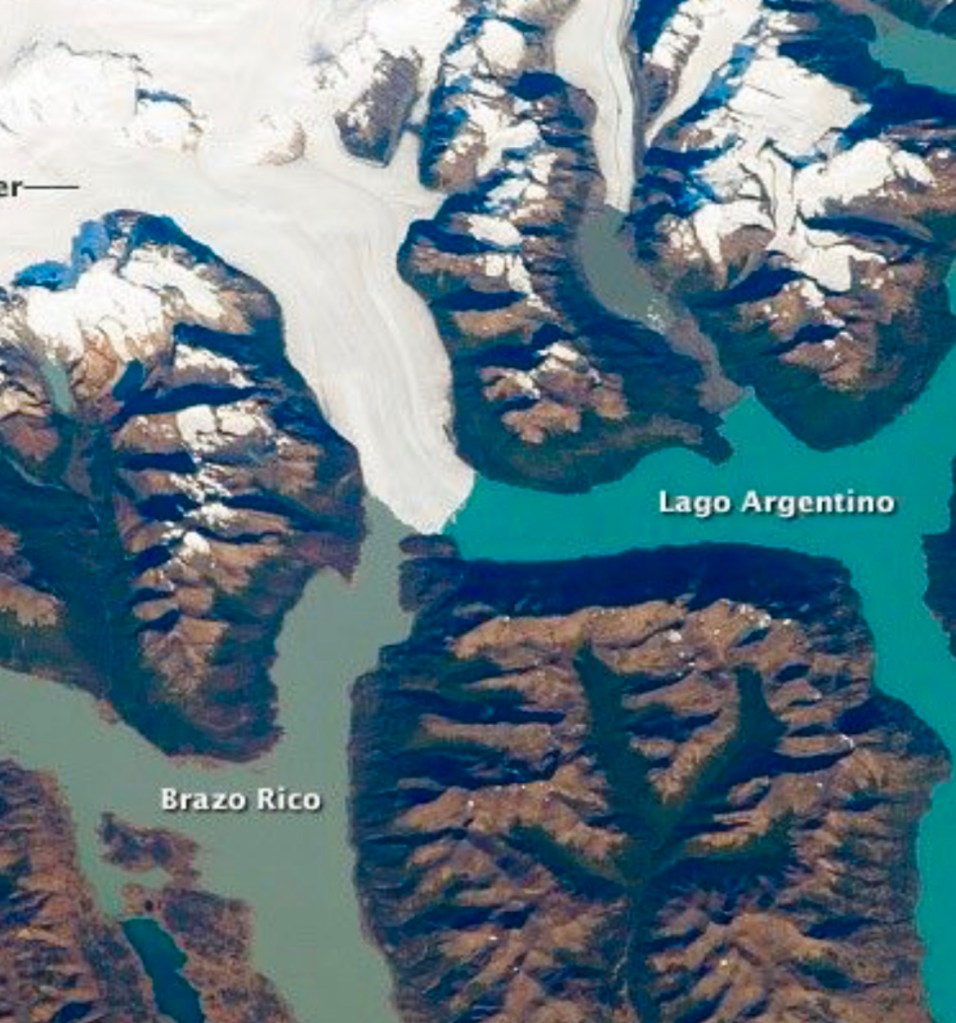
Our photos show how far the glacier has receded from the land. Until the last few years, Perito Moreno glacier held steady while many others shrank. Sadly, it has begun to recede very quickly. The “dam” has not formed since 2012.
Perito** Moreno was a late 19th century Argentinian explorer and scientist who mapped Patagonia and helped secure land in disputes with Chile. Like Teddy Roosevelt in the U.S., Moreno is remembered as an early conservationist who believed in protecting undeveloped lands for scientific research and public use.
**Not Perrito, which is “little dog.” Perito means “expert.”
When Moreno was awarded a large tract of land in recognition for his service to Argentina, he donated 18,500 acres back to the nation. This land served as the nucleus of what became Nahuel Huapi, Argentina’s first National Park.
El Calafate
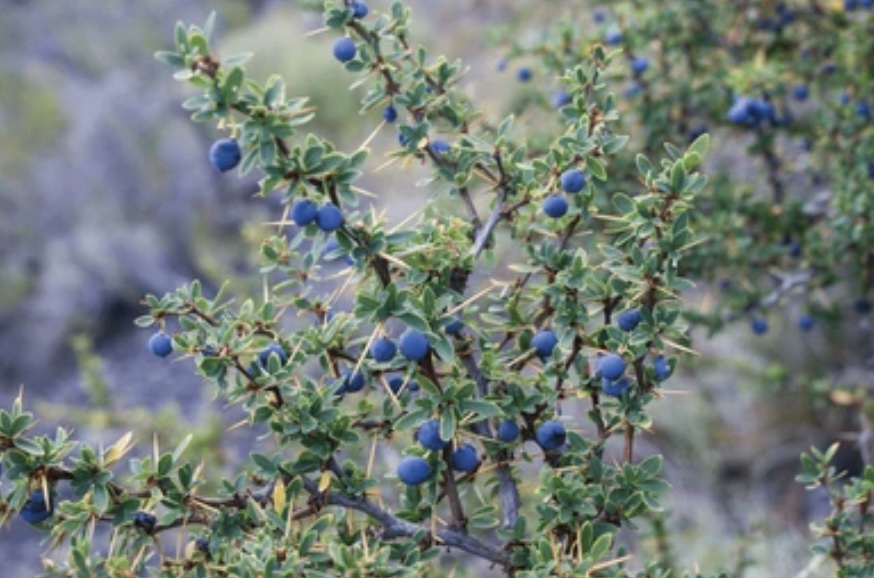
El Calafate, which gave its name to the town, is a small, blue berry that grows on thorny bushes only in Patagonia. Efforts to domesticate calafate for higher production have failed, i.e., have been fruitless…😉, much as with huckleberries or elderberries in the U.S.. Locals treasure el calafate. On our trip, we enjoyed it in jellies, ice cream, and liqueur.
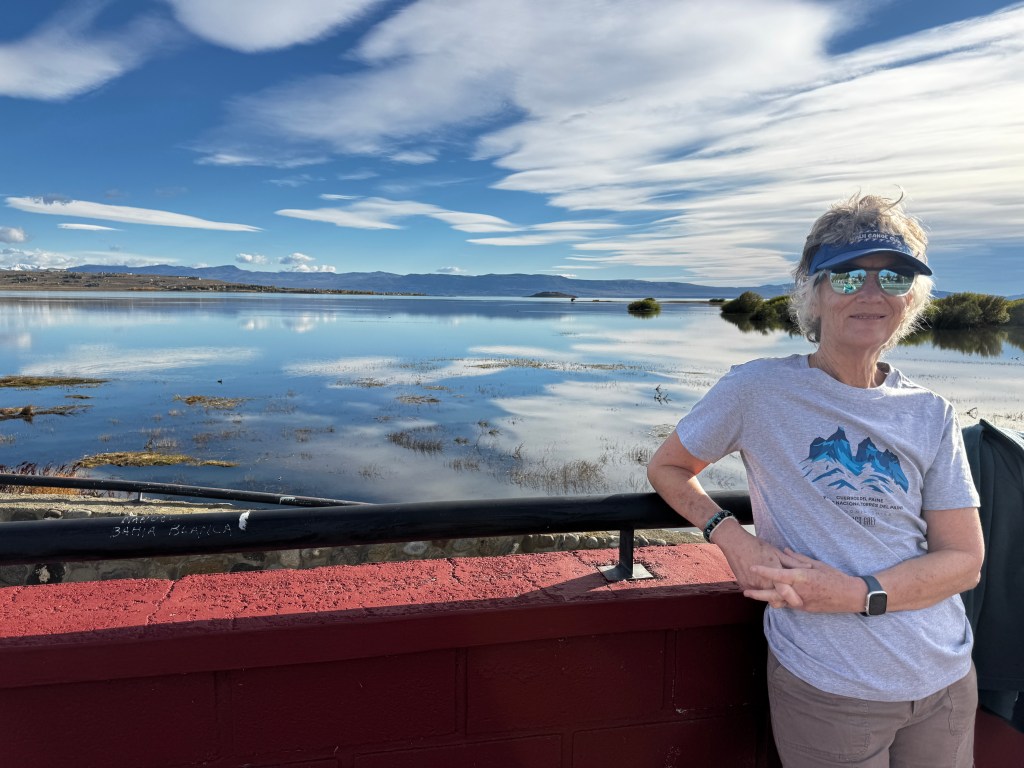
El Calafate is the gateway to the mountains and ice fields of southern Patagonia. It was a town of 2,000 when Caro moved there in the 1990’s. Now, thanks to the airport that brings tourists from the cities, it is home to 30,000 people.
The town sits on the southern shore of Lago Argentina.
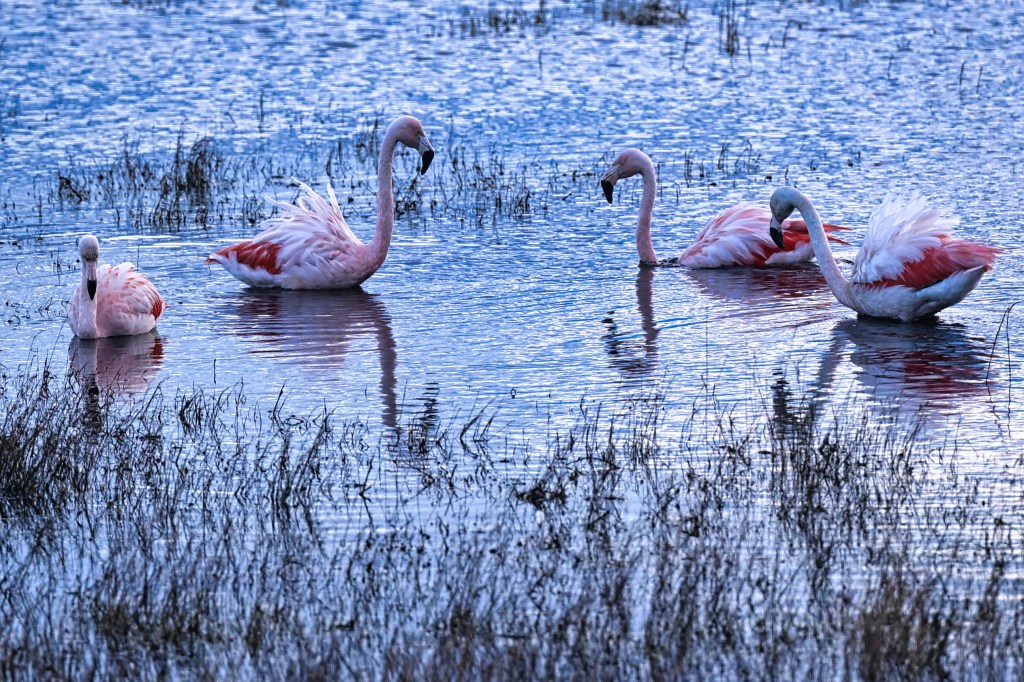
The shores host a population of Chilean flamingos, a cold-weather species. Unlike the all-pink flamingos we saw in the tropical Galapagos Islands, these are mostly white and gray with dramatic pink-orange markings.
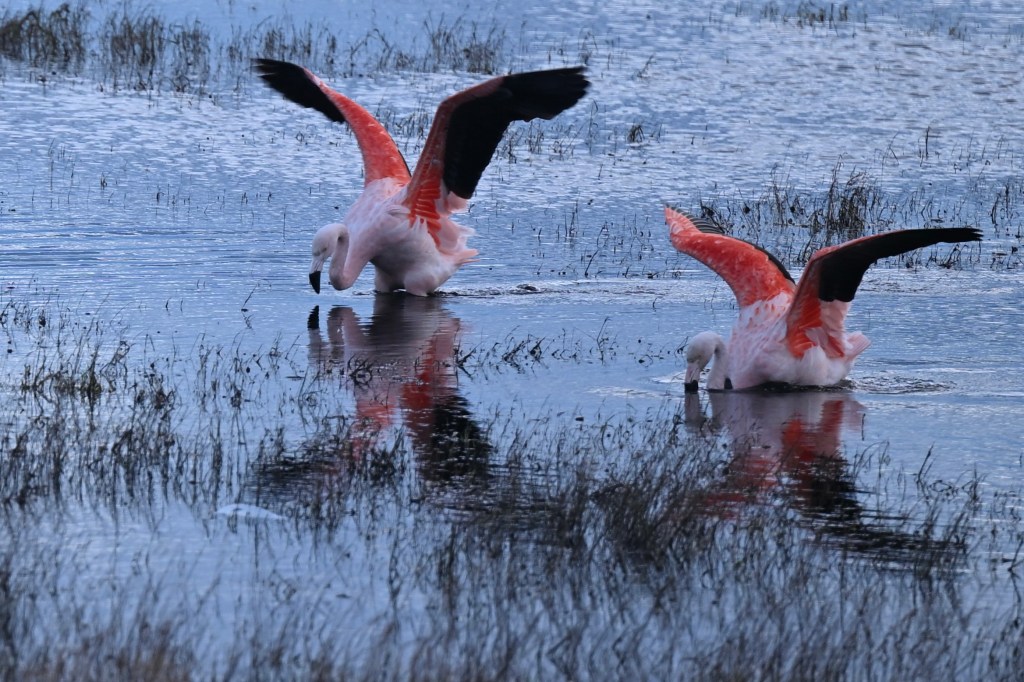
The Heart of Calafate
A Preface – OAT’s practice of home visits
The OAT travel company offers, as a signature activity, home visits with locals. Travelers enjoy family-cooked meals and open-ended conversations.
In Buenos Aires, we had dinner with a brother and sister in their 20’s and learned about their university educations, jobs, and hopes and dreams for their country and their future.
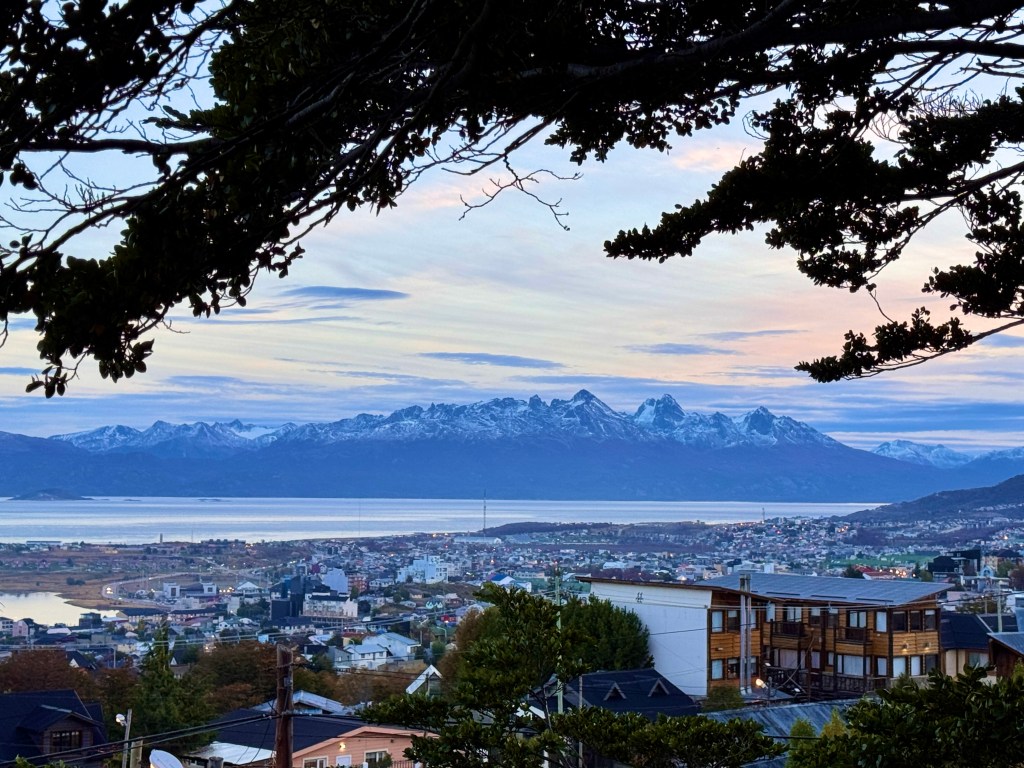
In Ushuaia, we were hosted by friends of Caro’s whose home had an interesting history following the town’s development (see my post on Tierra del Fuego) and offered a broad view of the Beagle channel.
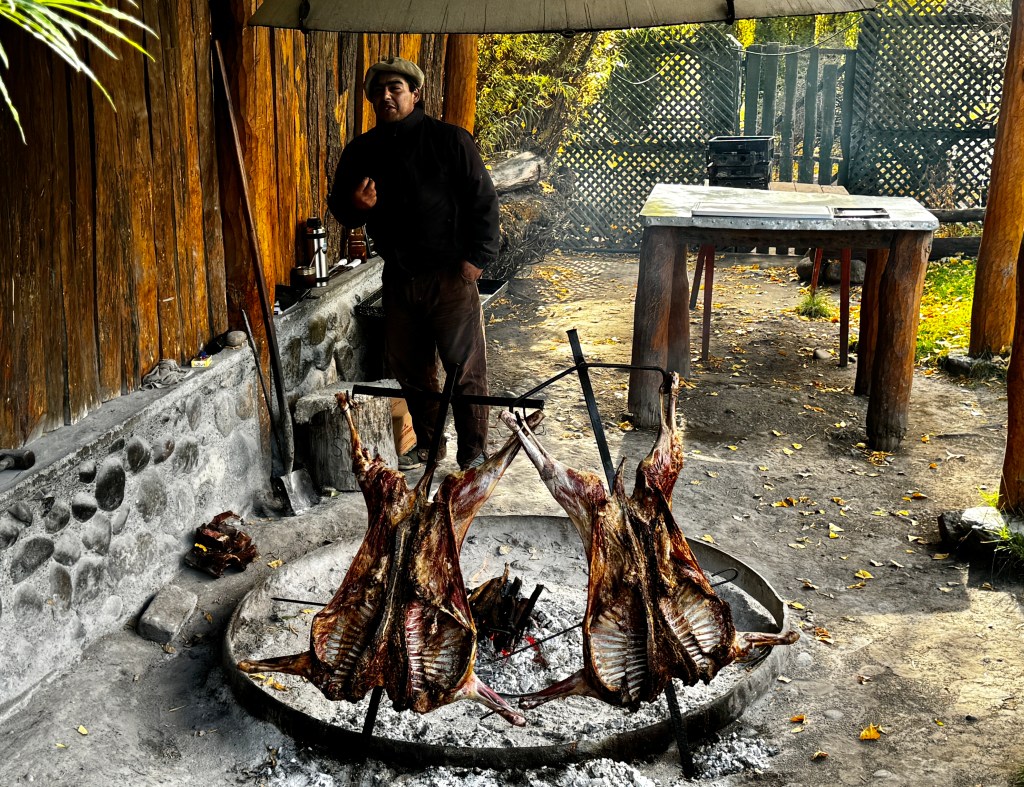
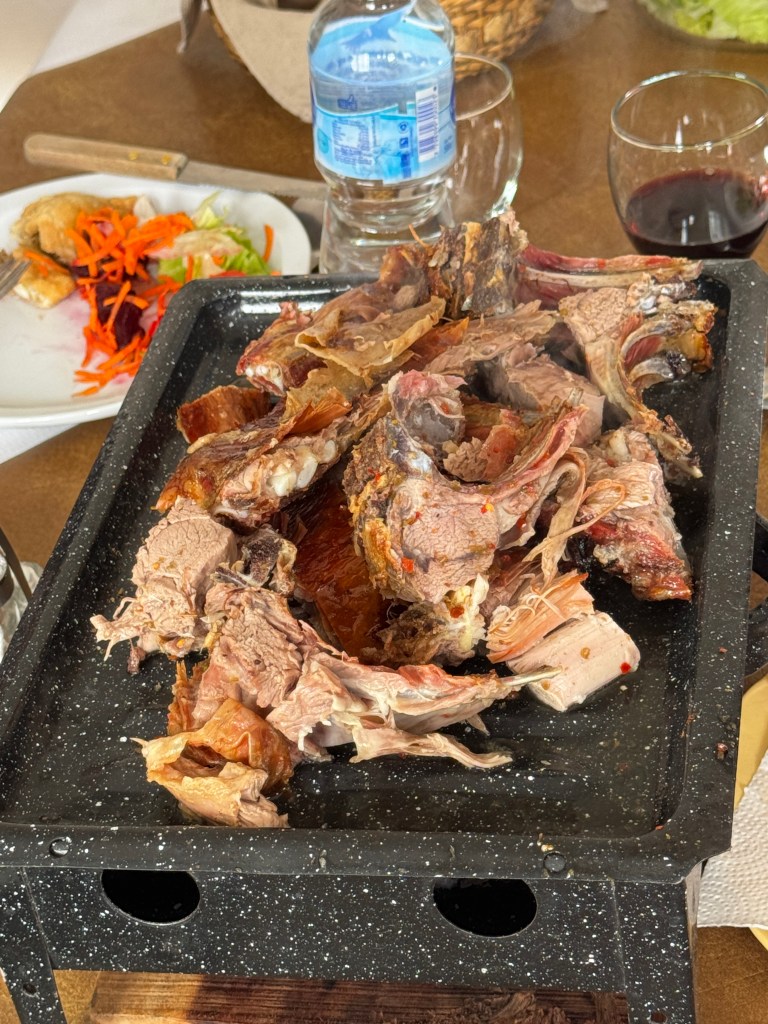
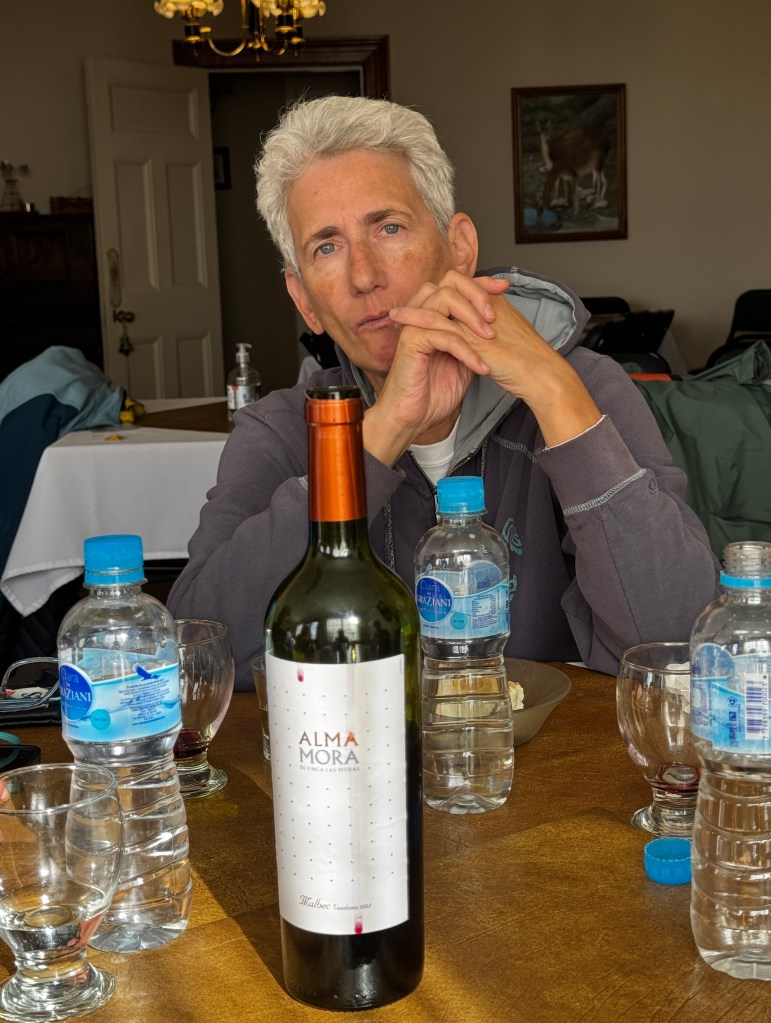
In the steppe, we visited an estancia where Merino sheep are raised for their prized wool. There we watched as a farmhand roasted a recently butchered lamb on the asado a la cruz. After a tour of the shearing barn, we enjoyed the lamb with some Argentinian Malbec.
A Heart-warming Family Meal
The best OAT trip leaders use the formal itineraries the way the best teachers use lesson plans: they prepare, they research, they gather the materials, make all the arrangements…and then they have the willingness and know-how to make adjustments based on conditions and unexpected opportunities.
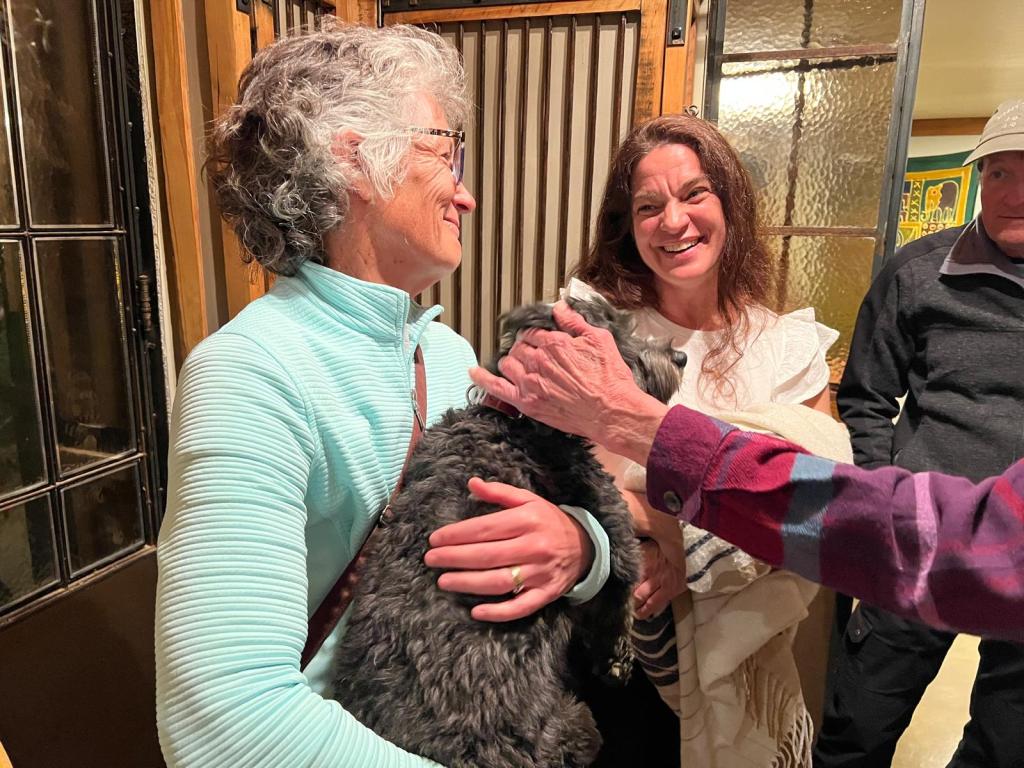
Our group was the last of the tourist season for Caro, our trip leader. Maybe that is why she planned a surprise event: inviting all 16 of us over to her parents-in-law’s home for dinner!
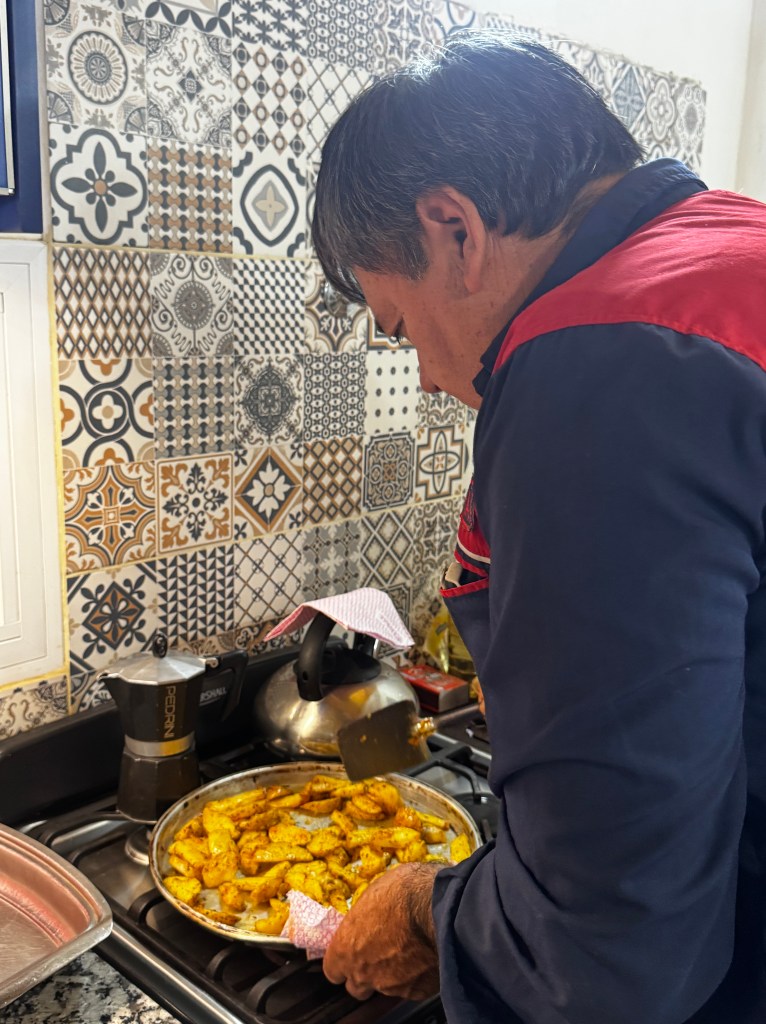
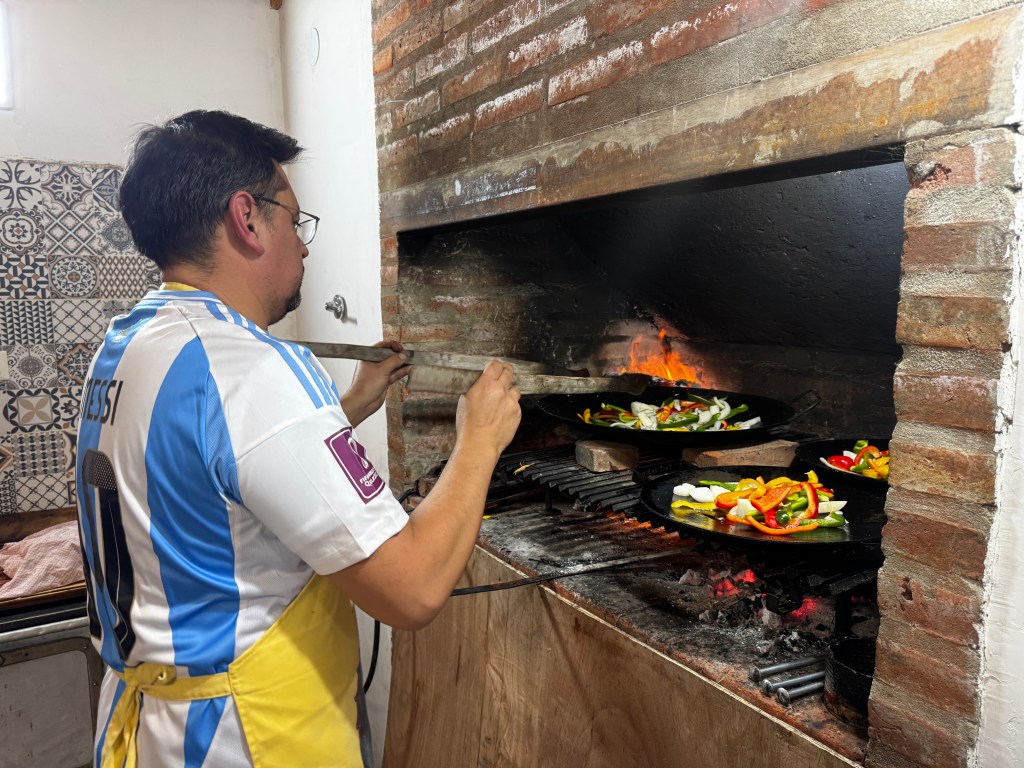
While we chatted and drank Malbec (a theme of the entire trip), Caro’s husband Juan and the whole of his family, along with son Cano, roasted papas, and cooked carne and pimientos on the asado.
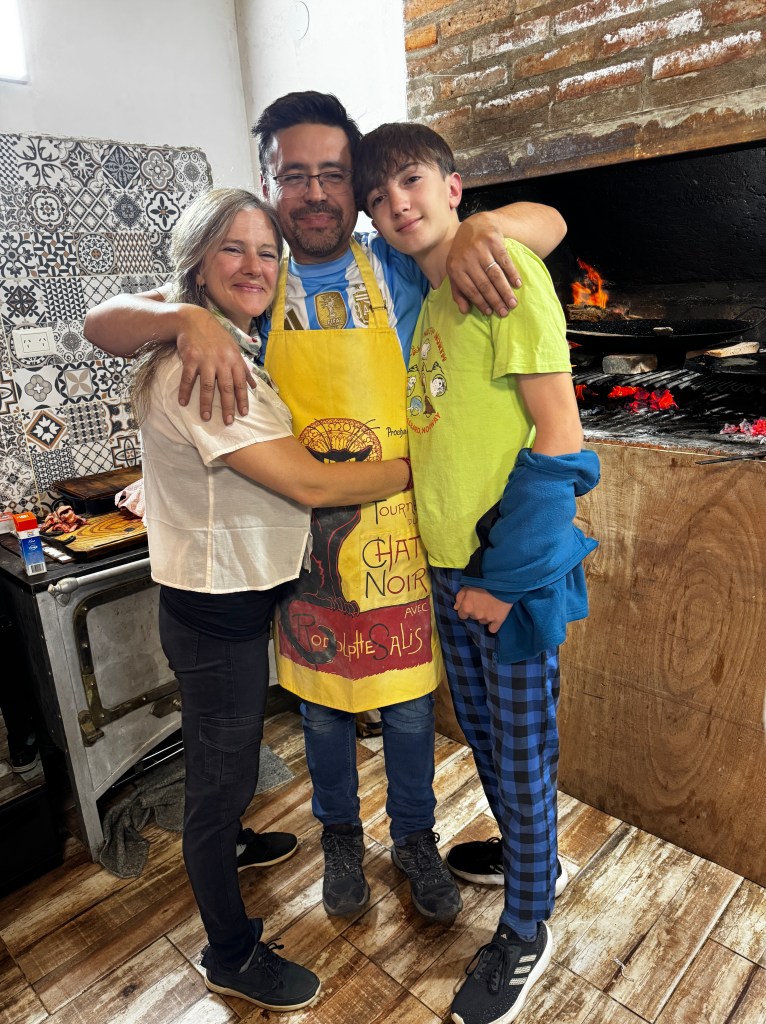
This personal, incredibly generous gesture by Caro and her family tied all the threads of our Patagonian experience together. The passion with which she and the other guides shared their eye-popping landscapes, and the love they feel for their country through thick and thin, and their devotion to their families’ well-being – they poured this positive energy and joy into sharing their world with us.
This was the heart of Patagonia.
 All play and no work
Leave a comment