
Before traveling to Argentina, I equated gauchos with cowboys, a piece of South America’s history now romanticized. To a certain extent this comparison held true. Gauchos represent toughness and self-reliance the way cowboys reflect the “rugged individualism” valued in American culture.
But I learned that gauchos mean more to Argentinians: the gaucho spirit carries a moral weight – always courageous, sometimes tragic – regarding resistance to unjust authority.
But first…Let’s ride with some 21st century gauchos!
Our OAT itinerary included a horseback ride on a cattle ranch (“estancia”) in Chile’s Torres del Paine national park. Having grown up riding horses, I had low expectations for a “dude ranch” trail ride. But we had a great time!
A flag-carrying gaucho on a flashy gray Arabian greeted our bus at the entrance. That beautiful gait!
**If this or any other video does not play, click on the “Read on Blog” link on the upper right of the email.
The Arabian was the exception to the rule. Soon a second gaucho on a Cruillo picked us up. The Cruillo is the classic gaucho horse, as the quarter horse is to the American cowboy. Super tough and heavily muscled.
Four riders in all greeted us. They are young people who go to college in Buenos Aires part of the year and work as gauchos and tour leaders on the ranch part of the year. Drought in Patagonia has caused estancias to shrink their herds; this ranch enhances the income with tourism.
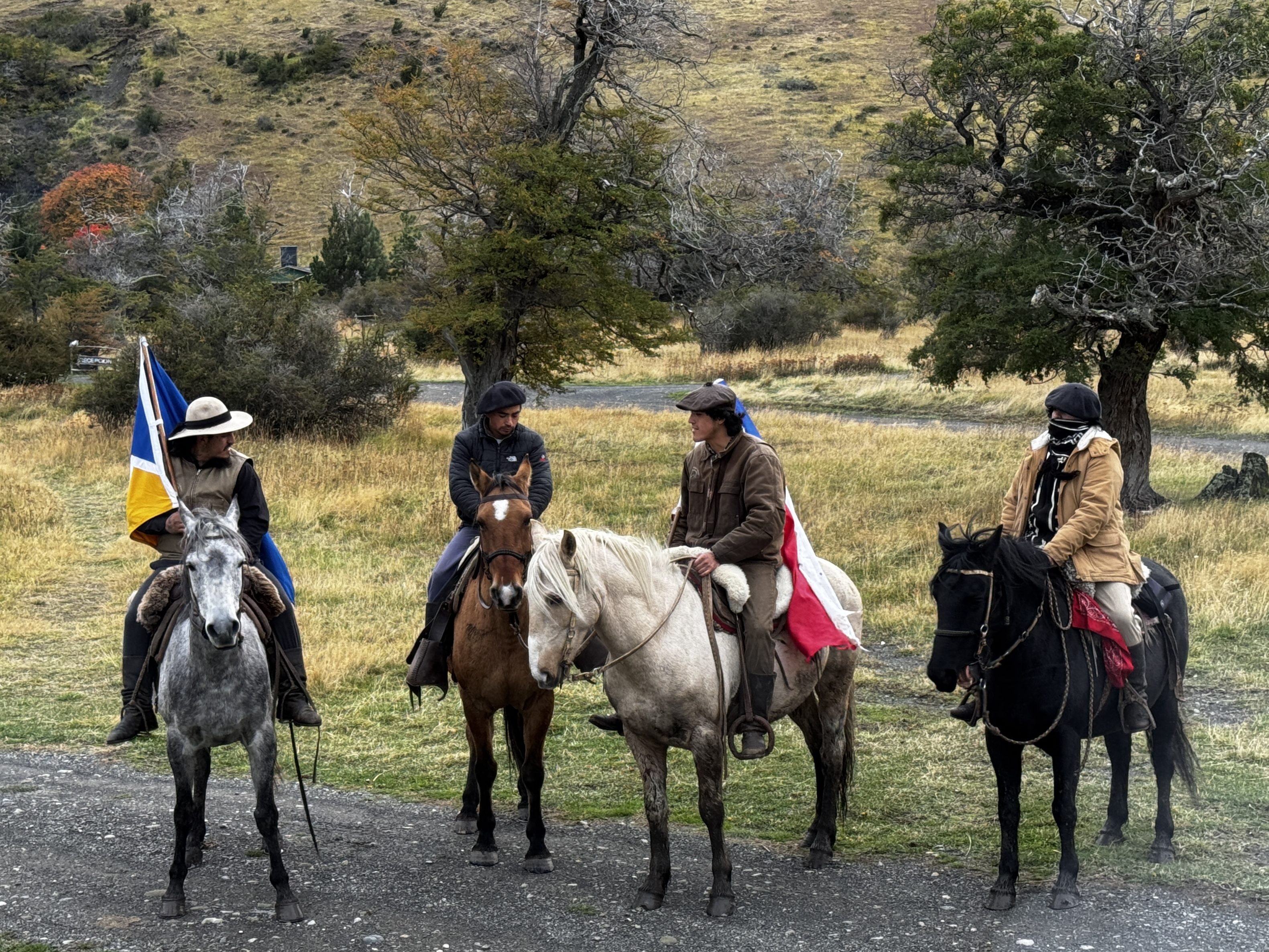
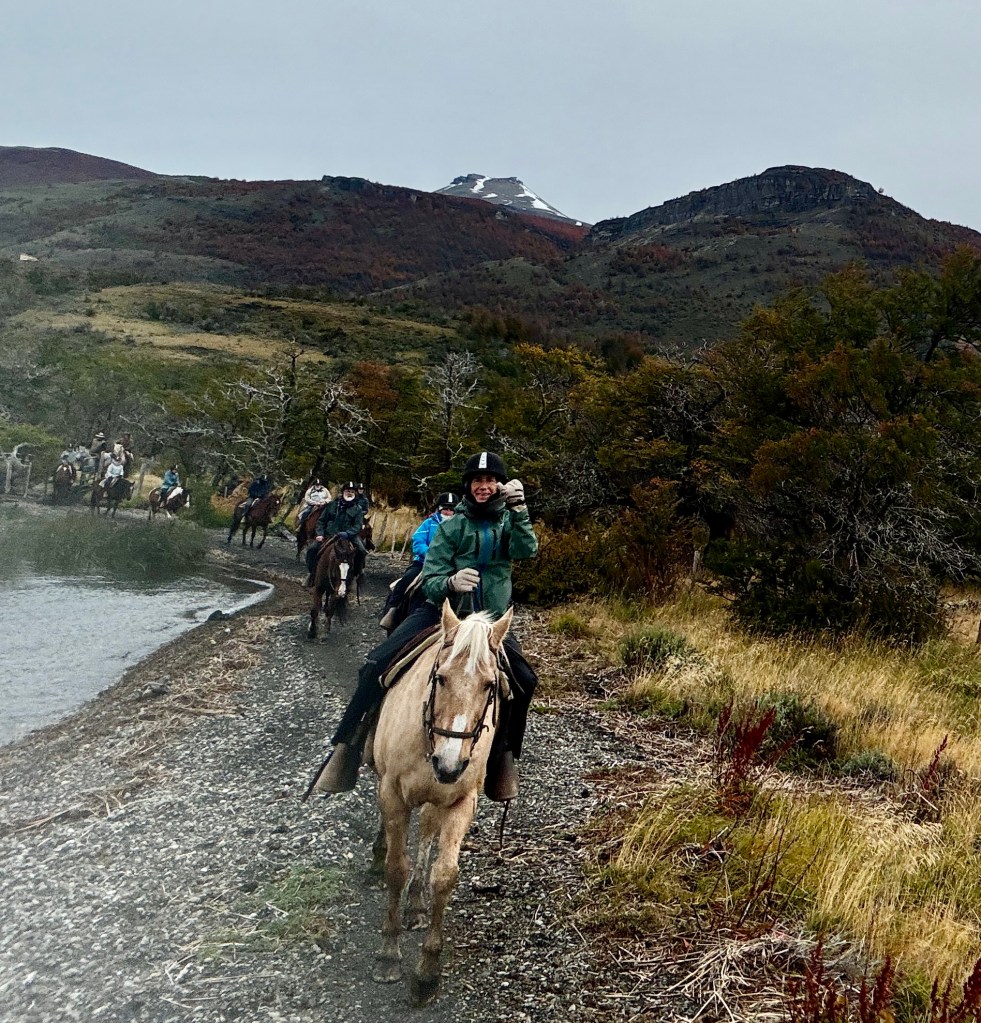
These 21st century gauchos mounted us up and took us out for a couple of miles. We started with a river crossing – relying on the horses to find their way down the steep bank, cross the water and scramble up the other side – and then walked along a glacial lake.
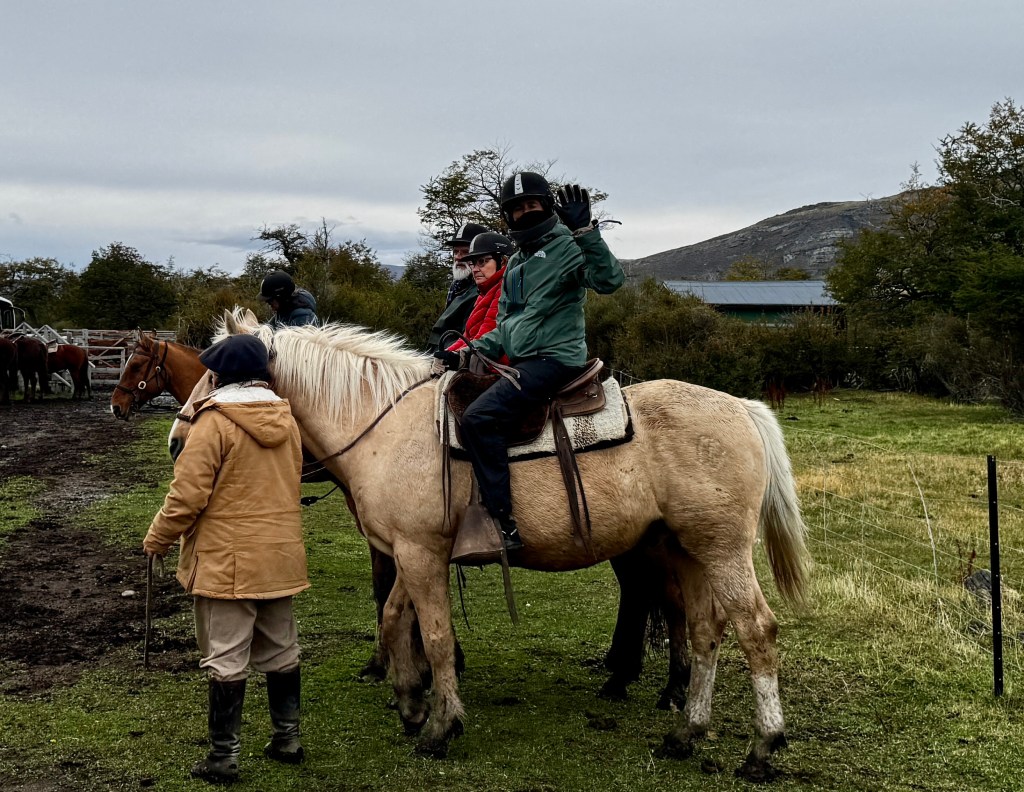
The Cruillos were easily ridable but unlike some dude ranch horses, these expressed their own ideas by angling for position in the line or ducking off the trail for grass. One horse even decided to GET DOWN AND ROLL! Fortunately, its rider – “I’m not a horse person,” she said – had the presence of mind to step off!
We were the last tourists of the season. I’m sure the horses were tired of the likes of us. But for me, sitting a strong horse in a gorgeous landscape felt perfect.
The first gauchos: “Feral men”
Our guide referred to the original gauchos as “men who had gone from tame to feral.” This was in the 16th and 17th centuries when men emigrated from Spain as herds of cattle and horses expanded across the vast pampas.
Spanish men who found girlfriends among the indigenous groups were rejected by Spanish society, and so were their mixed-race sons. The indigenous peoples rejected many of them also. Thus shorn of social membership, away they went to live off the land, nomadic and alone. Because cattle were among the game they hunted and horses among the goods they pilfered to stay alive, these first gauchos were considered vagrants.
I’m always curious about words. Where does “gaucho” come from? According to google AI, historians link the word “gaucho” to a number of indigenous, Portuguese, or Arabic words. The most popular theories are that it comes from the Quechua word huachu or watcha, meaning “wanderer” or “orphan” ; or from the Araucanian/Machupe word cauchu, for for “wanderer” or “man without a home.” These etymologies affirm the lonely, nomadic life of the “feral man.”
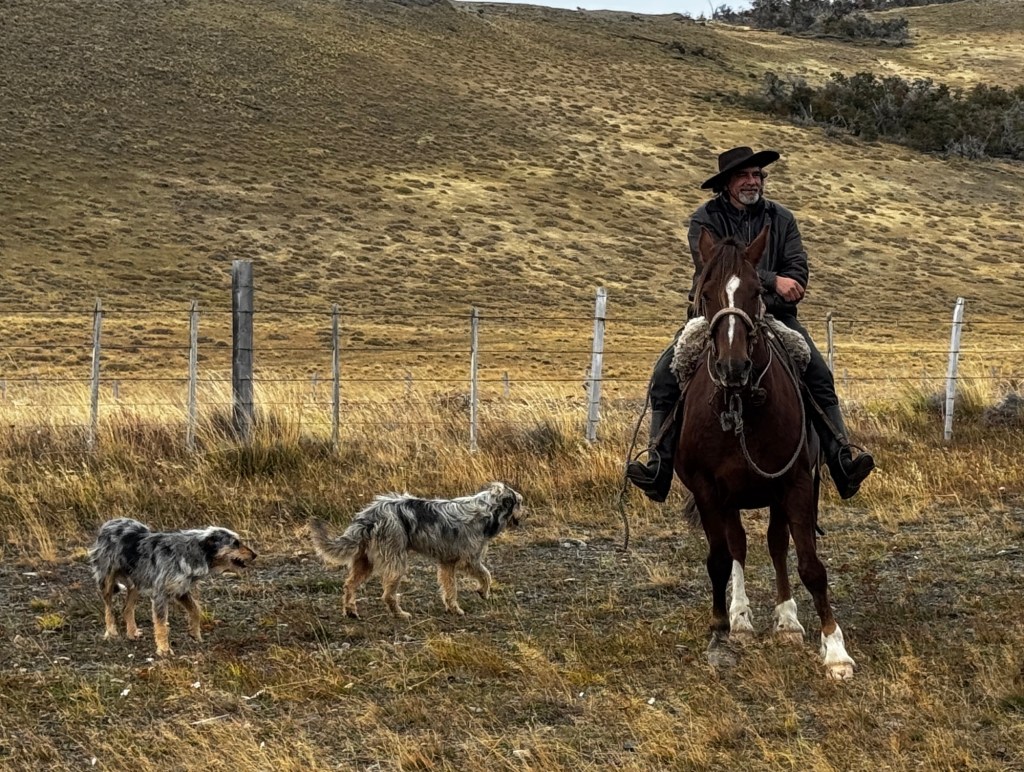
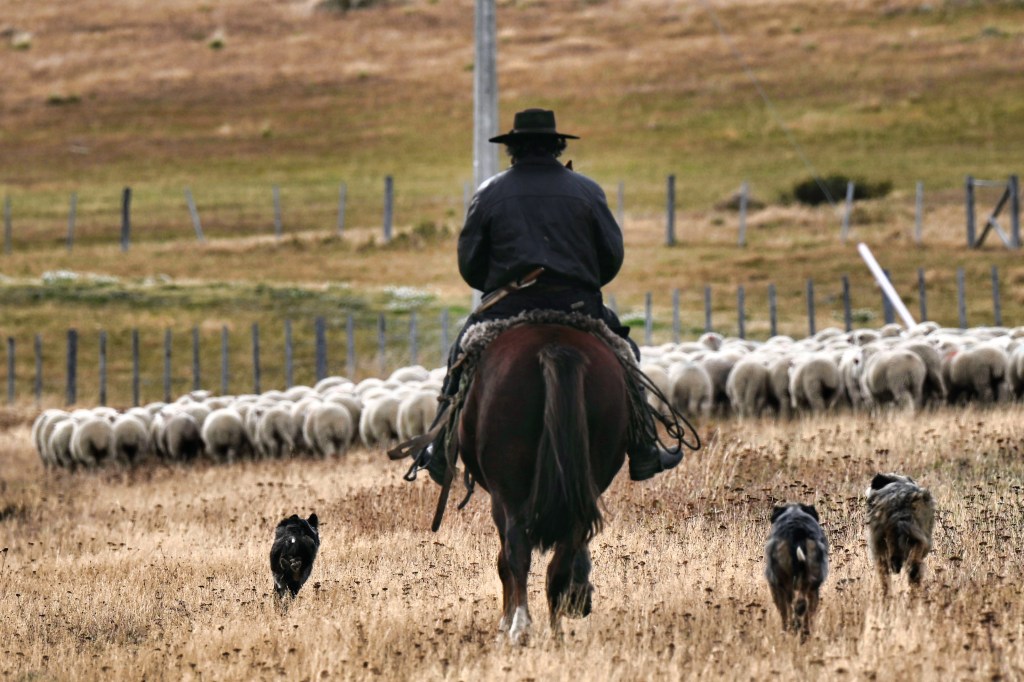
Gauchos’ fame as superior horsemen, hunters, and herders eventually superceded their reputation as vagrants . When land was divided into estancias in the 1800’s, gauchos were hired to run the herds, just like the vaqueros and cowboys farther north.
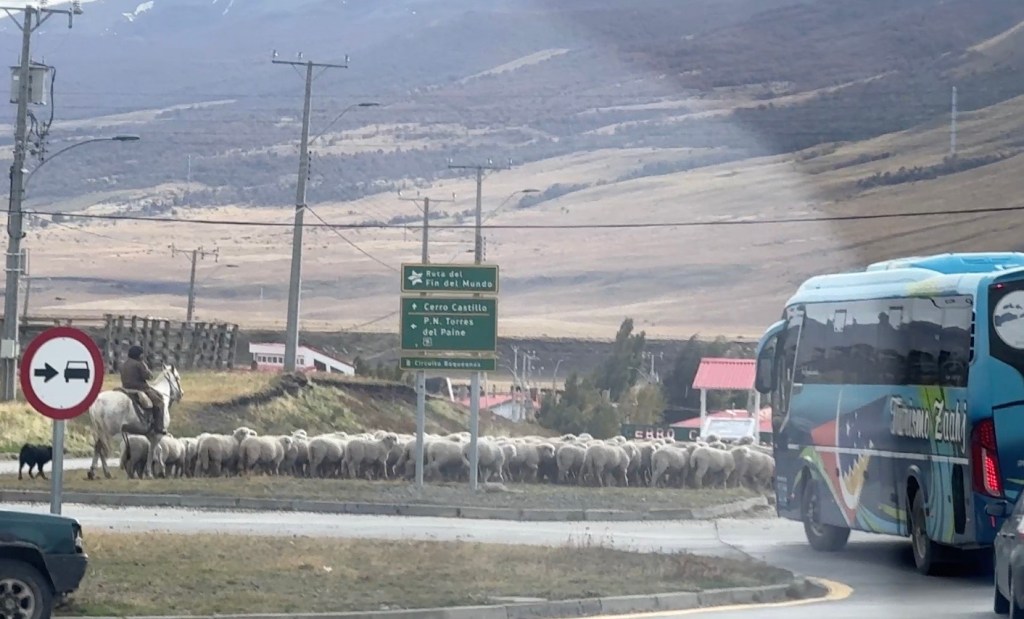
In the dry steppe of southern Argentina, gauchos herd sheep; in the grassier pampas of central Argentina, they herd cattle.
Gauchito Gil, secular saint
In the US we’ve had Buffalo Bill, John Wayne, and the Marlboro Man to carry on the cowboy mythology. Argentina reveres a more profound figure: Gauchito Gil, a national hero considered a saint.
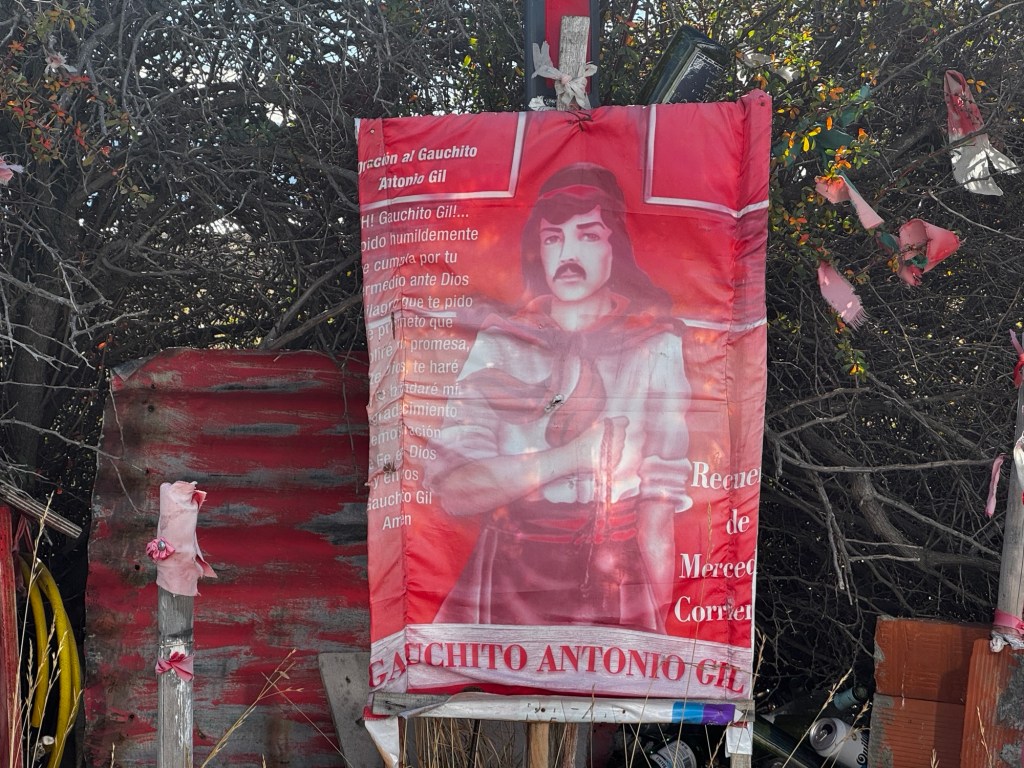
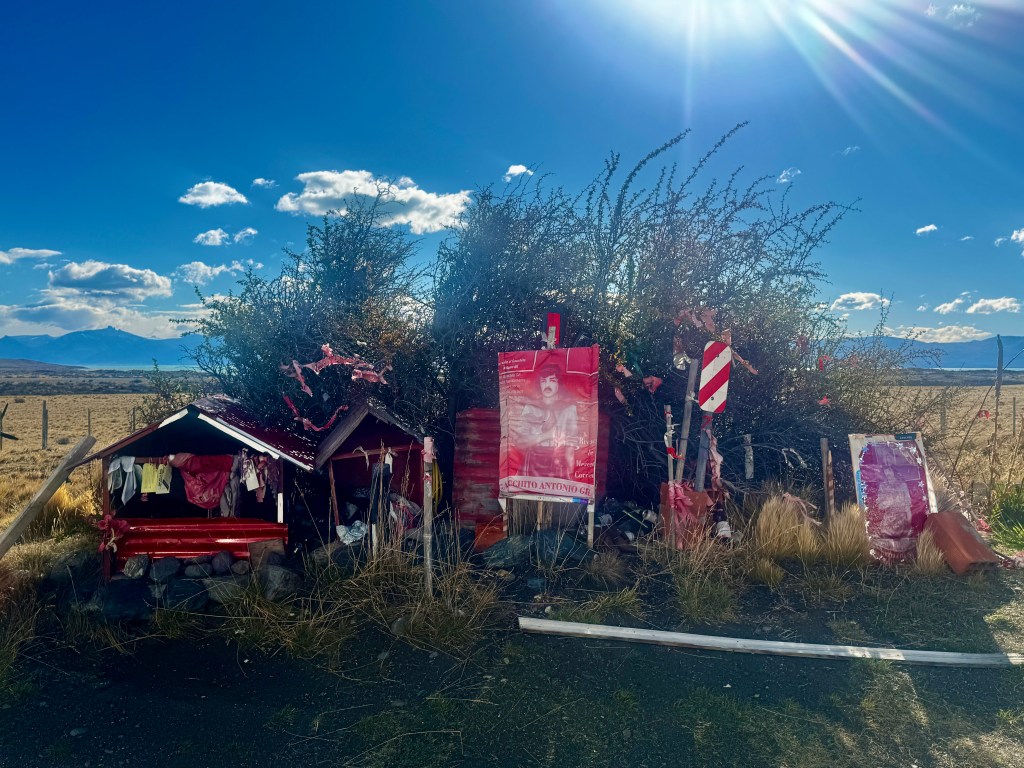
On a drive through the vast Argentinian steppe, we stopped at a road-side shrine, one of 16 shrines that our guide, Caro, knows of in that area. It has all the key elements: Gauchito’s portrait in his signature red color, flags and shelters, offerings of cigarettes and beer for Gil on his journey.
There is also an accumulation of items – clothing, boots, letters, name tags – left by travelers asking for Gil’s healing or protection. The reverence is real.
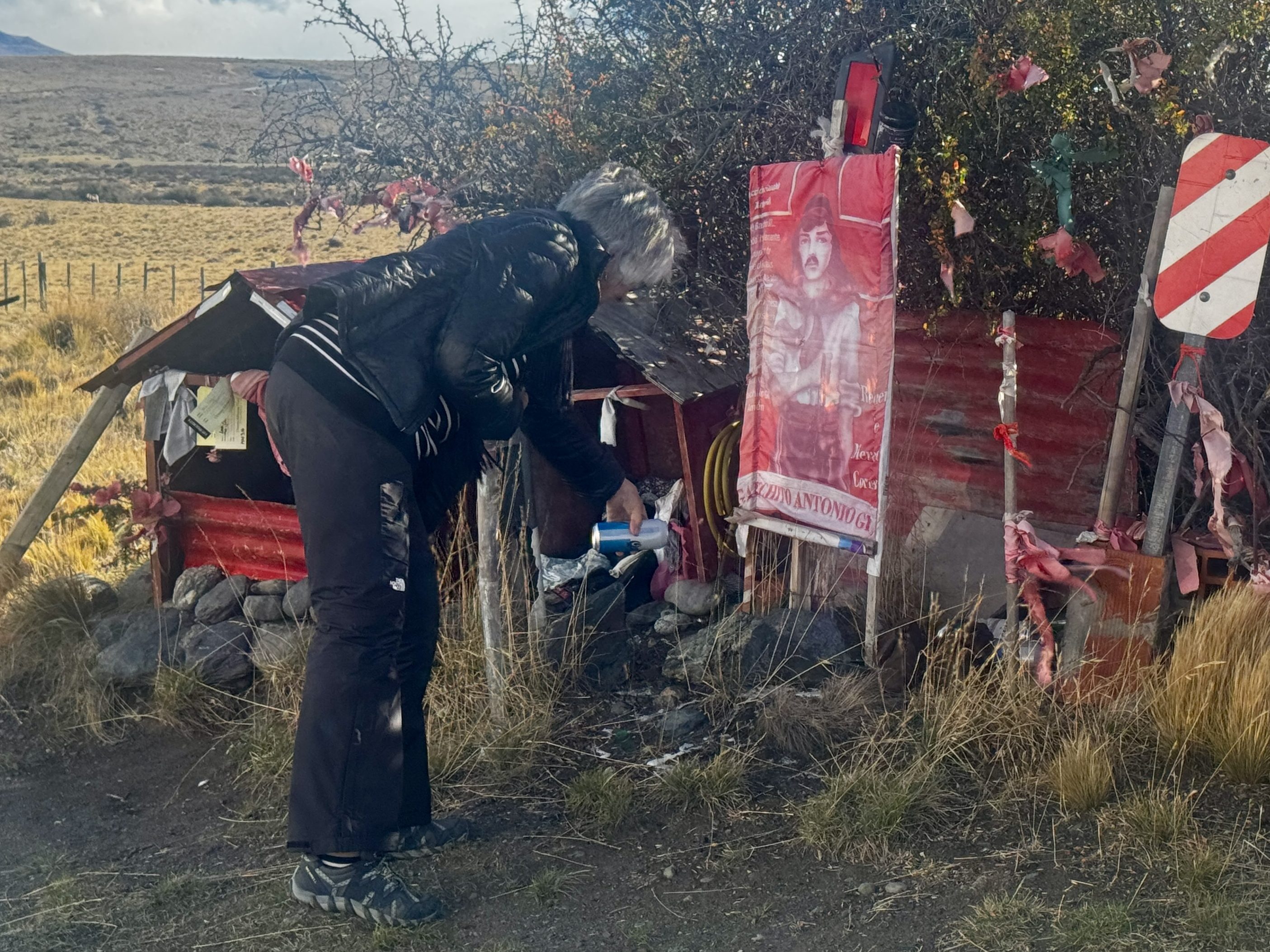
We took turns pouring a can of beer on the ground in front of Gil’s portrait while we learned the story:
The legend of Gauchito Gil
Antonio Gil was a gaucho who had an affair with a wealthy widow. The chief of police also loved her. He and the widow’s brothers accused Gil of robbery and tried to kill him. He escaped by joining the army and fighting against Paraguay, thinking this would restore his good name back home. However, Gil was then forced to fight in the Argentine Civil War. Seeing the war as unjustified “brother against brother,” he refused to fight and he deserted. The policeman eventually caught him, tortured him, and hanged him upside down from a tree.
As Gil was about to be killed, he said to the policeman, “Your son is very ill. If you pray and ask me to save your son, he will live. If not, he will die.” The policeman then killed Gil. This was January 8, 1878.
When the policeman went back to his village, he saw his son was deathly ill. He prayed to Gauchito Gil, and his son miraculously recovered. He then gave Gil a proper burial and made a sanctuary for “Gauchito.”
To this day, Argentinians hold celebrations of Gauchito Gil on January 8. Besides asking Gil for protection, they revere him as a symbol of resistance to unjust police authority & government coercion.
 All play and no work
Leave a comment