
Cabo del Horno
Standing on the last outcropping of South America and looking toward Antarctica is amazing and surreal. It is also windy! As the Ventus Australis ship approached the island, wind speed was close to the 30-knot limit for safety set by the captain.
After a short, choppy zodiac ride, we climbed the 100+ stairs built up the cliff face and then, leaning into the rainy wind, walked up the raised walkway to the monument.
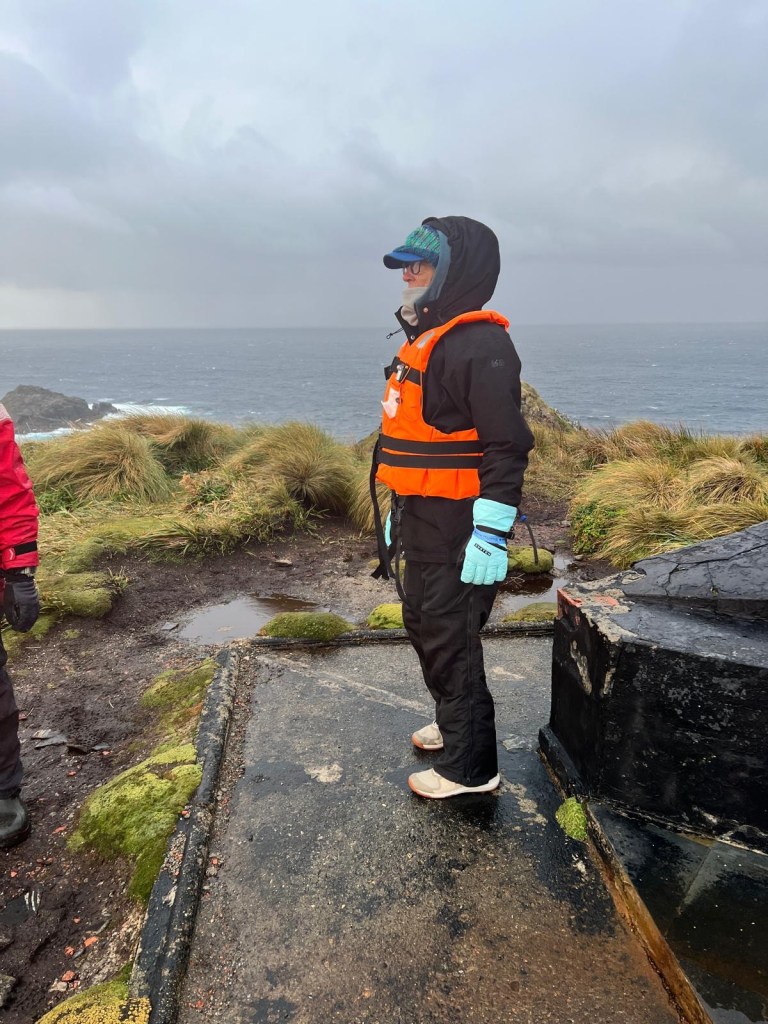

I imagined myself as a speck, a microscopic worm swaddled in layers of clothing keeping me alive, clinging to the tip of a hunk of the earth too vast to comprehend.
Amy later talked about the gratitude that she felt for all of it…how we could be brought to this place, how we could walk and breathe and see and feel the power of nature so close to the end (and the beginning) of the world.
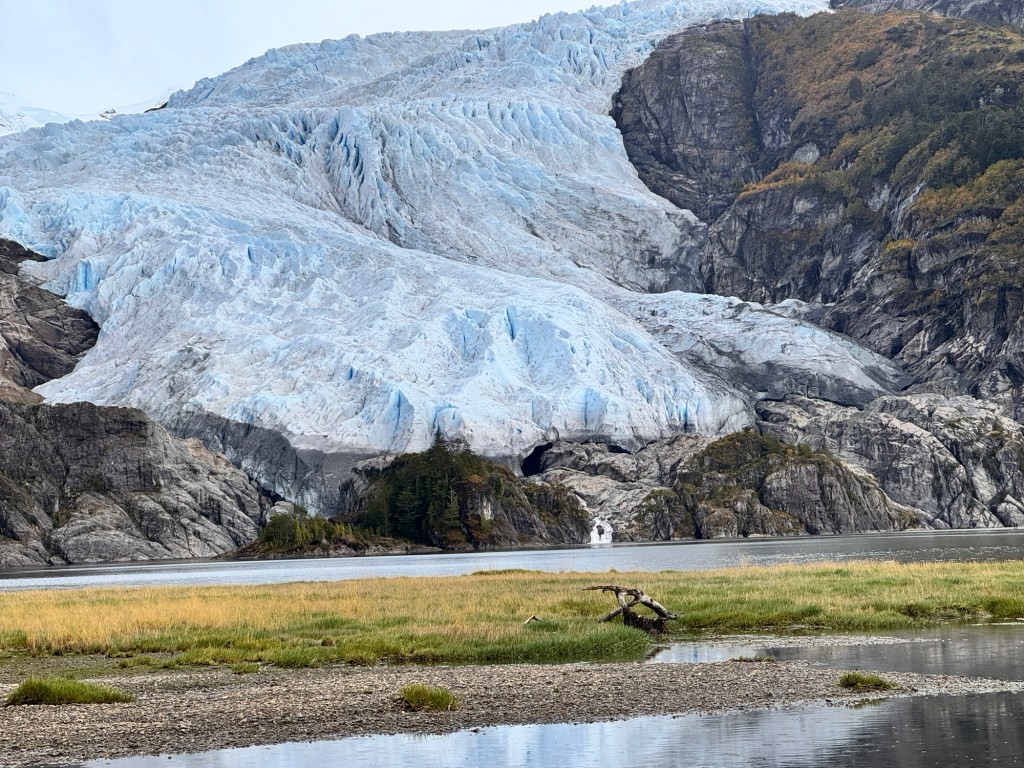
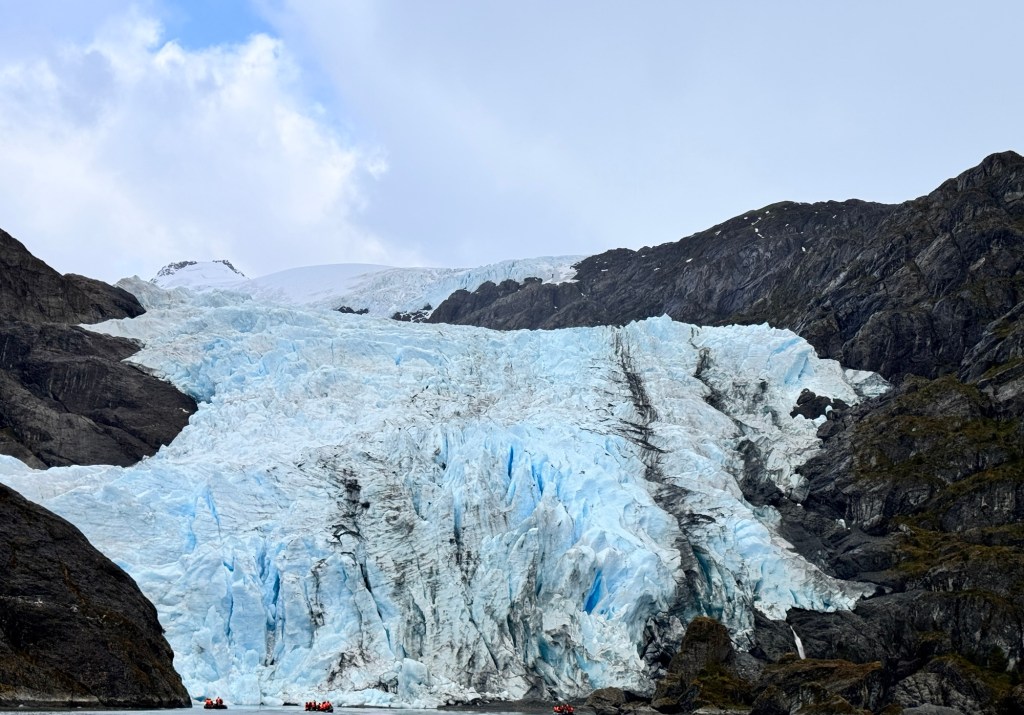
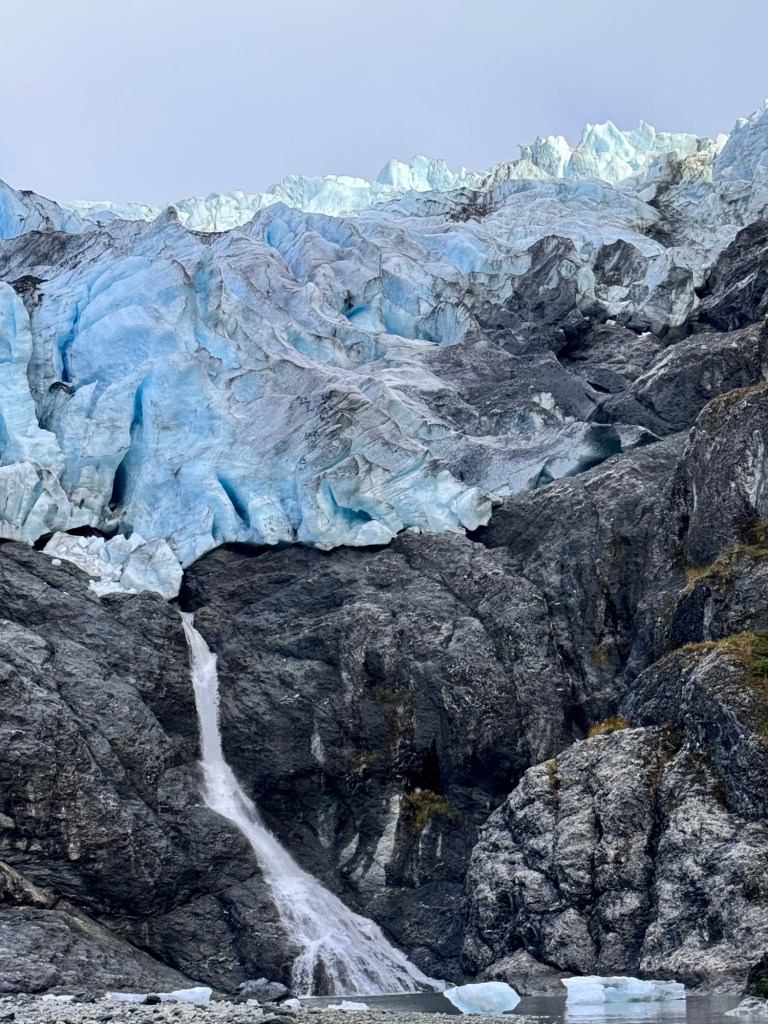
Glaciers of the Chilean fjords
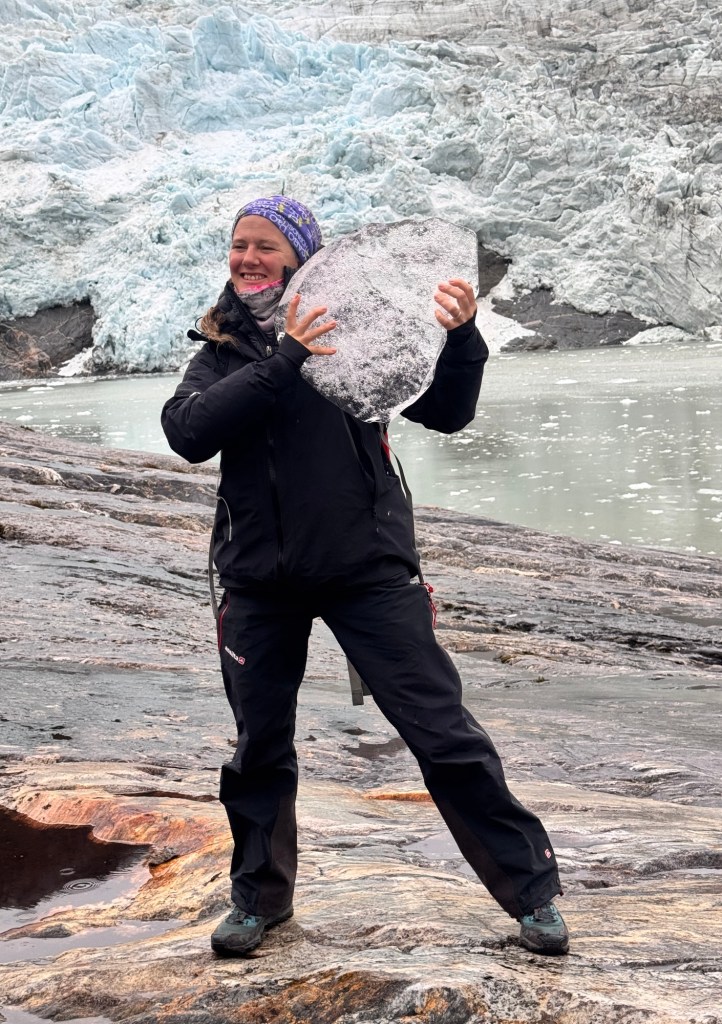
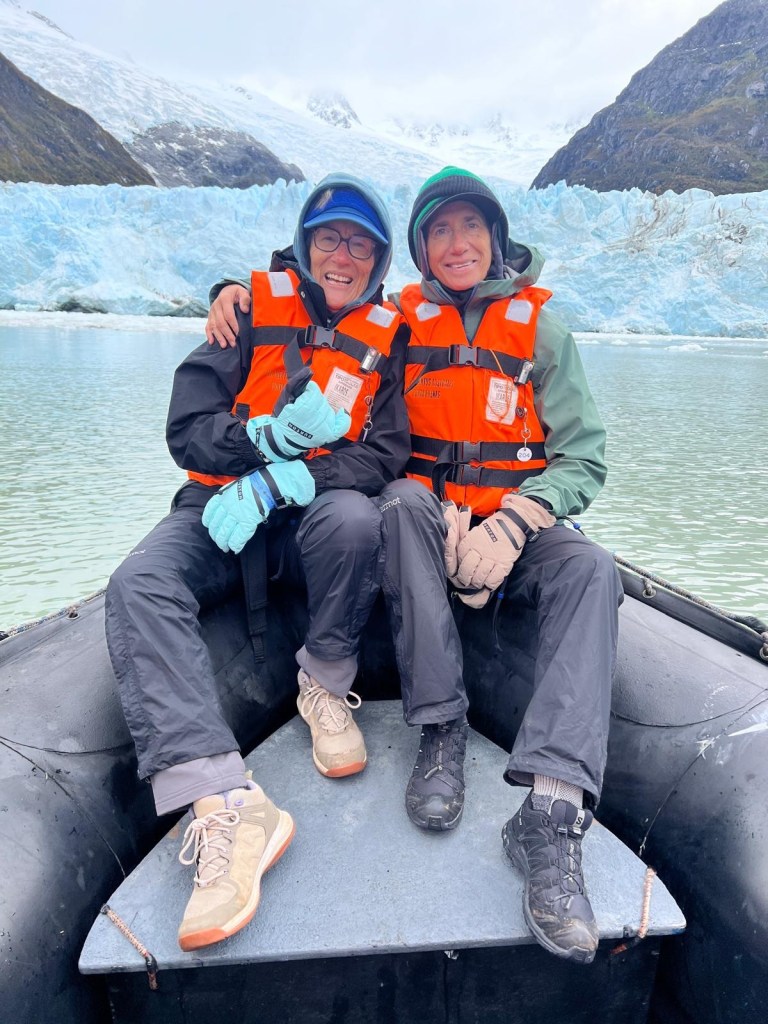
Our guides told us there are 26,000 glaciers in the Tierra del Fuego archipelago. How many times can a person say WOW!
(And yes, they’re all receding.)

Wulaia
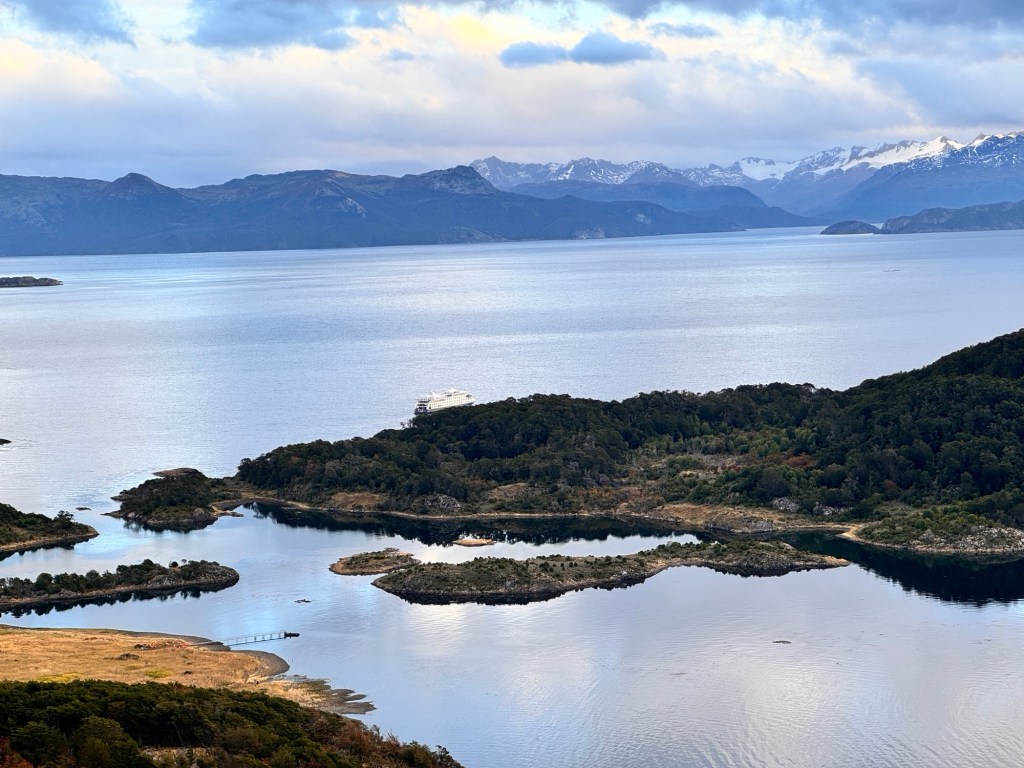
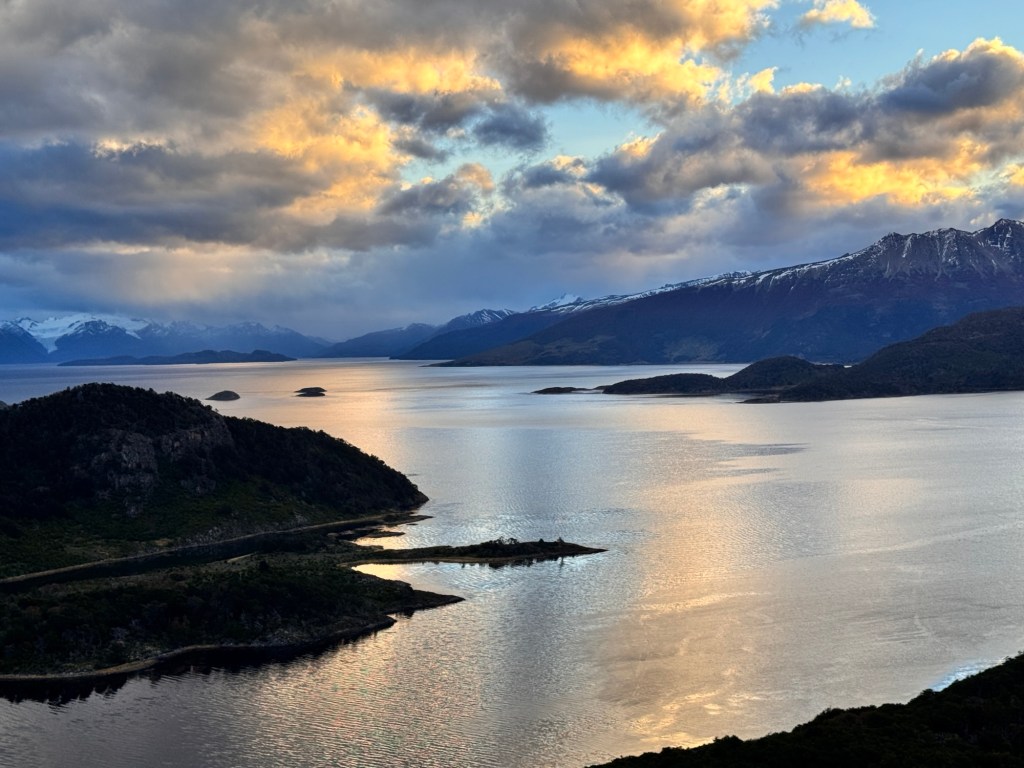
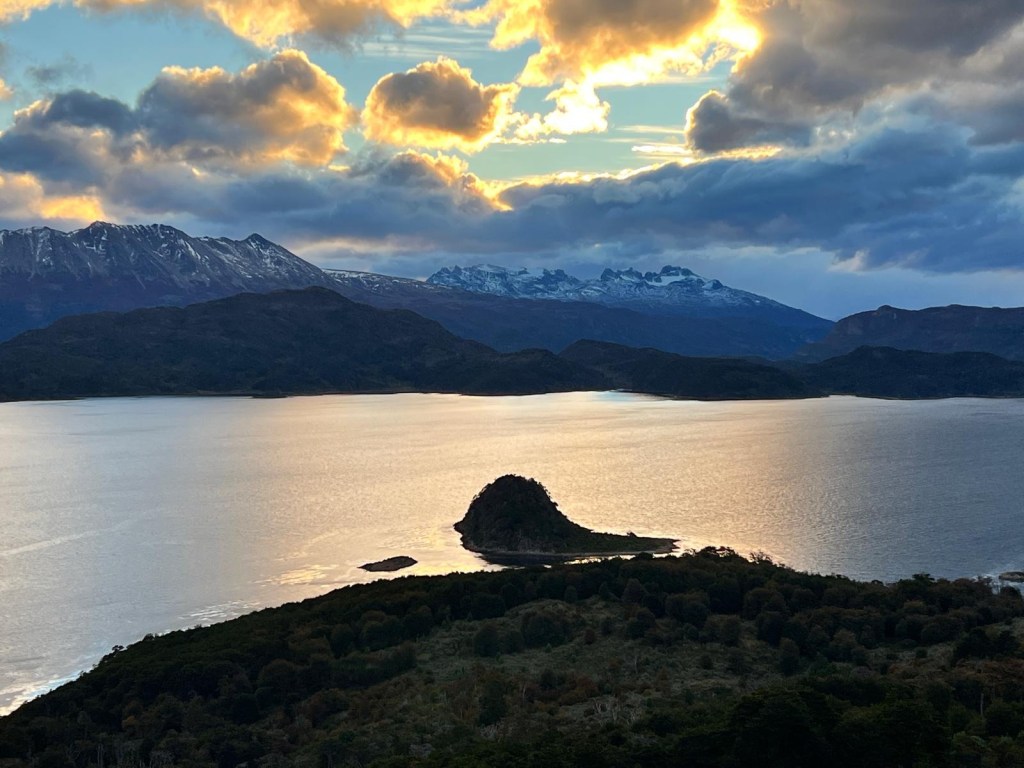
A number of place names are from the language of the Yamana (or Yaghan) people, one of several groups who first lived in the area. Aia means bay, and Wulaia means Beautiful Bay. We have seen a few bays in our lives but, truly, this one may be the most beautiful.
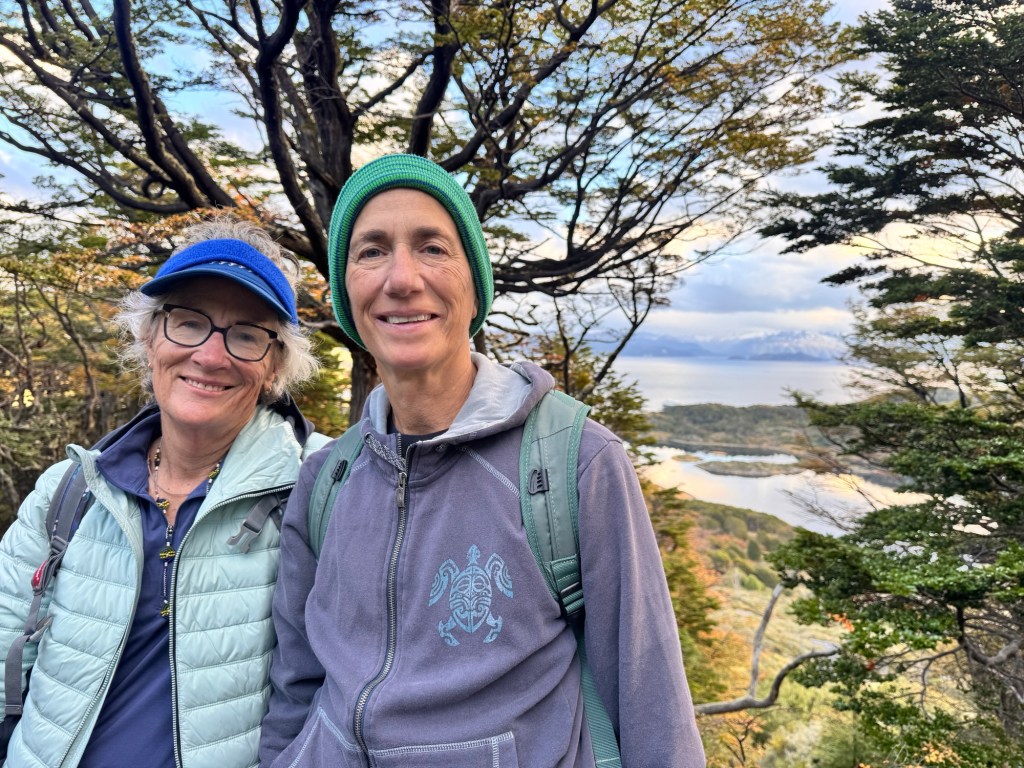
As we hiked, the afternoon sun began to set. The clouds, the sky, the water, the changing light…this beauty fed our hearts and souls.

The Yamana
Archaeologists are not certain whether the ancestors of the Yamana people traveled all the way to the end of the earth from the Bering Strait crossing or came across the south Pacific from Polynesia as the first Hawaiians did.
Either way—long journey!
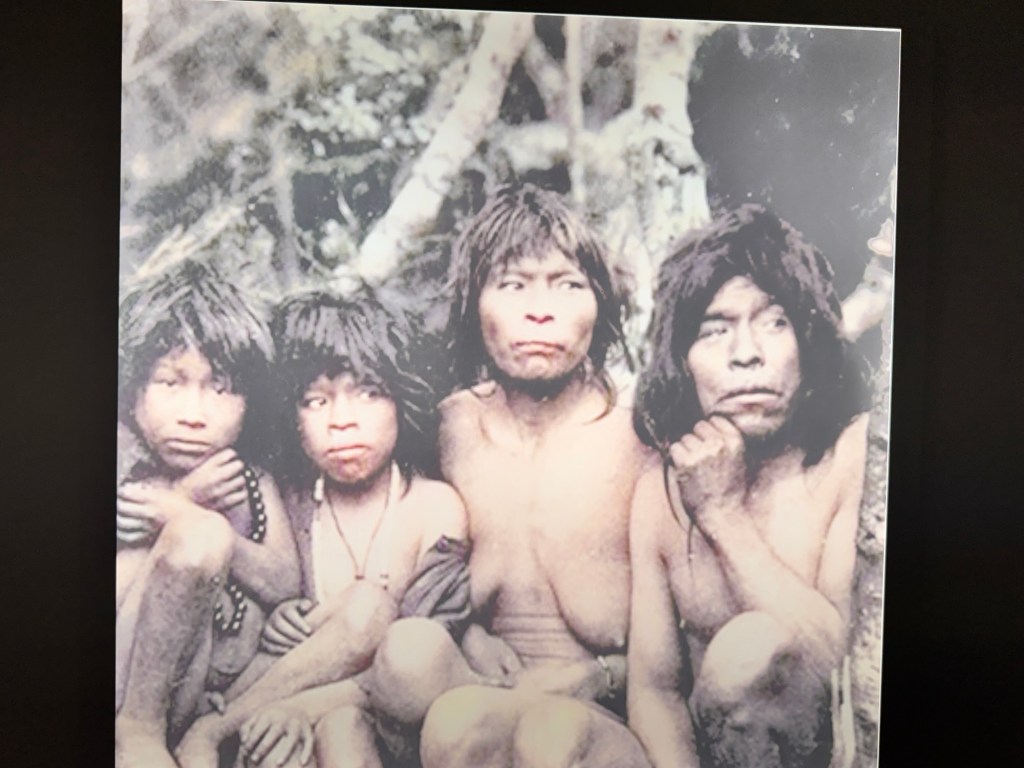
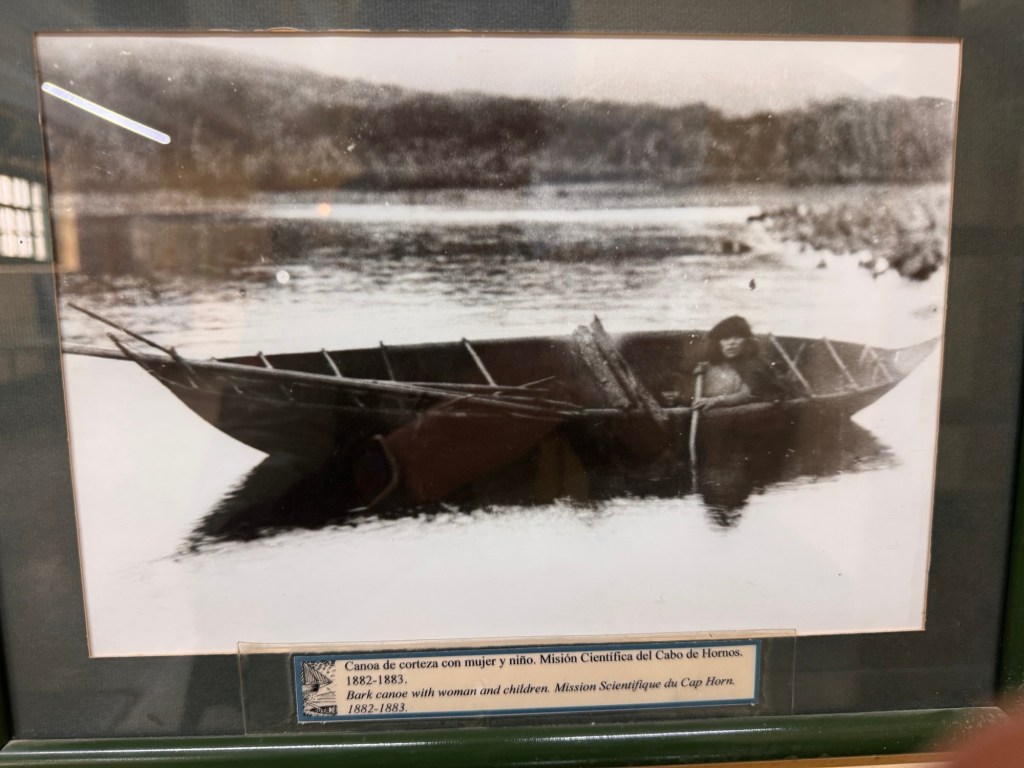
The Yamana lived mostly on the water in their bark canoes, sometimes on land, always nomadic. They wore little clothing, instead relying on seal blubber and continuous fires—including on their canoes—for warmth. Small family groups organized around tasks—women paddled, children kept the fires going, men hunted seals.
Magellan observed the Yamana in the 1500’s. The waterways he explored were dotted with hundreds of fires. He is apparently responsible for the name Tierra del Fuego, Land of Fire.
Following Magellan came a stream of explorers from Europe, including Drake later in the 1500’s, Darwin in the 1830’s, then Anglican missionaries, and other settlers.
Horrified at their nakedness, the missionaries set out to clothe the Yamana. Unfortunately, the used garments exposed the natives to germs that sickened them.
How many times have we heard the same story of colonizers bringing sickness and death to indigenous populations… 😥
After living in areas like Wulaia for perhaps 10,000 years, the Yamana went from a population of about 3,000 to total extinction within 400 years.
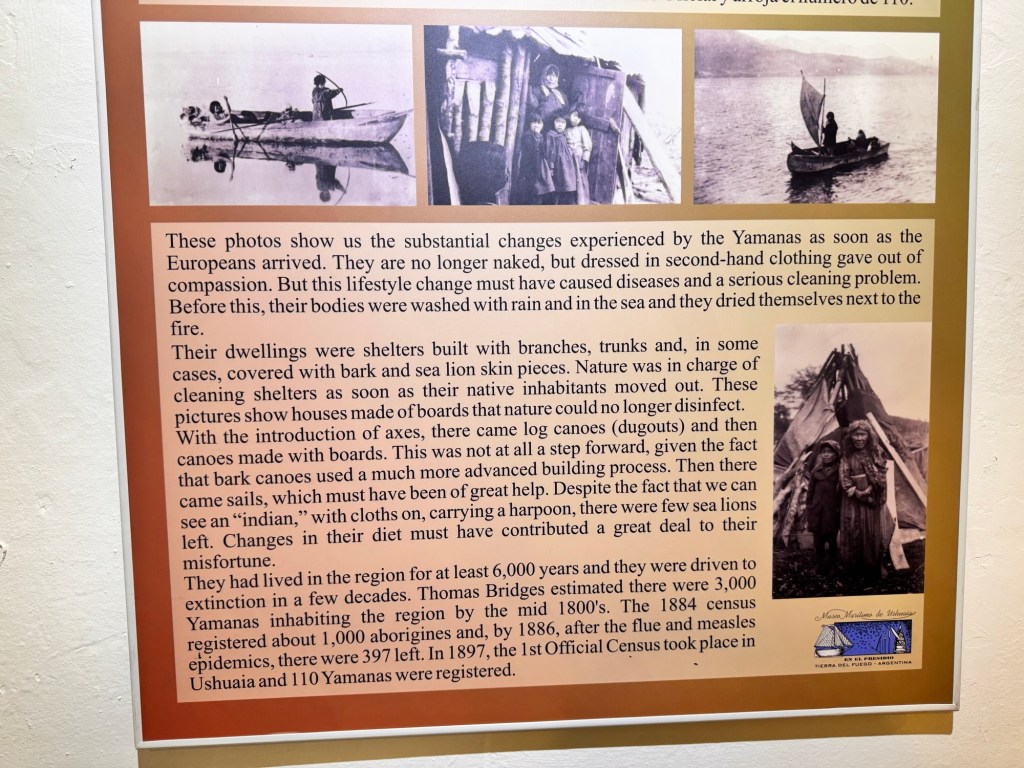
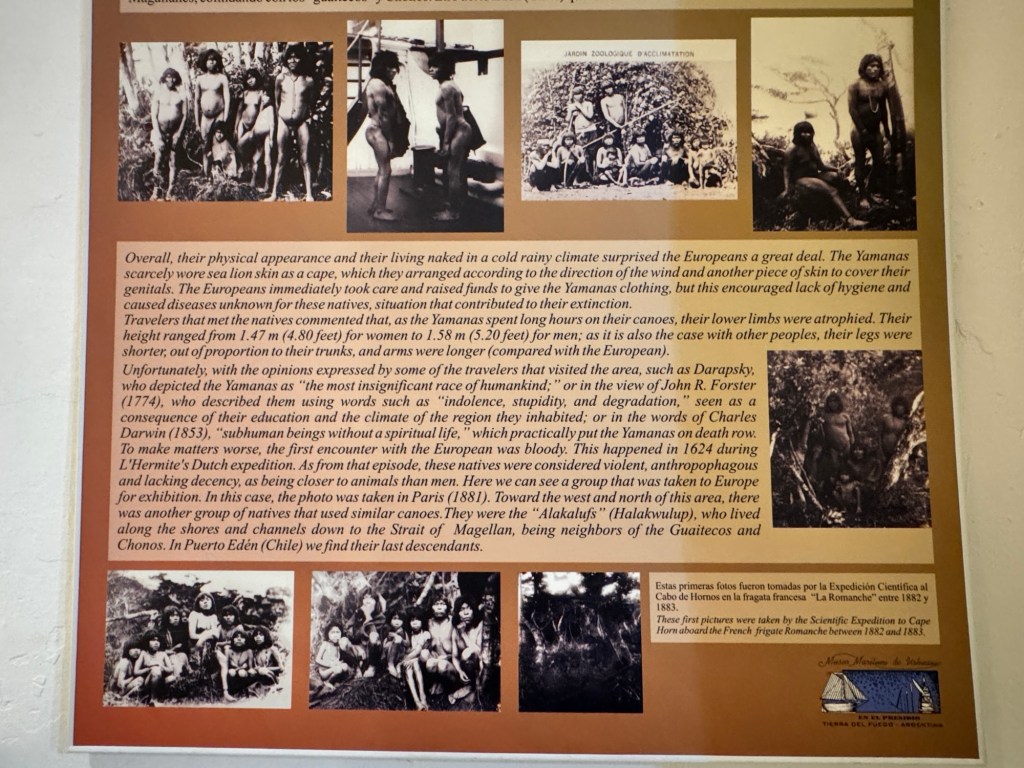
More on Darwin’s reports of the Yamana here: https://www.priweb.org/blog-post/fin-del-mundo-1#:~:text=After%20crossing%20the%20Atlantic%2C%20and,to%20this%20event%20were%20vivid:
Ushuaia
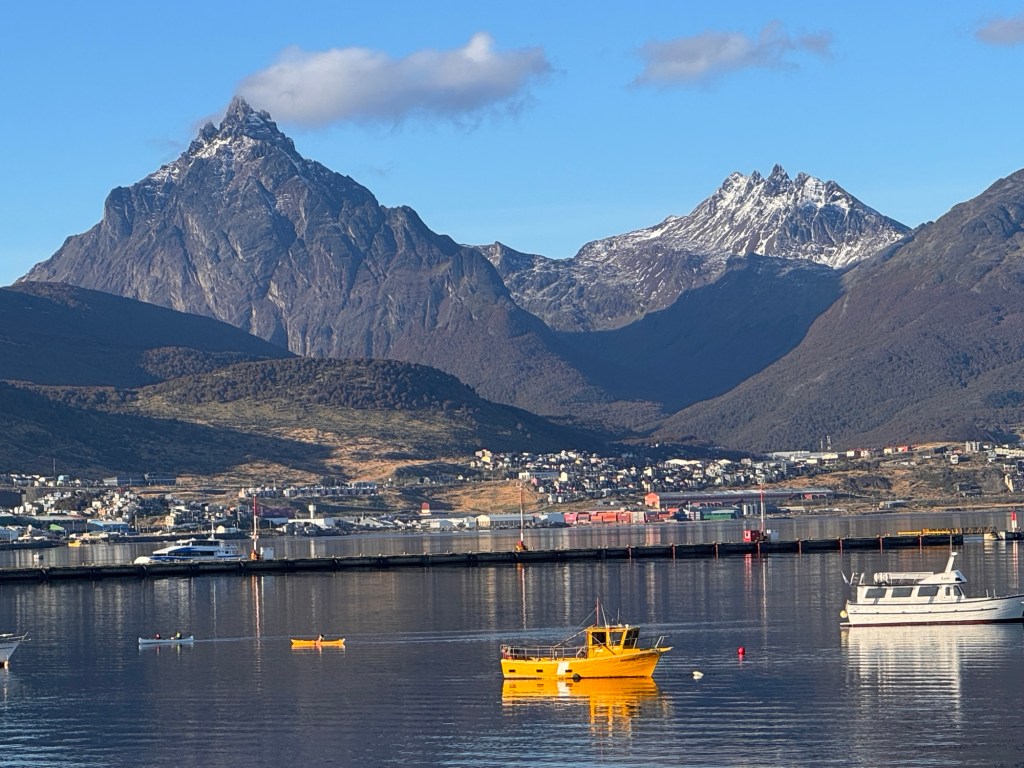
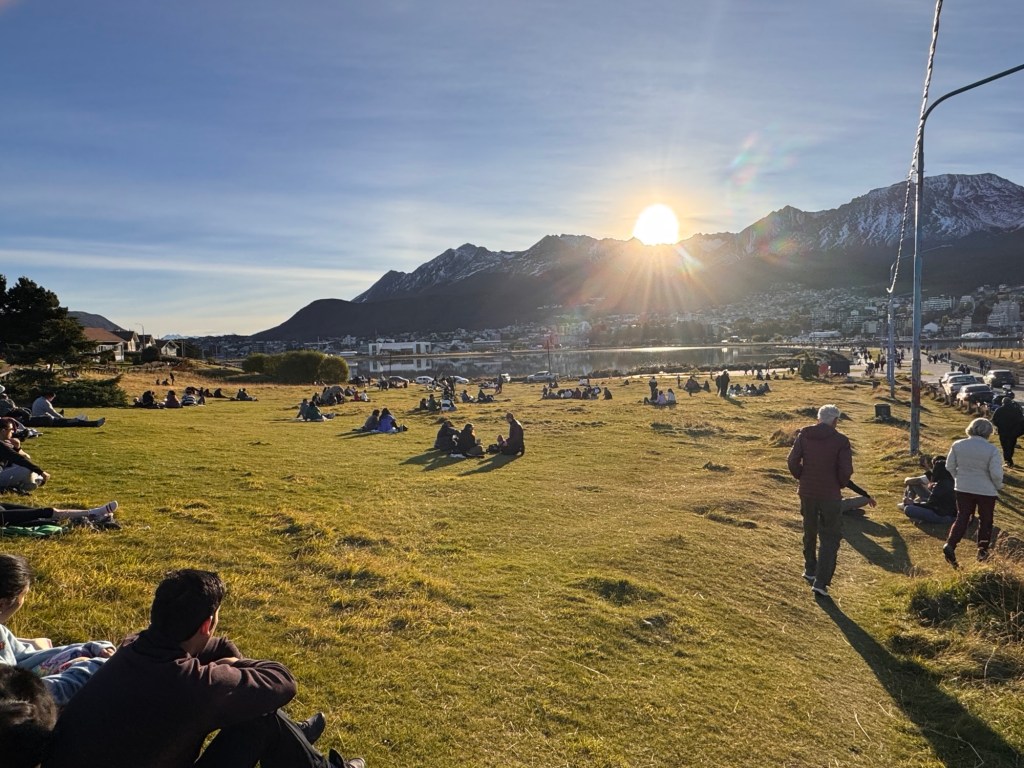
Known as the southernmost city in the world, Ushuaia sits on the northeast bank of the Beagle Channel. The name means Bay that Faces West in the Yamana language. As the most-used jumping-off point for Tierra del Fuego and Antarctica tours, it has grown to around 80,000 people.
Our trip leader told us to expect cold rain and wind. But as luck would have it, the town was enjoying one of about 15 days a year with calm winds and lots of sun. Everyone was OUT with their families—picnicking, throwing balls for their dogs, kayaking on the bay, relaxing.
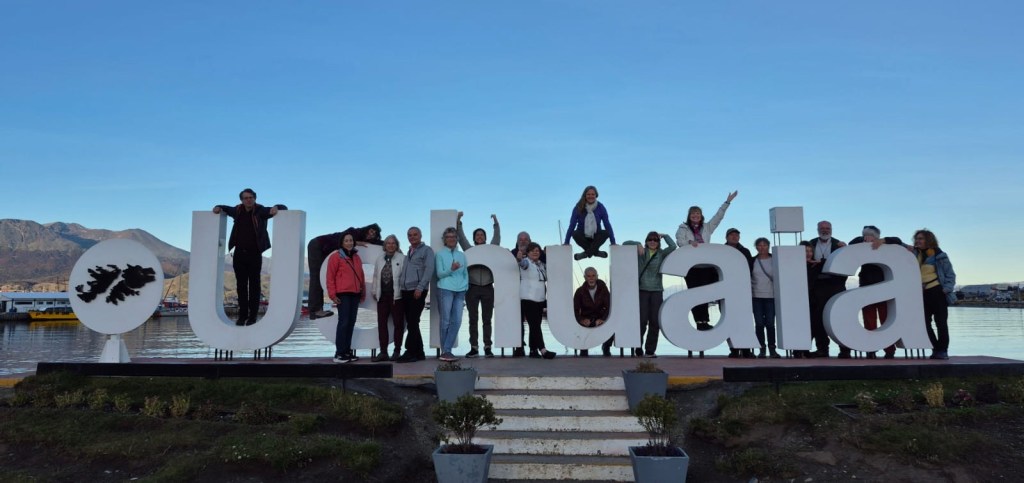
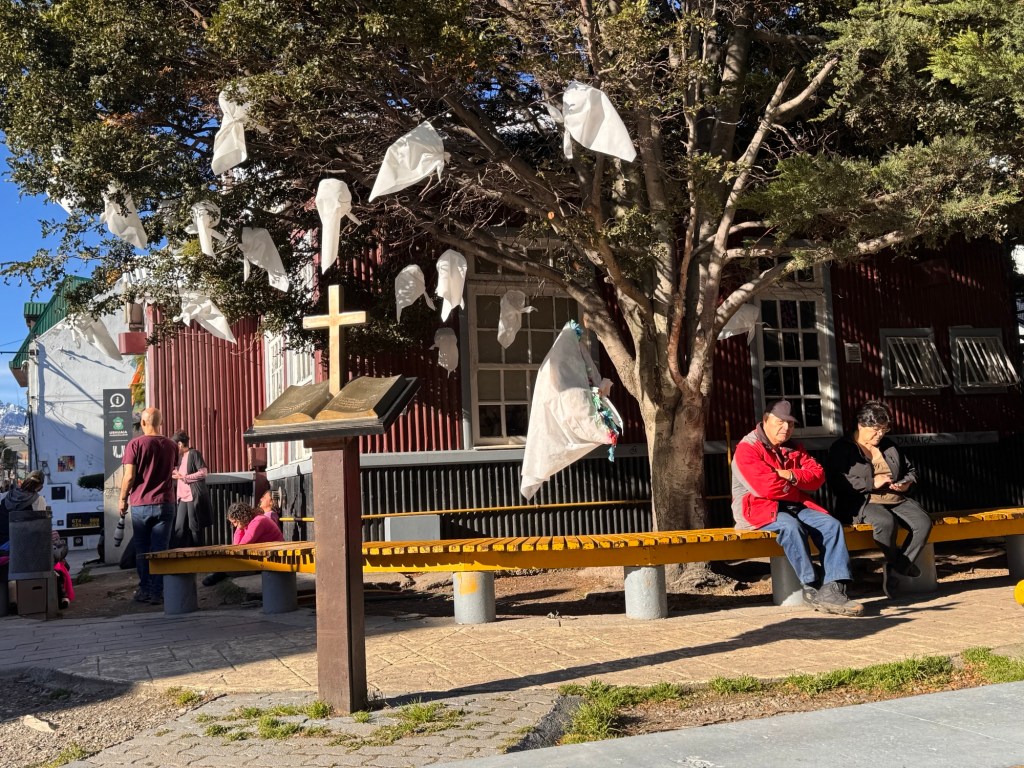
The Prison at the End of the World
Argentina had no significant presence in Tierra del Fuego at the turn of the 20th century. The government solved that problem by opening a prison, populating it with the most dangerous criminals, and using their labor to build infrastructure.
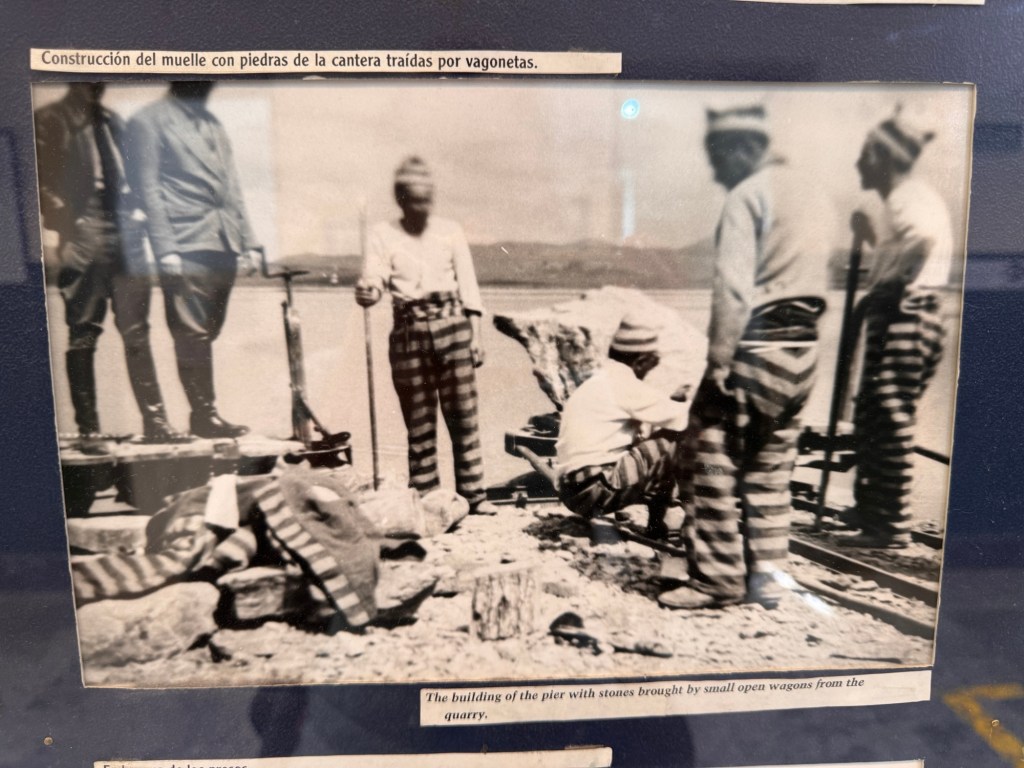
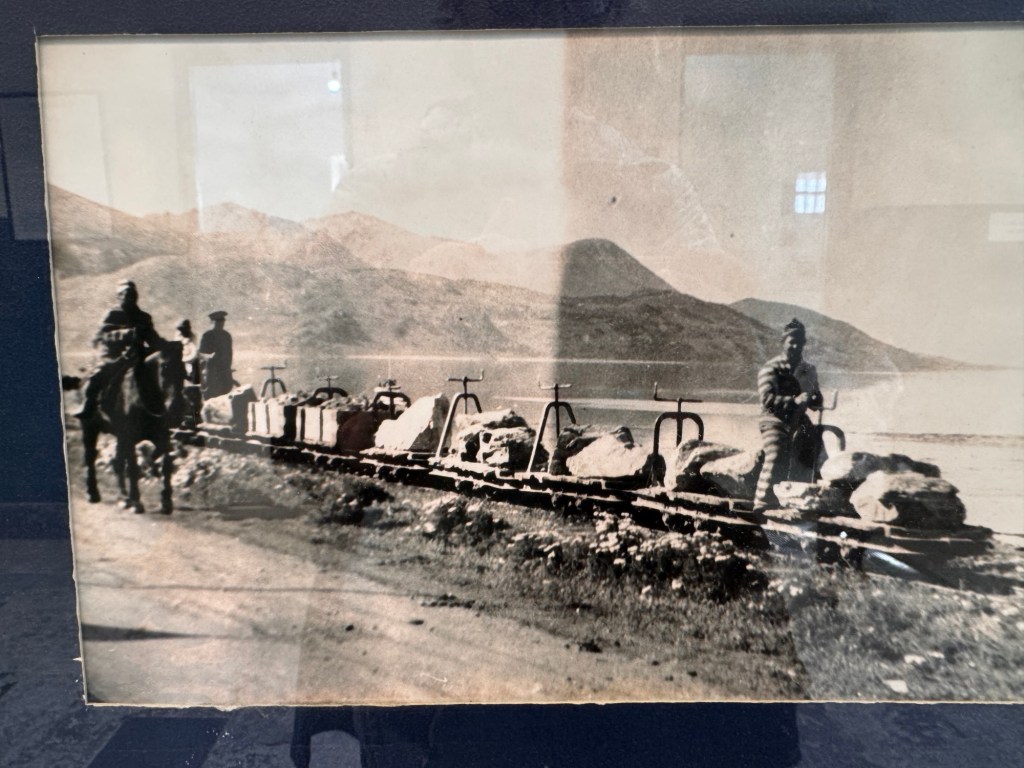
First, the inmates built their own prison. They continued to expand it for about 20 years. During that time, they chopped down trees and broke rocks, laid railroad tracks, used the tracks to carry the rocks, and built the harbor. They also built streets and civic buildings.
President Peron closed the “Prison at the End of the World” in 1947 when his director of penitentiaries deemed inmates’ conditions to be cruel and inhumane. Also, the prison wasn’t accomplishing the objective of securing the territory for Argentina; rather, managing the distant institution in inhospitable conditions was a drain on resources. The Argentinian government then established the town as a naval base.
Now, Ushuaia is the launching point for nearly all Antarctica excursions, as well as the key port for research and cargo ships.
The Malvinas War
Remember the “Falklands War”? I do.
Argentinians have always believed the Malvinas islands should be part of their territory, being 60 miles off its shores. The UK initially claimed the islands, then abandoned them, then reclaimed them permanently in the 1880’s.
According to an Argentinian historian who spoke with us, the dictators who took over after Isabel Peron’s death were losing the trust of the people. They thought they could regain credibility by winning the Malvinas Islands back from the UK.
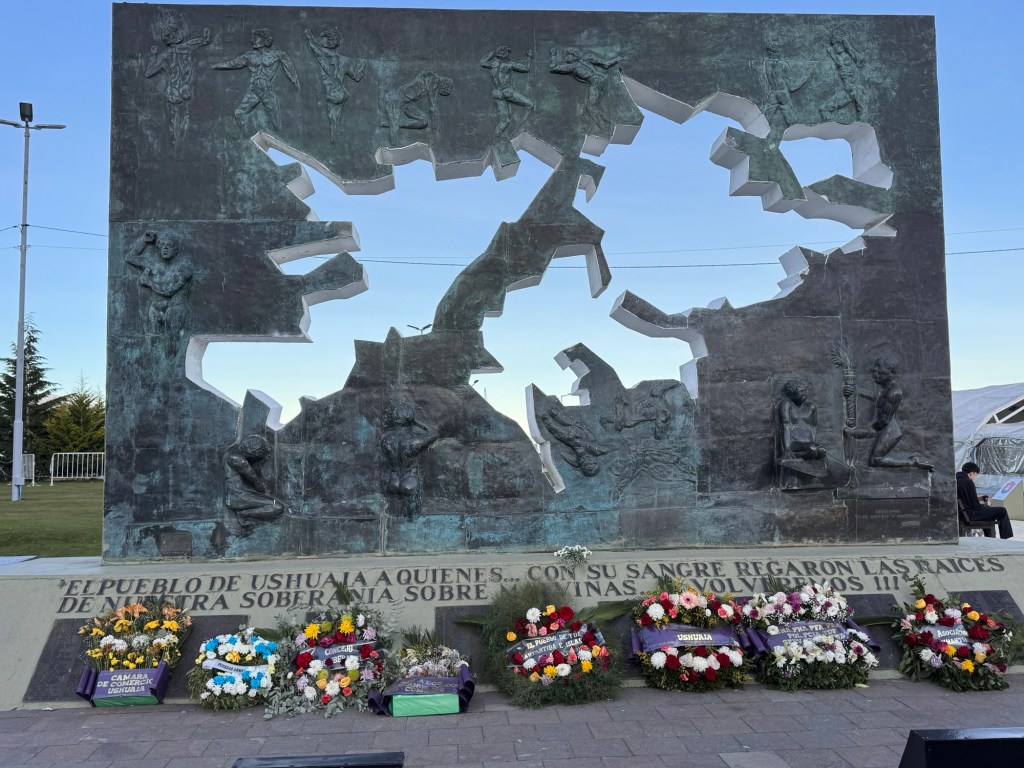
A gentleman younger than we are, who grew up on the pampas of central Argentina, told his personal story to our group—
He joined the army in 1981 at age 18 as a rebellion against his father. Four months later he was one of 10,000 conscripts—mostly poorly trained 18-19 year olds like himself—sent to the islands. Their feet sank in the freezing wetlands, their artillery sank in the mud, they ran out of food within a month, and worse, they learned that Chile—their friend and neighbor—revealed their locations to the UK forces. Although they fought valiantly for what they believed belonged to them, they were hopelessly outmatched.
In the two-month war, 649 Argentinian soldiers died. The survivors came home to a society that ignored them, or worse. It is estimated that 2,000 more took their own lives.
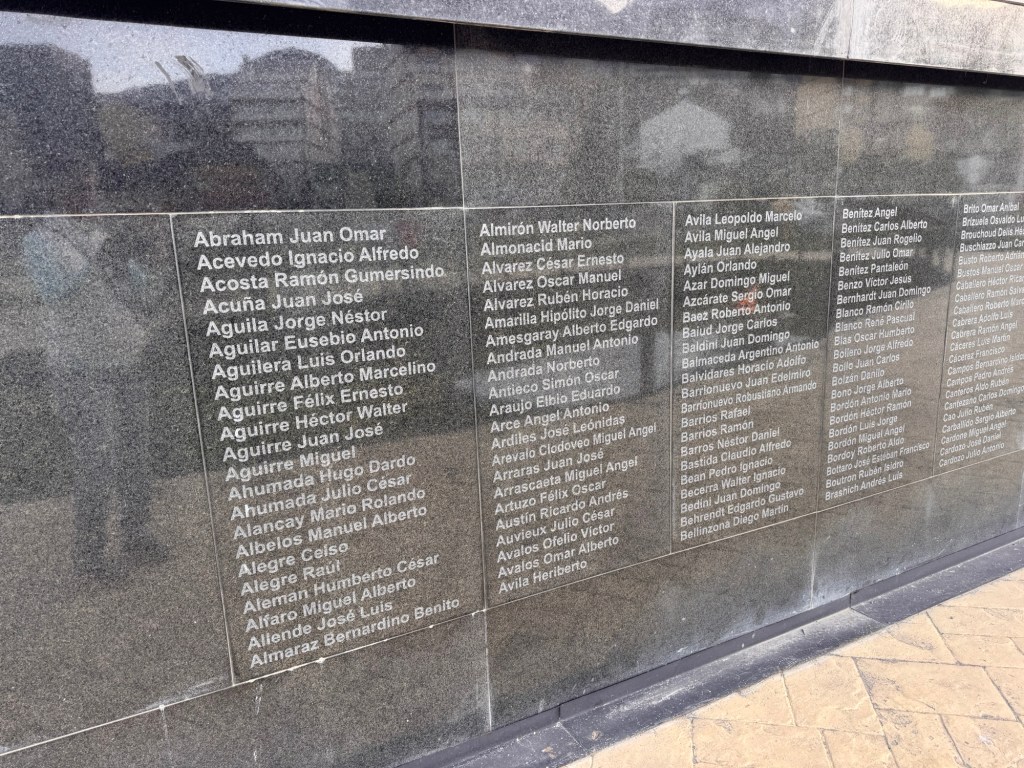
Those who found one other and shared their stories began advocating for recognition of their sacrifices. The veteran who spoke to us said after years of misery, he received counseling that helped him make peace with his experience and build a life.
People of Ushuaia—just 60 miles from the Malvinas—still feel the pain of the war and believe the UK’s claims are unjust. Memorials and annual remembrances ensure the soldiers are never forgotten.
Several people told us that one good resulted from the war. The dictators’ failure to reclaim the islands caused such humiliation that they lost power. That loss opened the door to the democracy they enjoy today.


Leave a Reply