
Buenos Aires is a big, beautiful melting pot of a city where 90% of the people are of European ancestry, mostly Italians and Spanish. The name refers to its advantages as a port city with favorable winds. It is stable and democratic after the recent trauma of the 1970’s and 1980’s. Here are a few impressions.
It Takes Two…
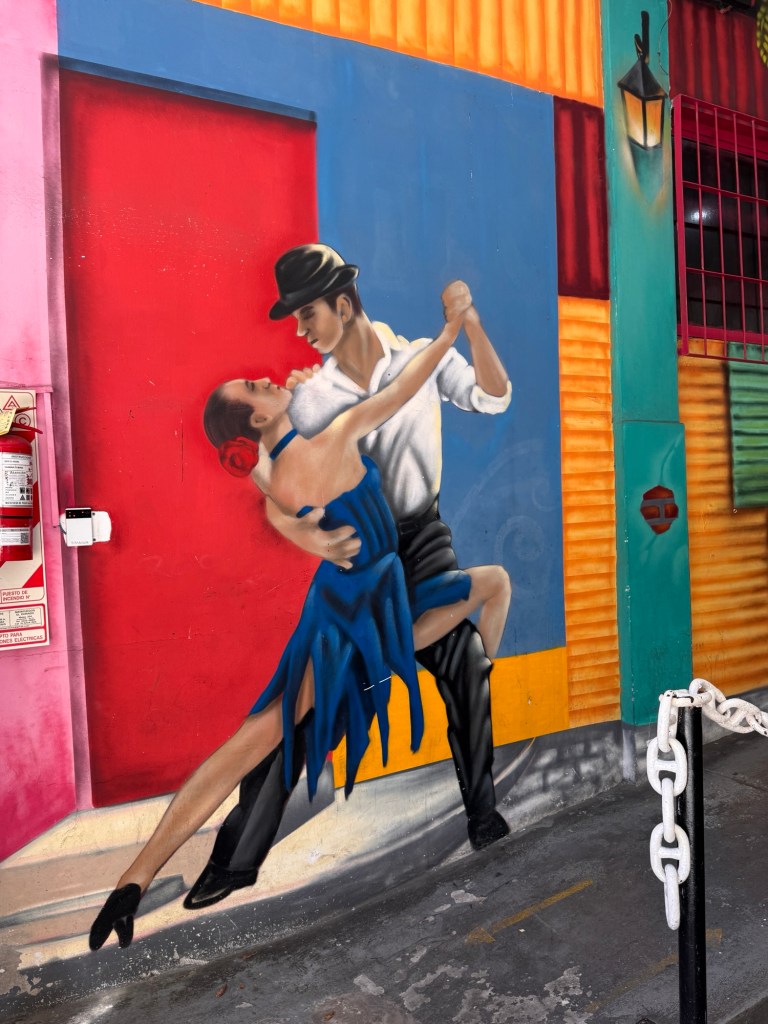
La Boca (“the mouth”) lies at the mouth of the Rio de la Plata and forms the entrance to the city. It housed burgeoning populations of Spanish and Italian immigrants in the booming late 1800’s.
Two kinds of work were available in La Boca—dock work and sex work. It is said that these workers, when they met on the streets at night, invented the Tango.
Yes, Amy and I took a tango lesson! is there photographic evidence? Nope! But…we looked pretty darn good, of course! 😉
Futbol—The National Religion
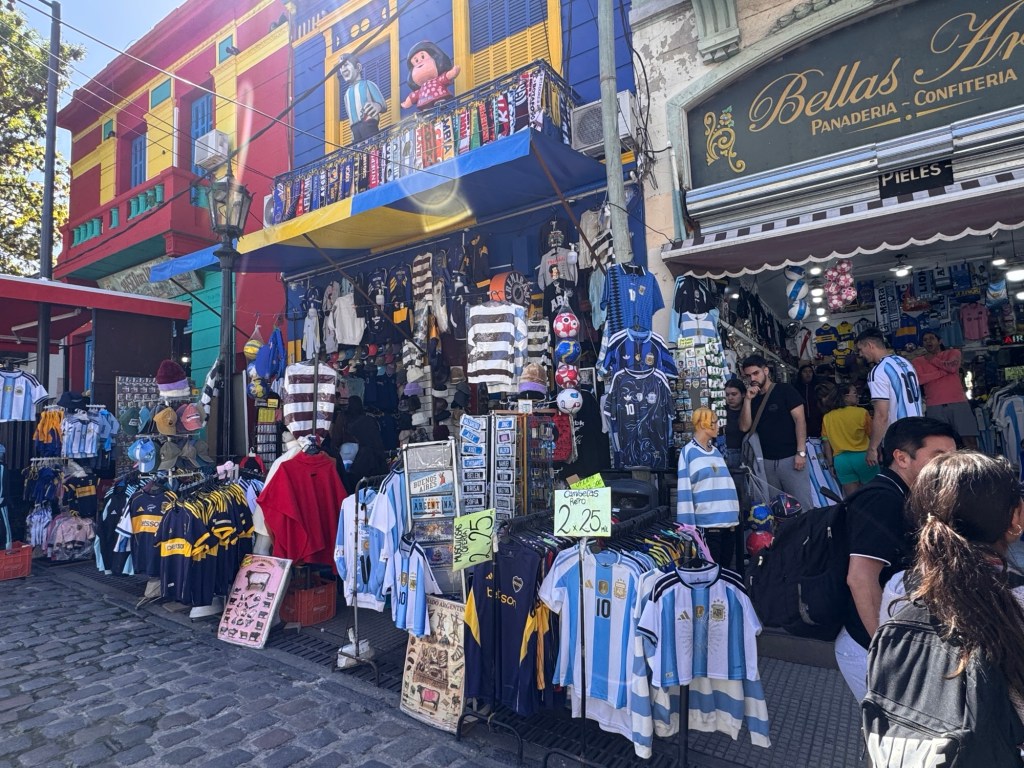
Our guide, Carolina, told us first thing that the most important fact to remember about the country of Argentina is…they are the current World Cup champions!
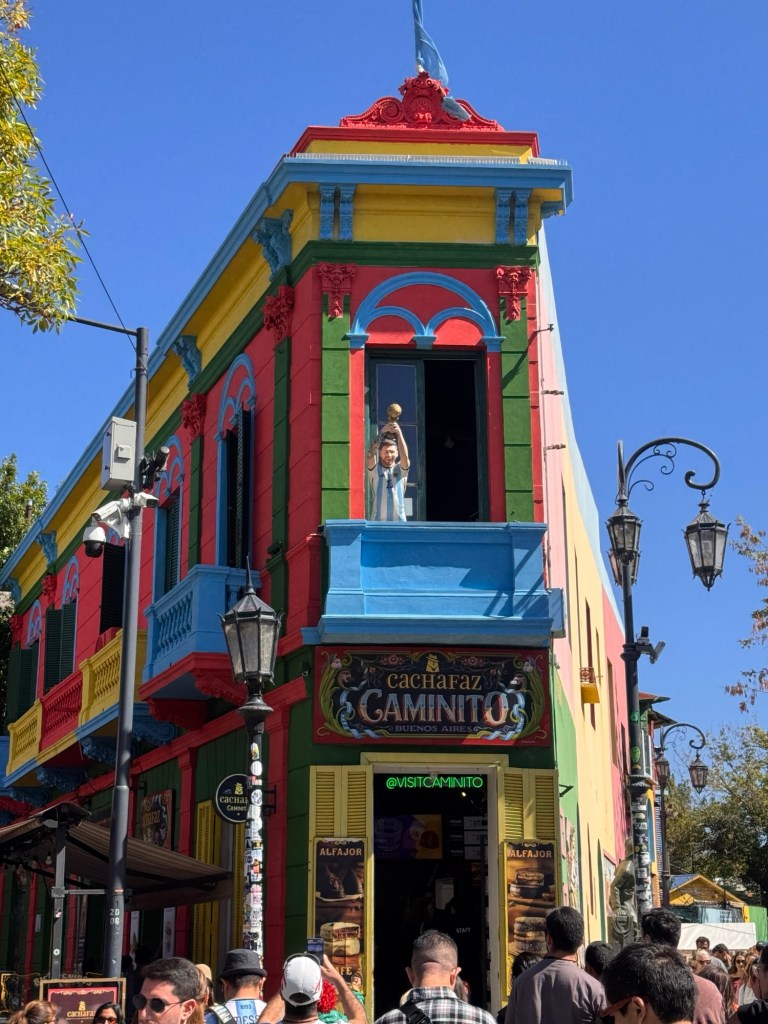
Guides and locals alike told us futbol is the national religion, not just a sport. You don’t simply root for a team, you commit to them like your family.
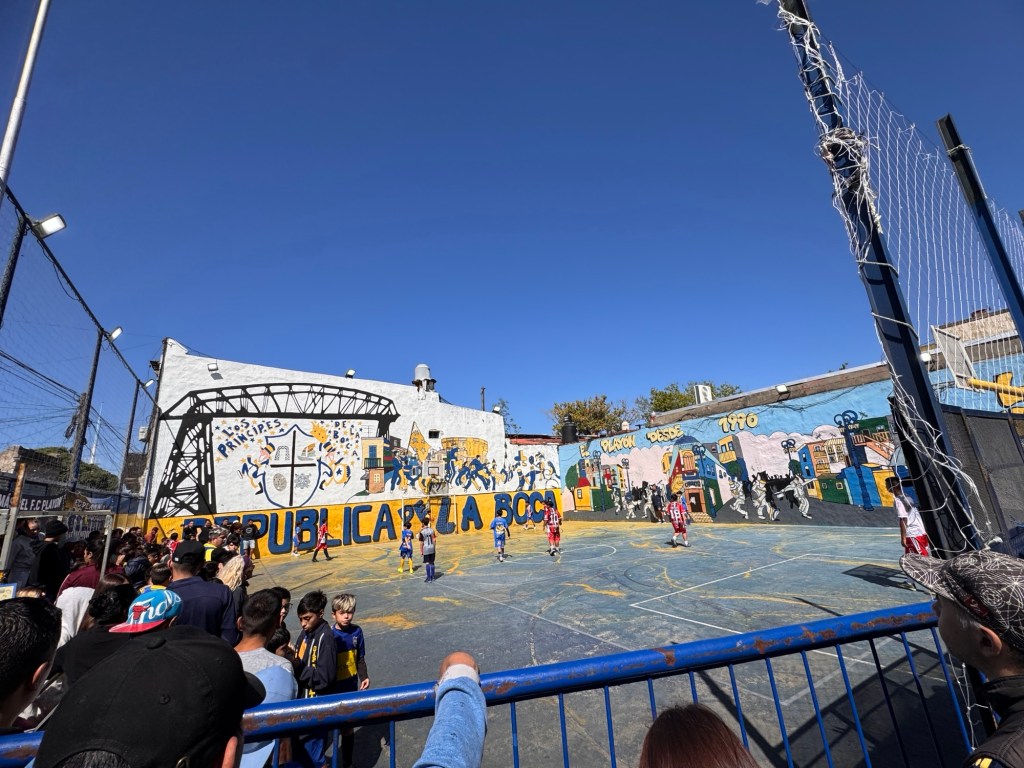
On our way to Argentina, we changed planes at LAX. Shops had kind of
Easter weekend in a Catholic country
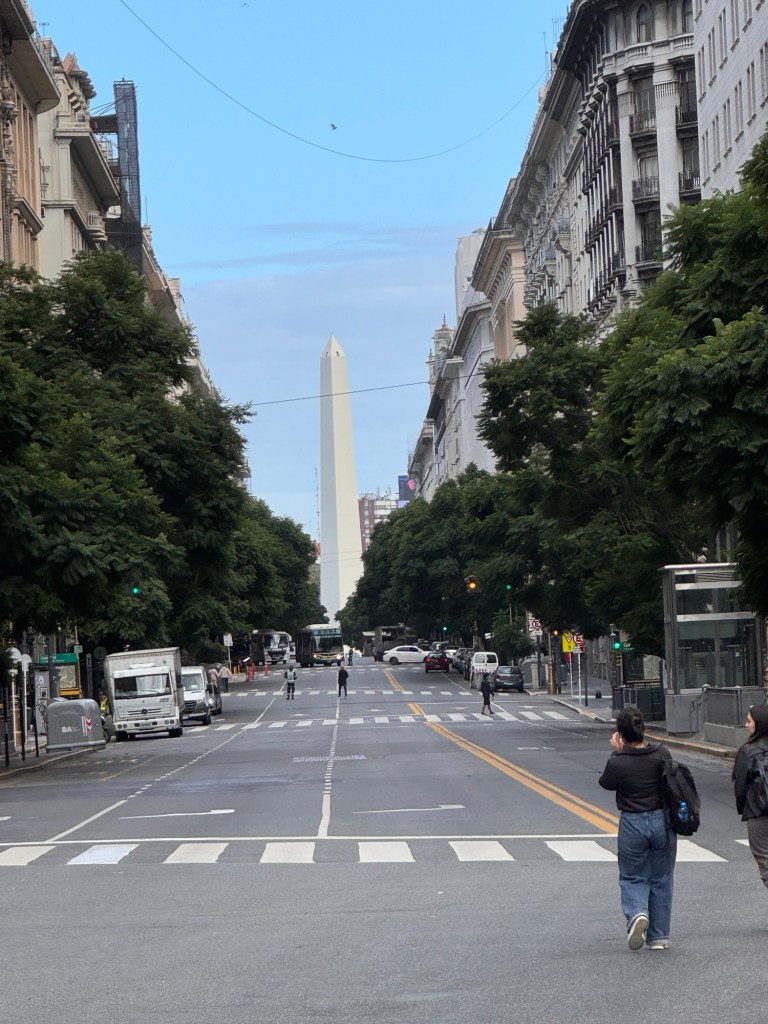
Locals told us that, like Christmas, Easter is a time for family gatherings. With no one working there is no traffic. Finding a restaurant, strolling through the heart of the city, shopping—it was all a breeze!
In the large cathedral on la Plaza de Mayo, the main square, we saw that a life-size representation of Jesus’s body lay on a bed in front of the altar.
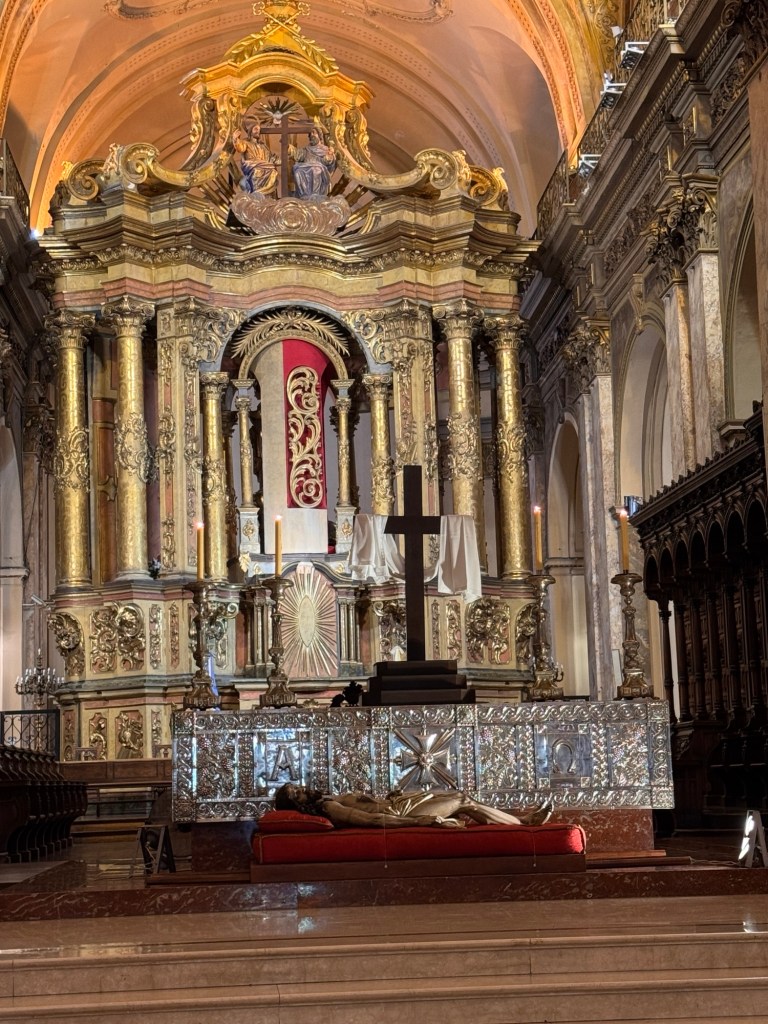
Not being Catholics, we asked about that, and we learned that Easter is “the time when Jesus was no longer on the cross.”
Guarding the liberator
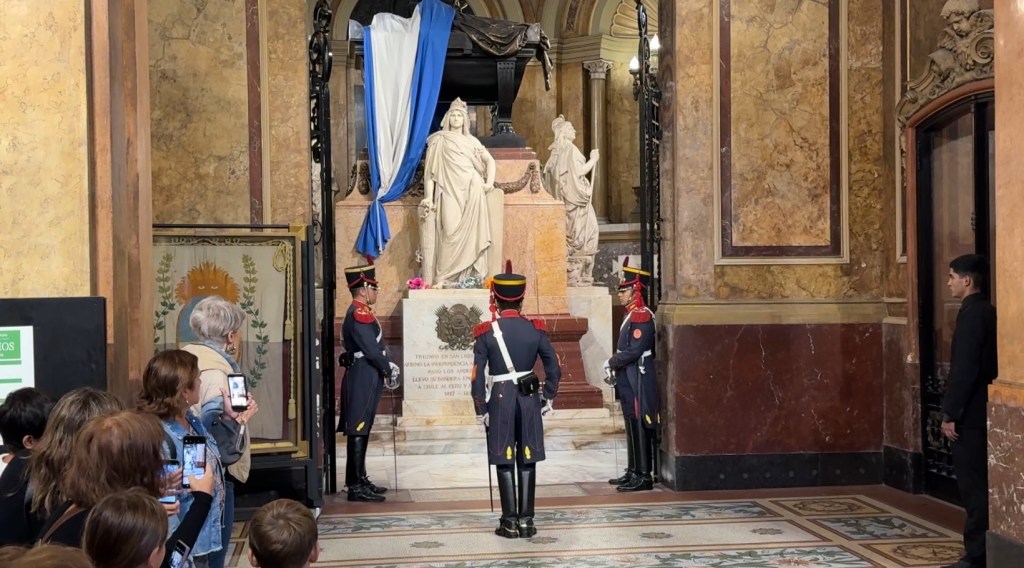
Jose de San Martin is known as the Liberator in Argentina, Chile, and Peru. In the US, we have the story of George Washington crossing the Potomac; San Martin is famous for crossing the Andes. His remains lie in a sarcophagus in the main church, protected by two soldiers.
Las Abuelas de los Desaparecidos
Local guides told us the story of Juan Peron’s presidency and exile, Eva Peron’s popularity and early death, Juan Peron’s return, and the (US-supported) junta that followed his death. It’s complicated.
Argentinians who lived through the 70’s and 80’s refer to the “Dirty War” as a national trauma that is still healing.
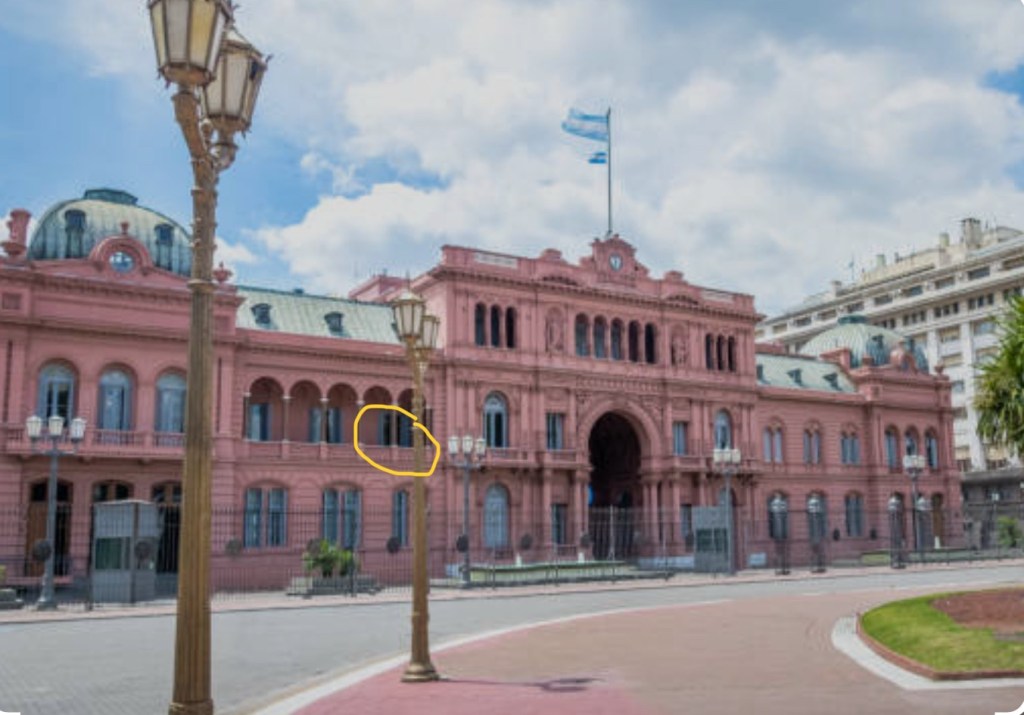
In college in the 1970’s I remember hearing about the Chilean citizens who “disappeared.” Best estimates now are that 30,000 people perished at the hands of the junta.
It was in the Plaza del Mayo in front of Casa Rosa that the Abuelas marched every day to protest the brutality of the junta and inform the world of the truth. They wore diapers on their heads to signify the loss of their children.
Efforts are still underway to identify people who, as babies, were stolen from their mothers.
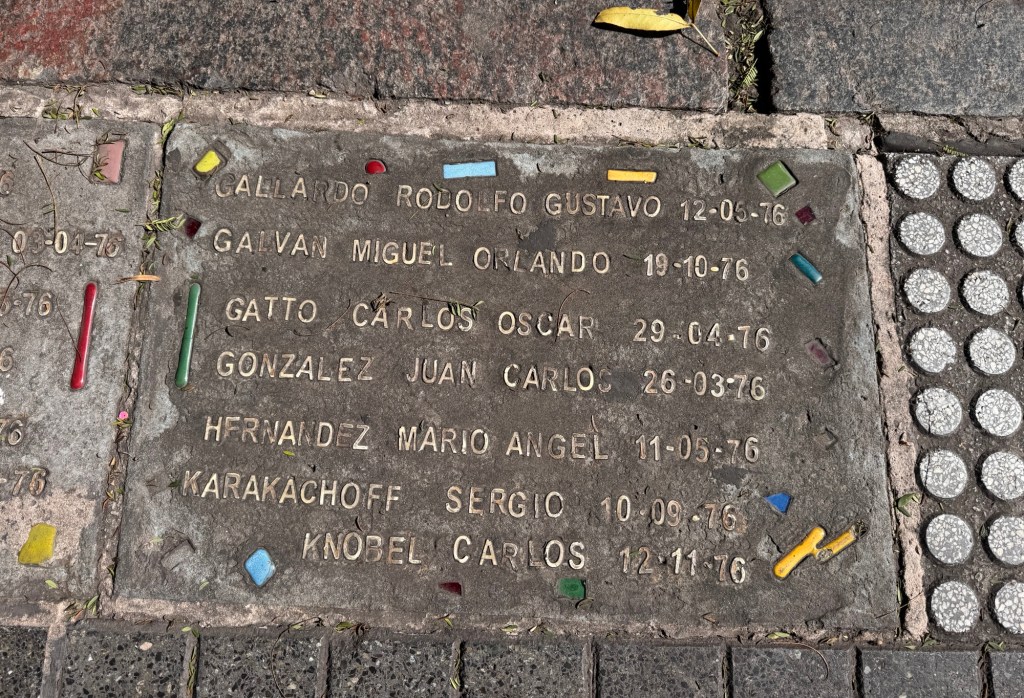
Along the streets lining the plaza are hundreds of plaques that name those who were kidnapped and never seen again.
Pups 🐶 for adoption
Residents of Buenos Aires leash up their dogs, walk them along sidewalks and let them romp in parks, just as in any Western city we’ve visited.
We saw a surprising number of dachshunds, quite a few beagles and mini-doodles, a few beautifully groomed collies.
And just like everywhere else, some dogs are not so lucky. In La Boca, the local rescue society set up in high-traffic areas, offering pups for adoption and asking for donations.
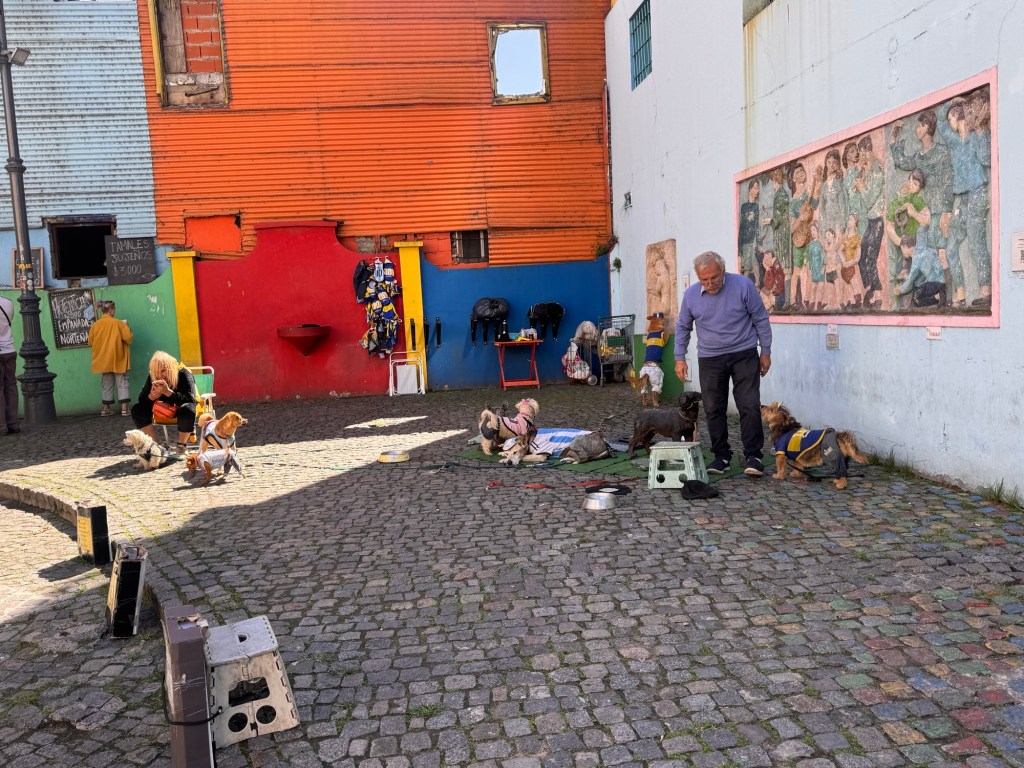
Of course I wanted to adopt them all.
 All play and no work
Leave a comment