
As always, you’ll want to read this on the blog site, rather than the email, to see videos.
Dad and Grandad taught me to look for deer tracks when I was very young. In the westerns I read, many plots turned on the sheriff’s ability to track villains’ horses or on villains’ ability to hide their tracks.
This love of tracking has stayed with me, even to the extent that I studied with a professional tracker when living in the Point Reyes National Seashore area.
Scat & Tracks
Here on the coast of Alaska, what did I want to see?
BEAR tracks, of course!
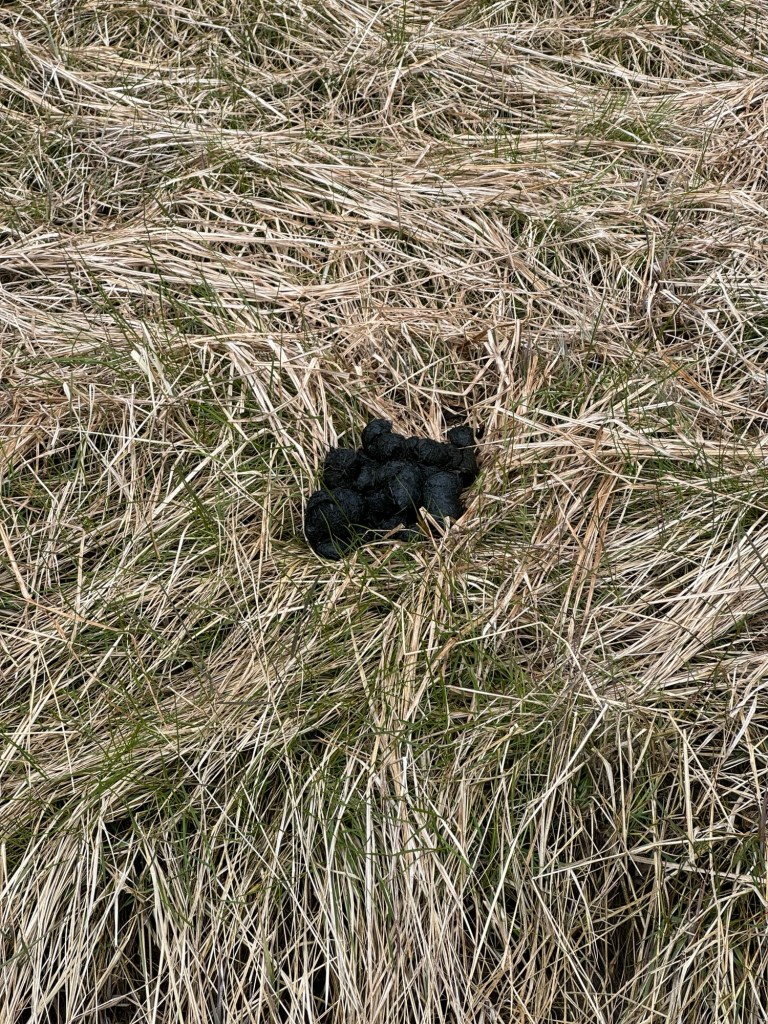
First, below is bear scat—two well-formed, plentiful, fresh piles—seen near a tidal wetland.
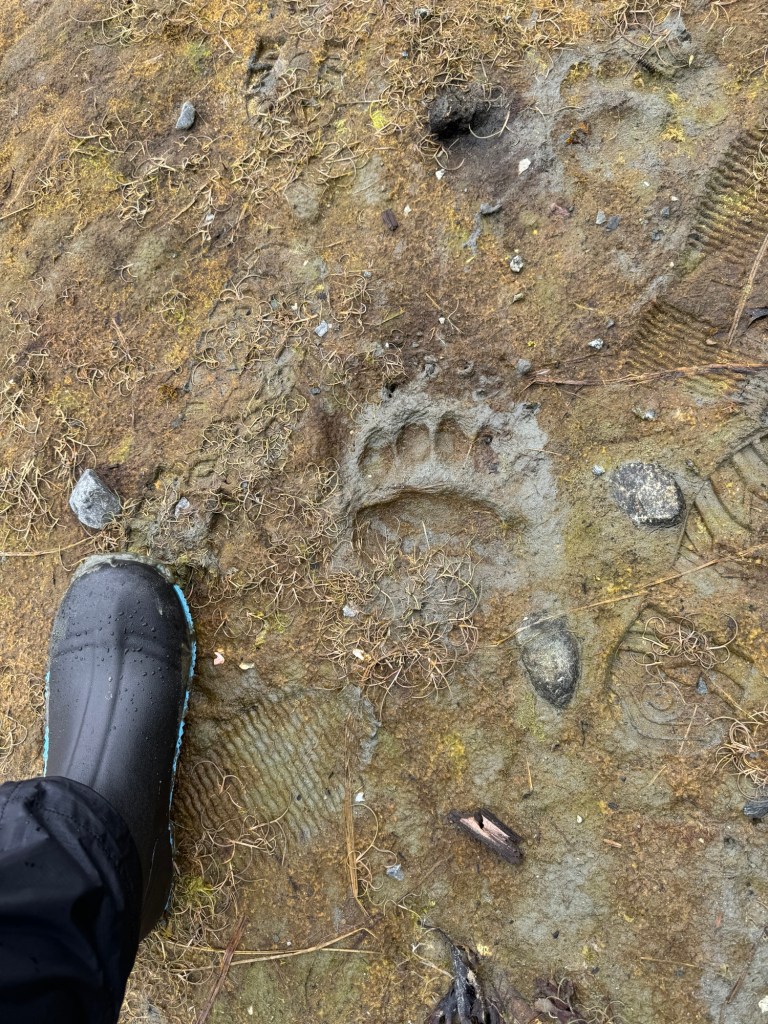
Here are some bear tracks, also very fresh. Our naturalist deemed them small. The pattern between the pad and the toes, and the distance from toe pads to claw marks signified brown bear.


Black tail deer roam this area also. The same tidal flat revealed tracks of a buck (left) and a doe (right).
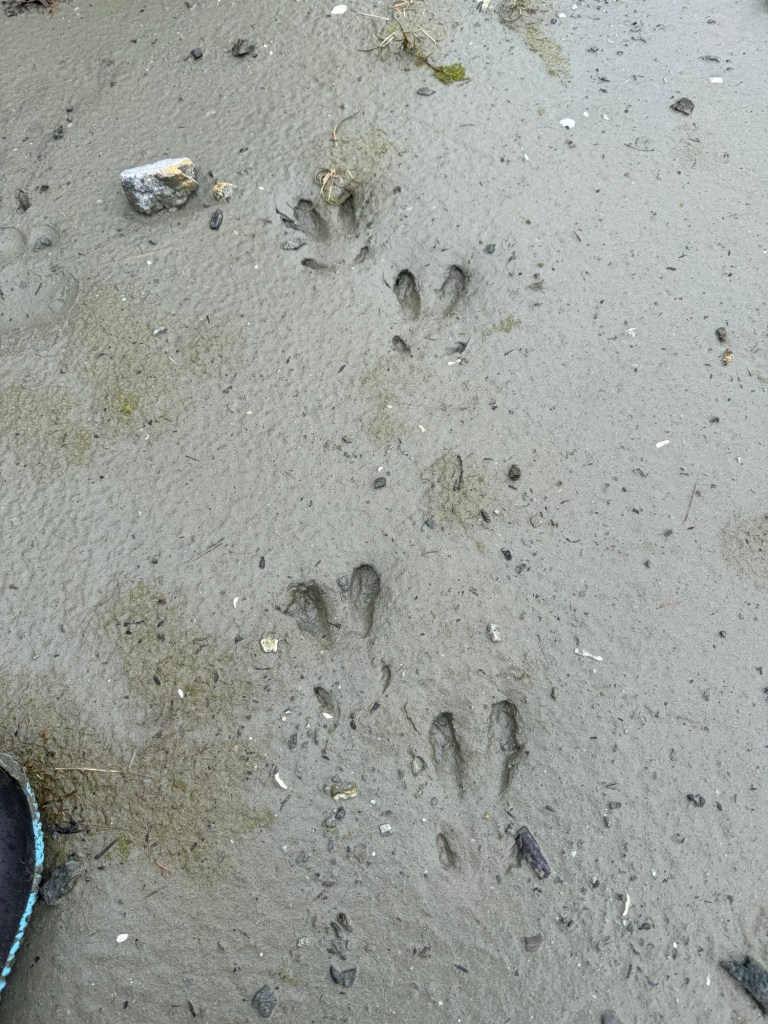
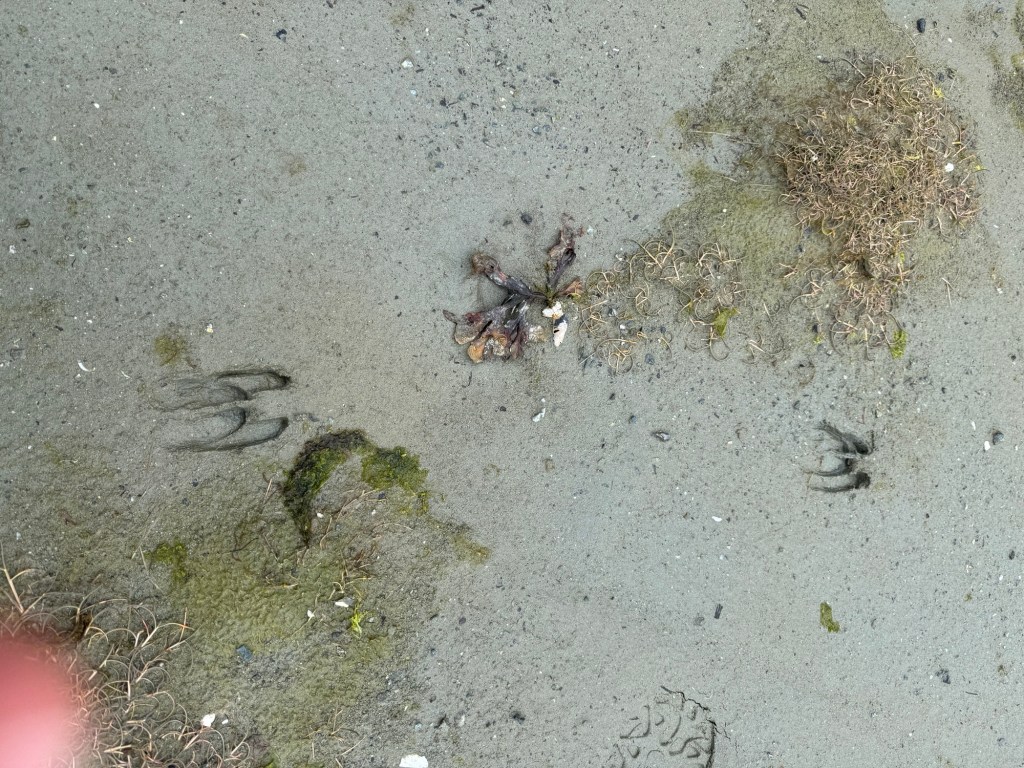
And below, a deer and bear shared a path—both since high tide but not at exactly the same time. They like to give each other space.
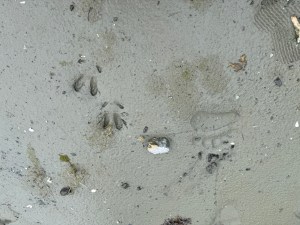
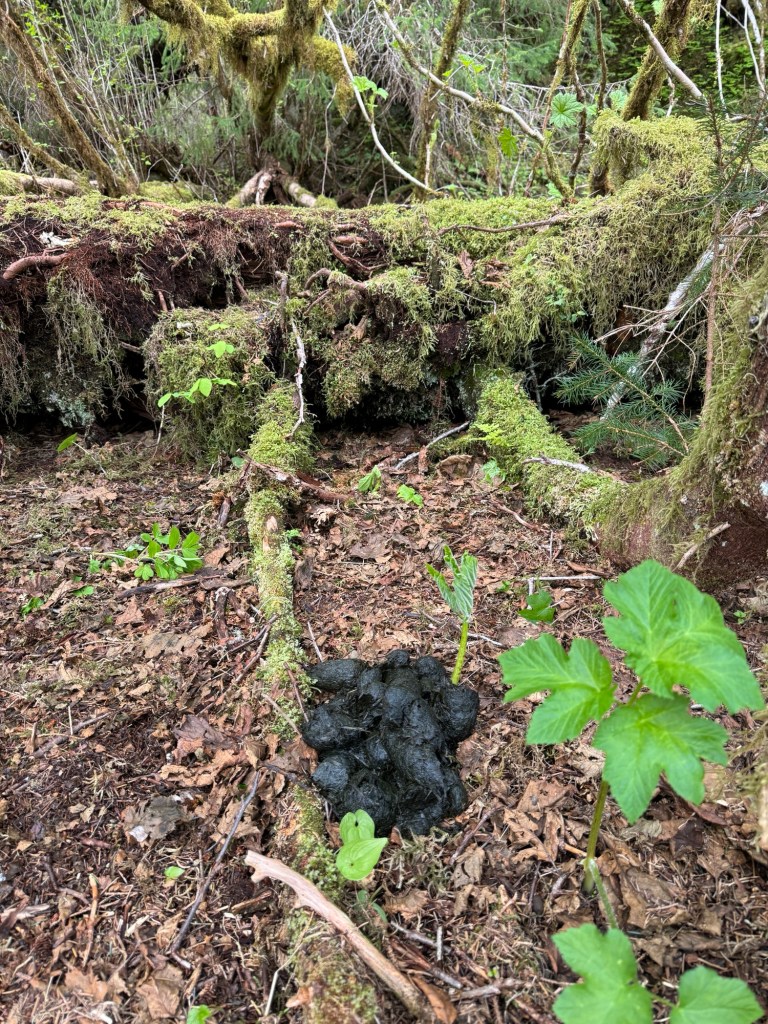
When we left the tidal flats and turned into the forest, we saw more scat. Dozens of piles of deer droppings and occasional bear scat. Below, there is a small chunk of bear scat (top of photo) next to a scattering of deer pellets.
We learned that when bear scat looks like this—hard clusters, rather than the great horse manure-like blobs we’d seen on the flats—it means the bear is newly out of hibernation and a bit constipated. Aww…

Middens of Red Squirrels
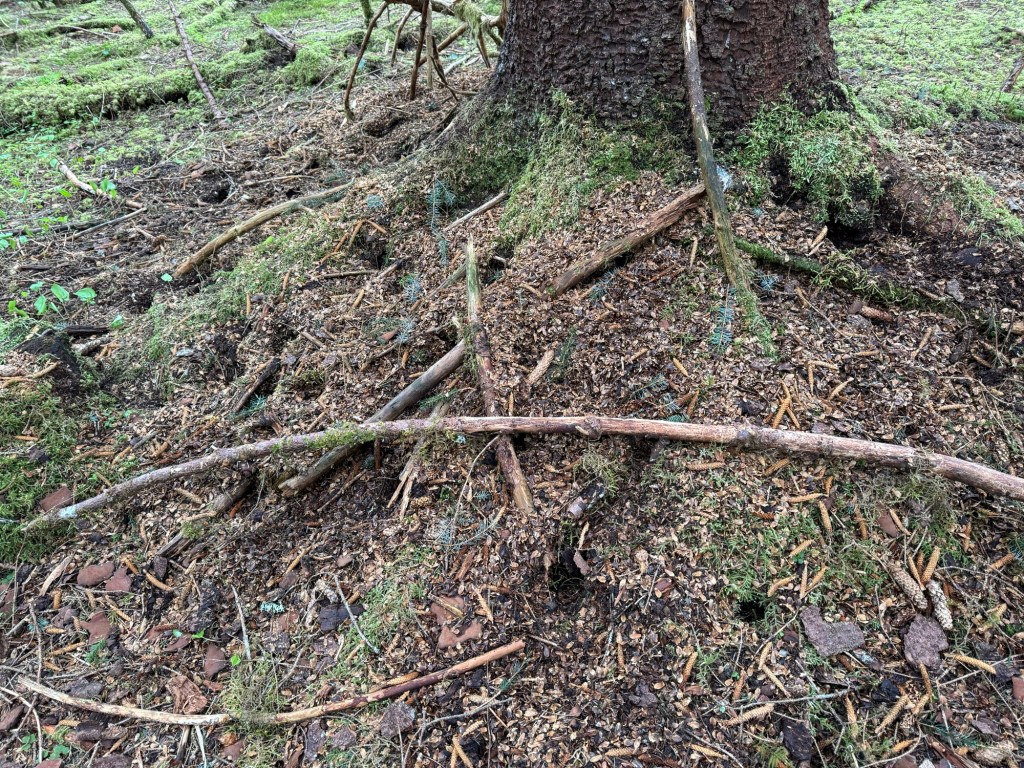
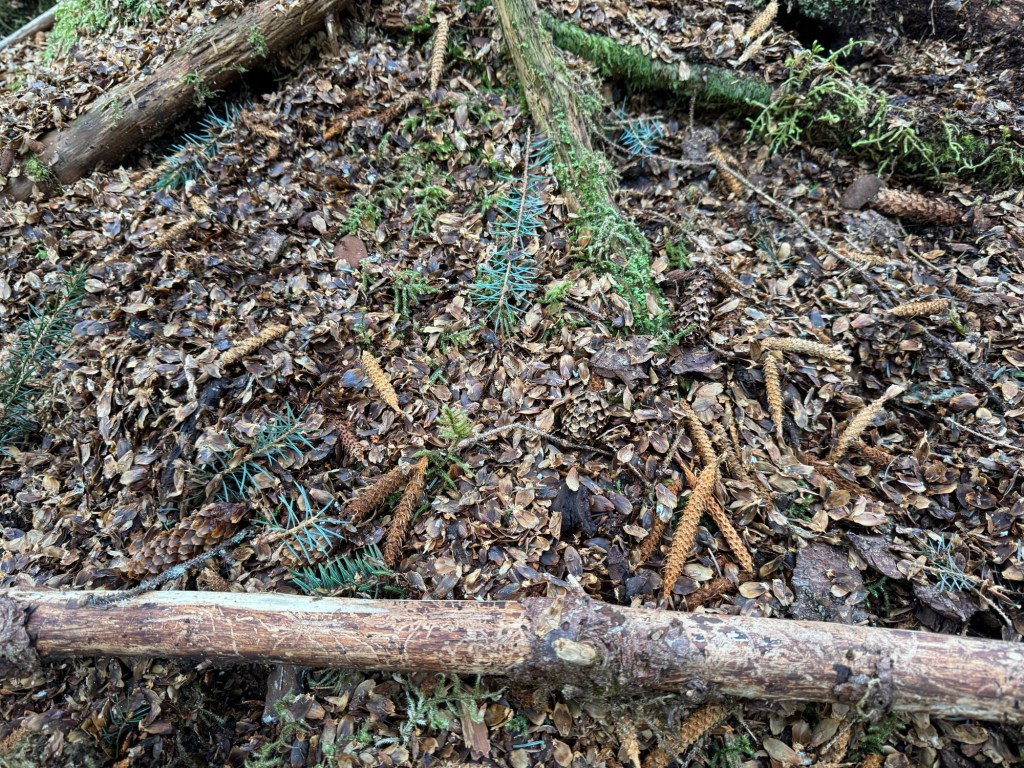
The bases of many conifers are piled high with stripped cores and scales of tiny cones. We never saw the red squirrels that picked the seeds out of them; they are shyer than the gray squirrels and chipmunks that were our neighbors in the fir forests of California.
Bushwhacking
Amy and I signed up for a bushwhack—a hike where there is no marked trail. The idea was to look for game trails we could follow and find our way by having a general sense of direction and terrain.
A creek bed opened up a route from the tidal flats into the forest. Soon, fallen logs and thickets of devil’s club* blocked our way.
*see why we didn’t want to walk through it. https://www.fs.usda.gov/wildflowers/plant-of-the-week/oplopanax_horridus.shtml
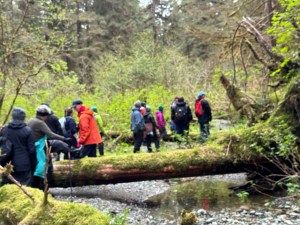
The naturalists conferred, then decided to try uphill in the hopes of finding a game trail.

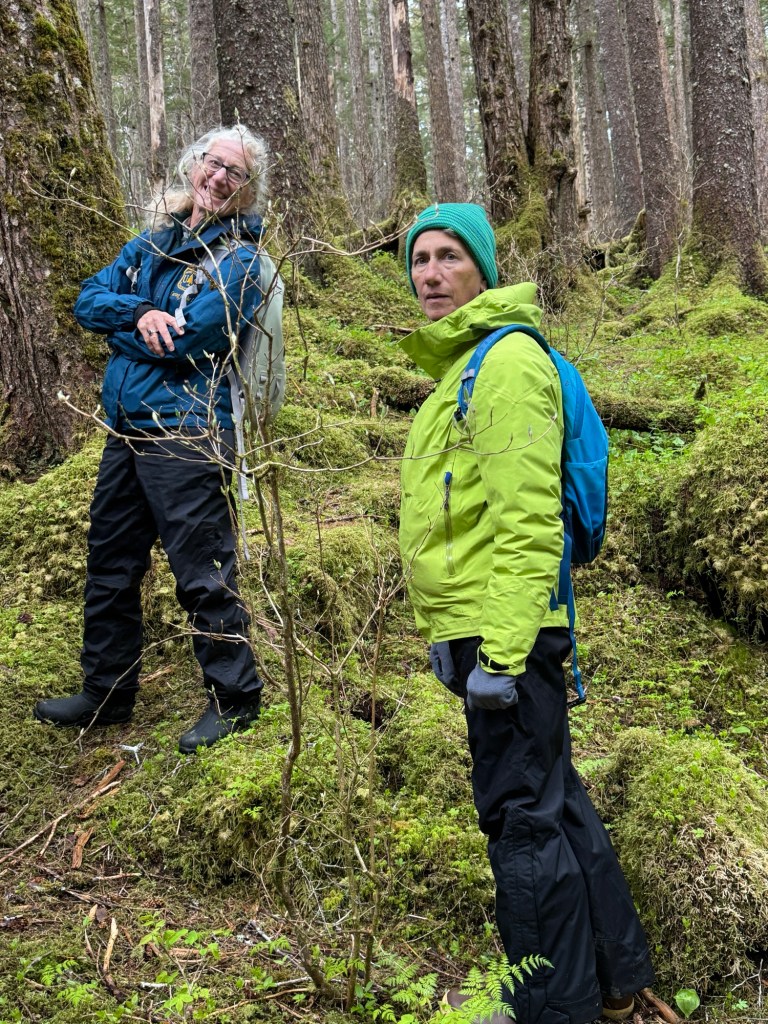
With a lot of effort clambering over and around mossy roots and boulders—easy trail for bear and deer, not so much for human tourists—we topped a small ridge. Below us was a small boggy meadow, a miniature muskeg.*
*See my Rivers of Ice post.
A carpet of sphagnum mosses made for easy, though spongy, walking. Lily pads spread out in ponds.

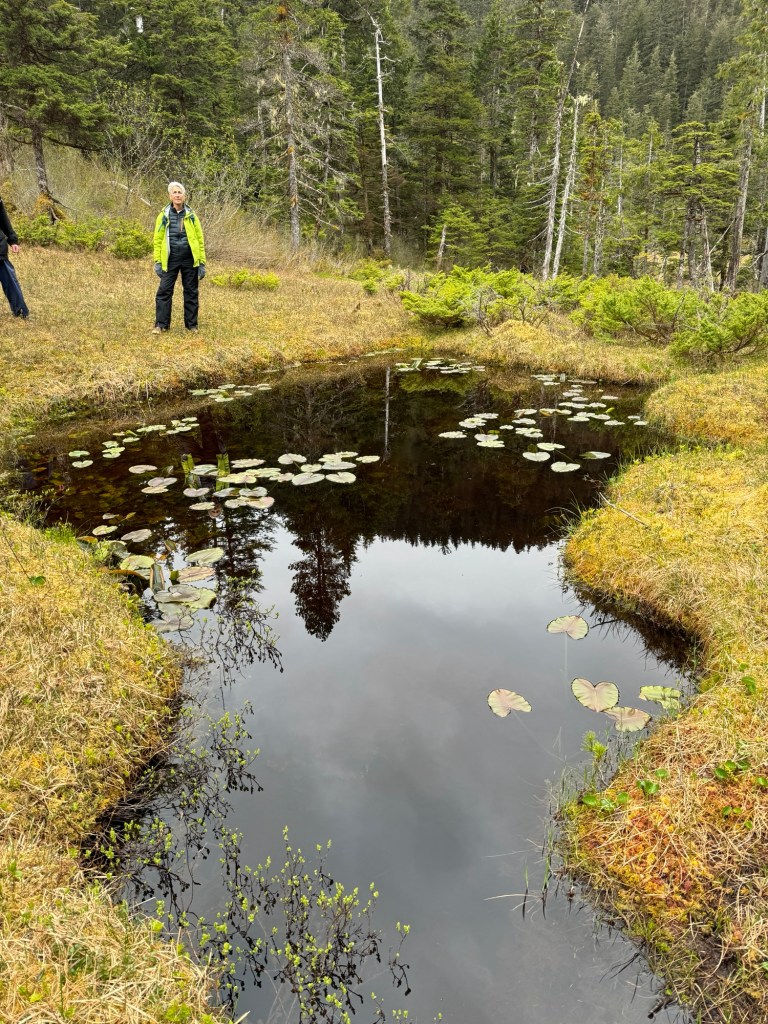
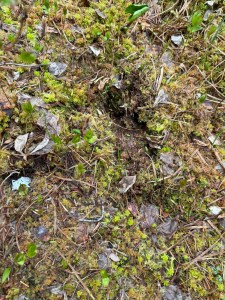
Deer tracks were harder to identify here.
The way down the other side was just as steep and obstacle laden as the way up—but a little scarier because of the slip-sliding down the muddy trail.
We learned a new phrase from the Tlingit—woosh ji.een. Work together.
Now, the day after this bushwhacking and tracking, we are touring up Glacier Bay.
I’m editing photos and creating this post from the ship’s warm lounge. Several times I have run out to the bow (38 and windy) to see—
- 5 brown bears, including a mom and 2 yearling cubs, some working along the shoreline, some high up on shrubby rock faces.
- 3 mountain goats high up on rocky cliffs, one with a nursing kid
- 2 humpback whales, both breaching against a backdrop of snowy peaks
- A couple of dozen puffins
- About a dozen bald eagles
- Countless sea lions, mostly males that were missing out on mating season out at sea
- Upwards of 20 sea otters, most with pups on their bellies
- Dozens of female harbor seals resting on ice floes with their pups. They’ll stay there together 4-6 weeks, then the pups are on their own.
Photos? Nope. Just enjoying with binoculars. Breathtaking. Awe inspiring. No adequate words.
 All play and no work
Leave a comment